

The economy and its impact on US voters
Political scientists say it's close to impossible for a candidate to unseat a serving president when the economy is booming
WHEN political strategist James Carville coined the phrase "It's the economy, stupid!" as the theme of Bill Clinton's successful 1992 presidential campaign against sitting president George H W Bush, he echoed the view of the majority of American political scientists, that the condition of the economy determines the outcomes of presidential and congressional campaigns.
It is true that political science, not unlike the economics discipline, is not an exact science, like physics, for example. But political scientists have been able to uncover electoral trends that more often than not predict and explain why voters would choose Candidate A over Candidate B.
And one of their conclusions has been that it is close to impossible for a presidential candidate to challenge a serving president when the economy is doing well. And vice versa, that when presiding over a weak economy, the chances of an incumbent president getting re-elected are very small.
Indeed, Candidate Clinton's campaign took advantage of the then-prevailing recession in the United States as one of its strategies to successfully unseat President Bush the First in 1992. Consider that only a year earlier, following the victorious US invasion of Iraq, 90 per cent of polled Americans approved of President Bush Sr's job performance. So it was the economy that had made all the difference.
Most economists would dismiss the notion that the men (or women) sitting in the Oval Office and the policies they pursue should be credited, or blamed, for the condition of the American economy, which, after all, is affected by many factors, including global economic trends and technological changes that no president can control.
Moreover, it takes time for fiscal or monetary policies to produce economic changes. Case in point: The policies that President Bush Sr had adopted during the recession in his last months in office ended up producing an economic upturn. But unfortunately for him, that happened only during President Clinton's first months in office.
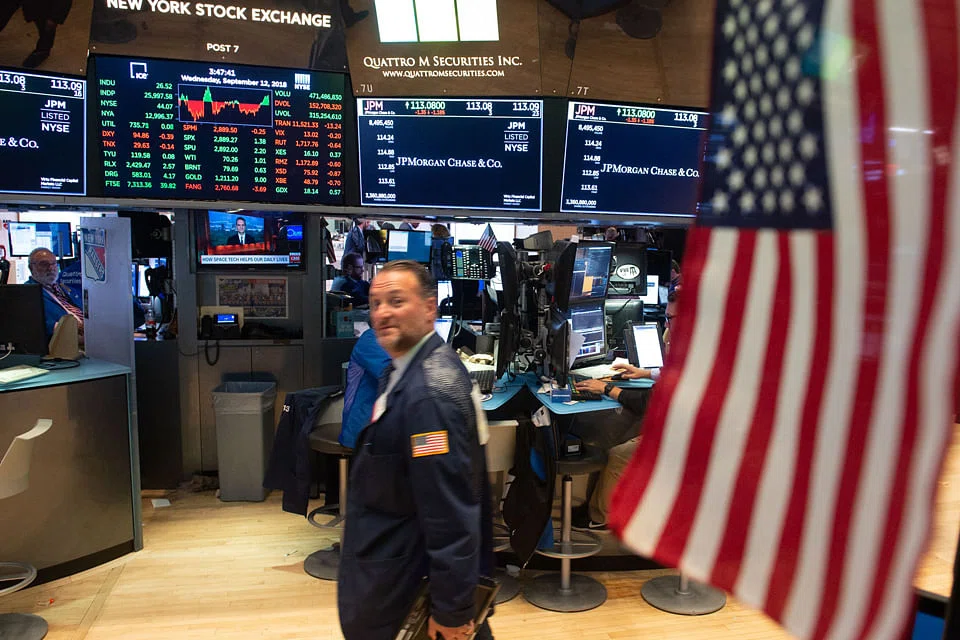
Similarly, President Donald Trump and his predecessor in office seem to be engaged in a debate over who should be credited with the current expansion of the American economy, the falling unemployment rate and the bullish stock market.
Former president Barack Obama and his political allies insist that the current economic recovery started during his presidency, noting that the policies his administration had set in motion following the 2008 recession have been responsible for the continuing economic growth, and that more jobs were created in the last 19 months of the Obama presidency than in the first 20 months of his successor in office.
President Trump, on the other hand, suggests that it is the massive tax cuts he introduced, combined with major deregulatory measures launched by a business-friendly administration, that are responsible for the turbo-charging of the American economy, leading to more business investment and creating more jobs and helping raise workers' wages.
Even if one assumes that the fiscal and monetary policies pursued under former president Obama have helped drive the current economic expansion, perceptions tend to prevail over realities when it comes to politics. Hence, according to a Gallup poll, only a quarter of Americans rated the condition of the economy as "good" or "excellent" during Mr Obama's last year in office, while 54 per cent of those polled gave the economy that grade today and who feel a sense of optimism about their economic future.
Which, according to the models drawn by political scientists, should turn President Trump into a political winner and ensure that the Republican Party he leads would be rewarded with electoral victories during the coming mid-term races for Congress and other political offices. True or false?
That is clearly the big political question on the minds of politicos in Washington these days. Will the impressive economic numbers - including the rising gross domestic product, the decline in the unemployment rate, increasing wages and lower taxes - ensure that the Republicans continue to hold on to their majorities in the House of Representatives and the Senate, and help create the conditions for President Trump's re-election in 2020?
If that is the case, why do Mr Trump's approval ratings remain below 40 per cent and polls predict a Democratic takeover of the House and perhaps even the Senate in November?
Democrats and many Republicans offer one explanation: "It's about President Trump, Stupid!" There comes a point, they suggest, when even a booming economy fails to obscure the reality of a boorish and narcissistic man that, through his personal behaviour and conduct, seems almost intent on demonstrating to everyone that he is unqualified to hold the highest office in the land and serve as the leader of the free world.
Even some of his staunchest supporters have ceased to try to defend his very un-presidential comments and actions - ranging from those maddening tweets, his bigoted and misogynistic remarks, his incoherent policy agenda and failure to control the administration. All of that created a sense of chaos in Washington, exacerbated by the daily stream of reports about backstabbing in the White House, about former aides (including a personal lawyer and a campaign manager) charged with crimes, and about old and new scandals.
Polls suggest that notwithstanding all the chaos and scandals in Washington, members of President Trump's electoral base and the majority of Republican voters continue to stand behind him and probably would not have changed their mind even if the economy was not growing at the current rate.
In a way, from their perspective, "It's the Identity, Stupid!" They believe that President Trump is under assault by the conspirators and the Deep State, the globalist elites in New York and California, the so-called advocates of open borders, joined by a coalition of ethnic and racial minorities that together challenge their sense of identity as Americans that President Trump, they think, has done so well to represent.
The other side of identity politics is that many African-Americans and Hispanics, who have done better economically under President Trump, would never vote for him, and why feminists and urban-educated professionals would reject him even if the Donald came up with a cure for cancer and landed the first man on Mars.
But what about some of the independent voters who can tip the outcome of an election and who decided to vote for Candidate Trump in 2016, hoping that as a political outsider, he would play the role of a disrupter, challenging the status quo and draining the swamp? Will they continue to stick by President Trump and the Republicans?
This is where the condition of the economy could make a difference, or not. If you have finally landed a new and well-paying job, if you can now afford to send your kid to college, to go on a long vacation, or perhaps even to retire, would you be willing to ignore the personality and the behaviour of the president who you see as responsible for delivering all these goodies, and then let members of his political party represent you in Washington? The answer to that would provide an explanation for the results of elections in November, and for the big one in 2020.






