Effective collaboration helps power innovation
By enhancing teamwork at the workplace, businesses can benefit from a diversity of inputs, become more agile and open up communications within the firm.
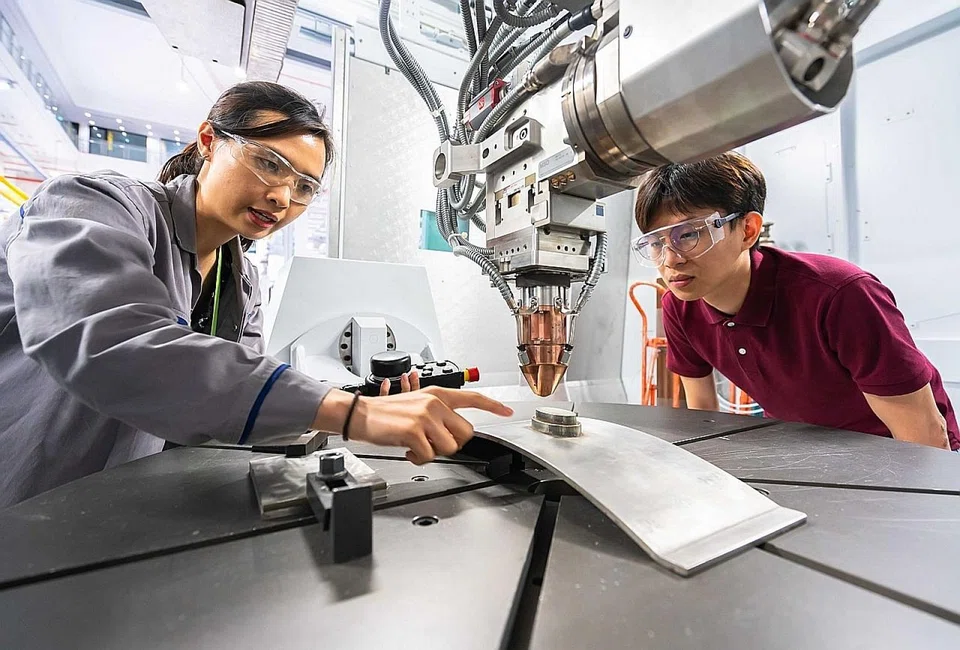
SOUTH-EAST Asia is in the midst of a massive technological transformation for manufacturing. According to McKinsey & Company, the region stands to attain up to US$627 billion worth of productivity gains from Industry 4.0 technologies.
Data, connectivity, availability of computing power as well as advanced human-machine interfaces and production methods are changing the way entire industries operate. Capabilities such as automation can help transition workers to more value-adding tasks while advanced inspection will improve processes at production sites.
Digital transformation will further accelerate these developments. In 2017, about 6 per cent of the Asia-Pacific's GDP came from digital products and services created by digital technologies, such as mobility, cloud, Internet of Things (IoT) and Artificial Intelligence (AI). This is expected to grow to around 60 per cent by 2021.
In this fast-evolving landscape, leveraging these opportunities requires rapid innovation. Collaboration offers an accelerated pathway to new ideas and faster implementation.
GETTING THE COLLABORATIVE METHODOLOGY RIGHT
But what does it mean to collaborate effectively? How do we design a methodology that will make an impact on the wider industry?
Leverage a "complete, agile loop" methodology that creates real value
It's important to pull together talent from a diverse mixture of backgrounds, experience and knowledge to provide more diverse perspectives that help solve problems faster. In this respect, manufacturers, research institutes and technology developers can come together to create a complete, agile methodology.
Problems are identified within the manufacturer by challenging existing processes, which triggers research and development. This allows organisations such as engine manufacturers and technology developers to co-create solutions for future use, while researchers ensure their projects have an actual impact on needs on the ground. The entire methodology helps drive research projects that do not turn out to be simply science experiments. Research teams are motivated to focus on delivery, ensuring that investments and pursuits will drive actual results operationally or business goals in the long run.
The process should also be gated, incorporating regular reviews to ensure that a particular research project is still relevant amid market changes. The speed at which technology is evolving today is at a breakneck pace.
The latest advancements may yield additional benefits, so a gated process helps ensure that organisations deliver the best solution and maximise the return on investment (ROI) for the company. It allows teams and decision-makers to be agile and make changes as and when required.
Tap the power of small wins to drive long-term transformation
Technological transformation is a journey. Long-term outcomes can only be achieved with incremental successes. Hence, it's important to not only focus on top-level gains but also harness the value of short-term wins.
For instance, regular progress updates on a long-term project between different teams can reveal more efficient methods for everyday processes, such as tracking inventory. Researchers can then test and deploy technologies such as serial number and data matrix scanning on the shop floor, which immediately improves efficiency and productivity while minimising risk arising from human error.
The speed at which these simple improvements are implemented can alleviate pain points and allow teams to work towards long-term goals more seamlessly. Deploying solutions quickly also gives researchers an edge in gaining additional commitment from government and the industry. The process provides more tangible results to justify their business cases, giving them more confidence to help secure more research funding.
Catalyse an agile technology culture across organisations
Constant discussions as well as weekly and quarterly reviews help trigger changes in mindsets across all organisations when it comes to innovation and implementation.
For researchers, they will have more exposure to industry processes, helping them adopt an industry-oriented research mindset. Technicians and managers in facilities have a platform to voice issues in terms of workflow and productivity. Being looped into the conversation also allows them to see their contributions to the bigger transformation roadmaps.
Take the Smart Manufacturing Joint Lab as an example. This R&D facility set up by Rolls-Royce, Agency for Science, Technology and Research (A*Star) and Singapore Aero Engine Services Private Ltd (SAESL) helps different stakeholders come together and play a part in developing solutions that improve existing processes and help drive national innovation agendas.
Organisations can also cultivate conducive environments for more frequent face-to-face discussions between different stakeholders. These close interactions help all parties to work through issues quickly, synchronise their plans and drive better outcomes.
A platform where teams can voice opinions and issues - from the shop floor to C-level offices - on how things can be improved will help lead to better solutions that truly benefit operations. In light of this, simple features such as co-working spaces and physical proximity can go a long way in helping different teams constantly connect with one another.
Successful collaboration will also encourage research organisations to adopt an application-driven mindset across different departments. For researchers, one of the most common pitfalls is that teams can become overly invested in projects after having spent much time on them. The discussions and fast-paced approach help keep everyone on their toes, ensuring an agile mentality that will benefit research networks.
Meanwhile, business unit leaders can steer the transformation journey more effectively. The open collaboration model will expedite technology development so as to achieve competitive advantage in the market. Constant feedback from researchers and technicians help leaders stay focused on driving high-level transformation goals. By combining "top-down" direction with "bottom-up" insights, projects are kept on the right track in terms of outcomes and ROI.
Solve a diverse range of technological challenges that will result in wider industrial impact
Tapping a wide pool of experts means that a broader range of technological and industrial issues can be solved. A successful collaborative approach will result in research and development outcomes that meet needs across the value chain.
For Singapore and the surrounding region, it will help drive beneficial outcomes in the following areas:
Apart from driving these technology streams, the results will create an innovative ecosystem with benefits for more industries. More businesses will benefit from better productivity and efficiency.
There will also be more opportunities for skills development, helping to minimise the talent gap. The net effect of effective collaboration will result in raising the quality of the region's innovation and driving our journey to a more advanced digital economy.