

Effort of internationalising yuan cannot be rushed
This should be carried out in tandem with capital account liberalisation.
 Add BT as a preferred source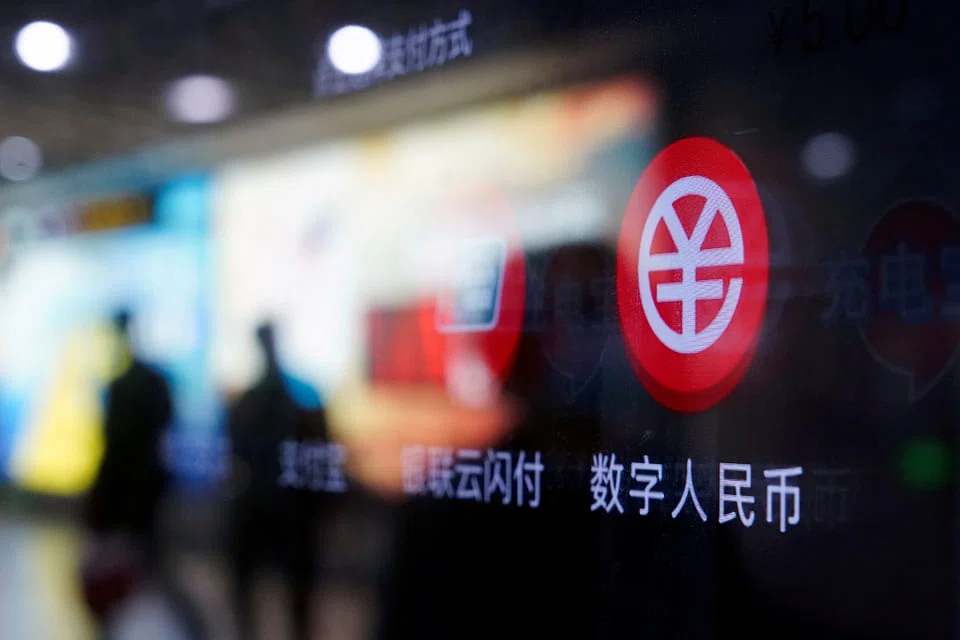
RECENTLY, China has been actively pilot testing the e-CNY, its central bank digital currency, which has a clear lead over the rest of the world. And amid the pandemic, the United States has once again implemented quantitative easing, leading to a depreciated US dollar along with expected inflation, as well as hot money flows disrupting emerging financial markets. All at once, active promotion of the e-CNY has been closely linked to the internationalisation of the yuan, and theories of China wanting the yuan to replace the US dollar as soon as possible to become the international trade and reserve currency abound.
At a technological level, indeed, the advent of a digital currency will help the internationalisation of the yuan, but several domestic and global conditions would need to be met for the yuan to become international currency.
CONDITIONS NOT FULLY ESTABLISHED
First, developing China's financial markets is a necessary financial condition. Only a well regulated and well managed financial system with a large-scale capital market can provide attractive investment avenues for offshore yuan to seek value preservation and appreciation, so as to make the yuan more attractive.
Second, with the blessing of Chinese President Xi Jinping's speech at the 2018 Boao Forum for Asia, China has only recently fast-tracked and expanded the opening up of its financial markets. With greater openness, there will be significant capital inflows and outflows, exposing China's financial sector to changes in the external environment. Adjustments to the monetary policies of developed countries and changes in international interest and exchange rates can lead to large inflows and outflows of capital, which may cause the domestic market to be more volatile and impact financial stability. There is, therefore, an urgent need to ramp up the monitoring system and improve policy tools to manage cross-border capital flows, build up systems and experience in managing financial market turbulence and crises. This is critical in view of the largely closed financial markets China has been operating for years.
Third, for a sovereign currency to be used as an international currency, there has to be global support and cooperation; it will not happen just because China is willing or says so. Beijing needs to work harder at international diplomacy on the world stage to get more countries' support, in ways such as improving the understanding and respect of the international community for China's systems and governance in politics, economy, finance and society and so on.
Navigate Asia in
a new global order
Get the insights delivered to your inbox.
Recently, Mr Xi spoke on the need to strengthen international communication, and on telling the China story to help the global community better understand the Chinese Communist Party and "socialism with Chinese characteristics". Besides counteracting the containment strategies of some Western countries against China, such effort should also help the internationalisation of the yuan.
PHASED APPROACH
The internationalisation of the yuan will not happen overnight, but it will gradually come into being if and when conditions support it. Former governor of the People's Bank of China (PBOC) Zhou Xiaochuan has said that internationalisation of the yuan should be a gradual process, and he recently stressed again that it will depend on China's higher-order thinking on institution and policy choices as well as progress in its reform and opening up, rather than technological factors.
From China's evolving response to the "impossible trinity", we can see that it is currently not in a rush to internationalise the yuan.
The impossible trinity theory was proposed by US economist Paul Krugman in addressing policy choices for an open economy. It says that of these three goals - an independent monetary policy (that is, control of domestic interest rate), a fixed or stable exchange rate, and free capital movement - a country can only attain two. Before opening up, China chose to have full control of interest and exchange rates; hence it had to restrict capital movement, and so it implemented capital account control.
In 1996, the yuan became convertible for current account transactions and China started to promote capital account liberalisation as its economic ties with the world grew. It adopted a phased approach and has met with challenges in the process. One good example was when the PBOC announced the "811 Exchange Rate Reform" on Aug 11, 2015, which attempted to reform the central parity system to let the market play a bigger role in determining the yuan exchange rate. With this reform, the exchange rate between the yuan and US dollar would be based on the previous day's closing rate of the inter-bank foreign exchange rate market.
Unfortunately due to domestic economic slowdown and the strong pressure from US dollar interest rate hike, the yuan experienced significant downward pressure following the announcement of the reform. A massive outflow of domestic capital prompted the authorities to intervene in the foreign exchange market to halt the yuan fall and control the outflow of domestic capital, and to consider slowing the pace of yuan exchange rate market reform.
So to this day, China's overall priority is to ensure stable economic growth, and the policy preference in dealing with the impossible trinity is as follows: maintaining an independent monetary policy, taking gradual and controllable steps towards capital account liberalisation, and implementing a managed floating exchange rate regime to allow the yuan to fluctuate within a reasonable range.
In other words, China is currently not choosing two of the three goals, but attaining the goal of controlling domestic interest rate while liberalising its capital account in a controllable fashion, and at the same time gradually allowing market forces to determine the exchange rate.
Such an gradual approach also means that the effort of internationalising yuan cannot be rushed and should be carried out in tandem with capital account liberalisation.
CONTROVERSY OVER USING SOVEREIGN CURRENCY
Next, using sovereign currency as reserve currency or currency for international transactions is inherently flawed, because it cannot accommodate different goals at home and abroad. For instance, the formulation of US monetary policy cannot ignore the economic conditions and interests of the US and, at the same time, be able to meet the demand arising from changes in global liquidity conditions. This is why in 2009, following the global financial crisis and the quantitative easing implemented by the US, Mr Zhou said: "We need to create an international reserve currency that is divorced from sovereign states and is able to maintain a stable value over the long term."
Former governor of the Bank of England and former chair of the Financial Stability Board Mark Carney said during the Jackson Hole Symposium in August 2019 that the US dollar's hegemony as the world's reserve currency must come to an end to weaken the spillover effects of a US dollar-unipolar system. However, he thinks that the greenback's reserve currency status will be better taken over by some form of digital currency such as Facebook's Libra (now named Diem) than another sovereign currency such as the yuan.
In other words, if the yuan is to become the next reserve currency and global currency to be used in international trade, several obstacles need to be overcome. Apart from the likely resistance from Western powers such as the US and the United Kingdom, there are also developments that may unfold in the medium to long term such as the international community's increasing lack of confidence in the sovereign currency, and various future possibilities involving digital currency technology - all of which may pose considerable uncertainties.
- The writer is an adjunct university professor, angel investor and adviser to fintech startups, and director of Libai Academy. He was formerly director of MAS Academy.
Decoding Asia newsletter: your guide to navigating Asia in a new global order. Sign up here to get Decoding Asia newsletter. Delivered to your inbox. Free.
Share with us your feedback on BT's products and services
TRENDING NOW

Middle East-linked energy supply shocks put Asean Power Grid back in focus
Strengthening Asean’s economic resilience through RCEP’s 2027 review
Malaysia’s 8th richest man Jeffrey Cheah wants Sunway business to last 10 generations

How China’s young workers are securing their future even as AI disrupts job market, triggers pay cuts

