

eFishery fiasco: Are state-linked investors risking their reputation investing directly in startups?
It might be wiser for such investors to stick to a fund-of-fund strategy than to do direct investments. The reputational fallout from a failed startup isn’t worth it

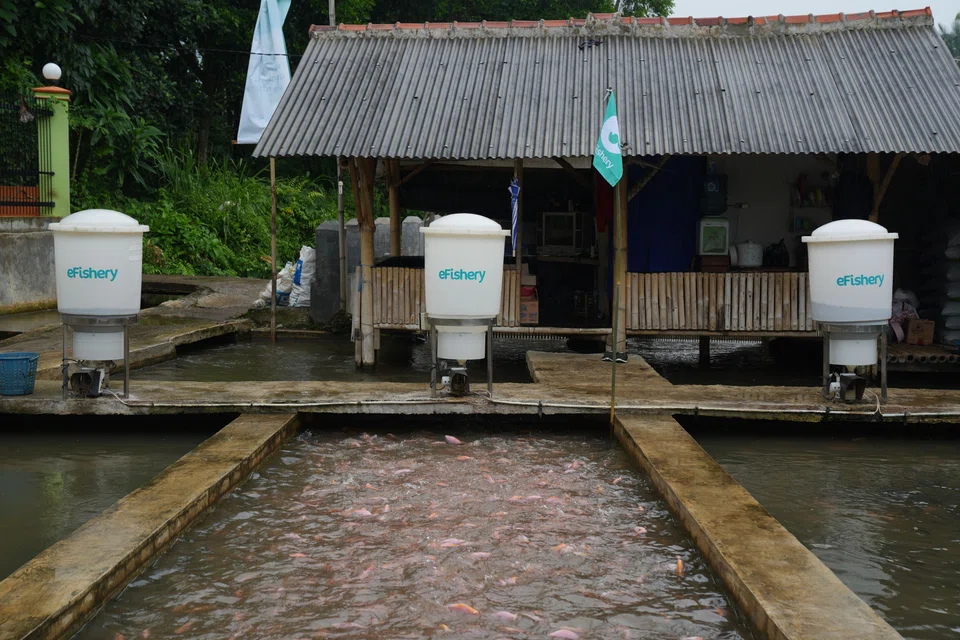
INVESTORS in Indonesian unicorn eFishery must have felt their hearts sink with the revelation that the declared revenue and profits may have been faked for several years.
An investigation commissioned by the company’s board indicates that the eFishery management allegedly inflated its revenue by nearly US$600 million from January to September 2024. The final investigation report is yet to be completed.
The company provides feeders to fish and shrimp farmers in Indonesia.
The news was a big shock to the startup community, not least because the agritech startup has quite a few name-brand investors, including SoftBank and Peak XV Partners. It also counts not one, but two state-linked funds among its investors – Singapore’s Temasek and Malaysia’s government pension fund Kumpulan Wang Persaraan (KWAP). It is likely the stakes they have in eFishery are small.
All investments come with risk, which is something eFishery investors would have been well aware of.
But with startups, the risks are slightly different. Adages such as “fake it till you make it” and “working in the grey” are familiar phrases within the ecosystem, and investors take on a very different set of risks when investing into startups.
A common question asked each time a startup implodes from financial impropriety is: Was enough due diligence done by the investors?
Typically, venture capital (VC) firms undertake due diligence on their potential targets, but the process is far less rigorous than when a listed player invests in a business. Market players have said that due diligence for VCs tend to centre more on key issues such as the share register and intellectual property rights.
Balancing act
Should there be the expectation of more thorough due diligence on the part of a state-linked investor? It is a balancing act between moving fast to secure an investment on the one hand, and having the startup founders be quizzed by lawyers on their operations, and having their focus diverted away from running the business on the other.
Finding returns is in every fund manager’s mandate, with the appropriately applied risk management framework to gauge if an investment is worth the risk. Having a startup fail is part and parcel of a VC’s experience – but fund managers hope they place enough bets to come out ahead in the long run.
Temasek’s exposure to any startup failure is limited, as it has capped investments in early stage companies to 6 per cent of its total portfolio.
So while it is likely the potential investment loss in eFishery in absolute terms is a small fraction of the assets under management of Temasek and KWAP, this is not the first high-profile failure that state-linked investment funds have been exposed to.
Recently, Malaysia’s state-linked investors Khazanah and Permodalan Nasional Berhad (PNB) faced the ire of the Malaysian public when it emerged that one of their portfolio companies’ e-commerce platform FashionValet was sold at a fire-sale price. Khazanah and PNB later issued statements to clarify that Covid-19 had left the startup in urgent need of capital injection, and that the sale of their stakes would enable the e-commerce platform to move forward.
The amount invested by Khazanah and PNB was small in absolute terms – RM27 million (S$8.2 million) and RM20 million, respectively, but the public backlash was loud and vocal.
In Temasek’s case, its investment in failed crypto exchange FTX led to parliamentary questions, and the senior management of Temasek took a cut in compensation for the reputational damage caused.
Investing in startups is a risky affair, but it offers the chance to invest at a lower price, and the promise of a much bigger upside in the long run. There are also strategic reasons for state-linked investors to invest directly – it gives these investors a chance to understand how existing companies can be disrupted by innovative technologies.
But for state-linked investors such as Temasek and KWAP that have their reputation to consider as well, the question is whether investing directly is the best approach to get exposure to startups.
Fund of funds strategy
Perhaps sticking to a fund-of-funds strategy might serve state-linked investors better. Investing into funds to get exposure to startups enables such investors to put some distance between themselves and an imploding startup. Plus, spreading the investment over multiple funds creates a well-diversified startup portfolio that can pay off.
Temasek already has such a strategy, seeding funds such as deep-tech VC firm Xora. Others such as Vertex Ventures have received seed money from Temasek alongside other outside investors.
But consider the numbers involved for Temasek: 6 per cent of last year’s portfolio value of S$389 billion works out to around S$23 billion – not a small sum in absolute terms. The allure of direct investing should be weighed against the potential reputational fallout and backlash from public failures.
With an average of about 90 per cent of startups likely to fail, state-linked investors should consider dialling down their focus on direct investments, and keep startup investments at arms length. While returns might not be in the same multiples, the reputational damage and public outcry after an implosion might not be worth the risk.






