Emboldened Truss takes major risk on day one
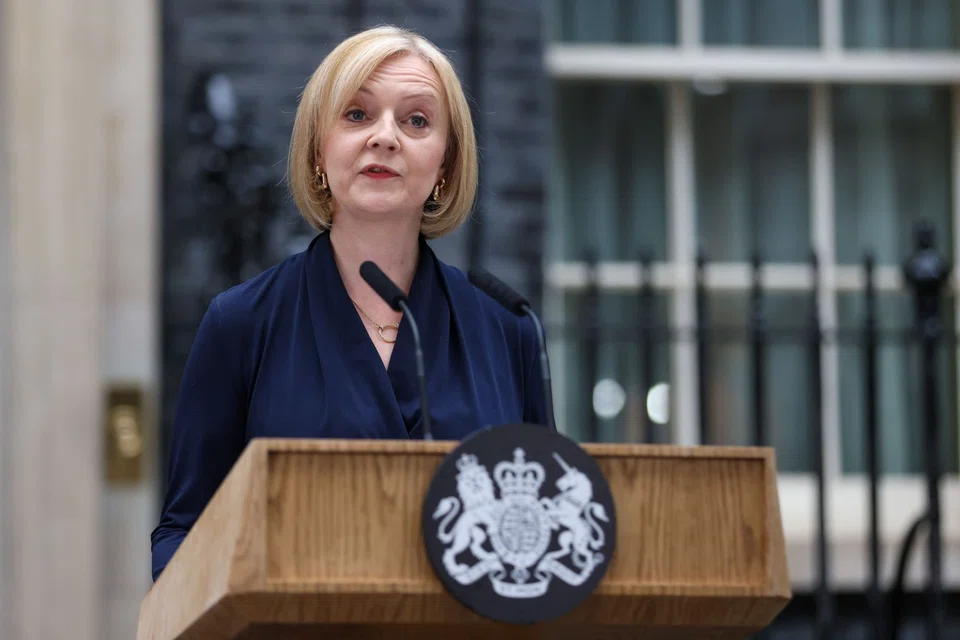
LIZ Truss became on Tuesday (Sep 6) the first British prime minister for 140 years to be appointed in Scotland by the Queen, but this is not the only historic echo for her forthcoming period of office.
In July 1962, Prime Minister Harold Macmillan dismissed 7 members of his Cabinet, one-third of the total. This became known as the “night of the long knives” and is akin to what Truss did on Tuesday with a major cull of supporters of former finance minister Rishi Sunak.
Despite Truss winning the Conservative leadership contest on Sep 5 with a narrower margin of victory than expected, she has shown little appetite to appoint ministers who opposed her, and Sunak himself has not been offered a role in a significant break with precedent. She, therefore, risks making exactly the same big mistake as Boris Johnson in 2019 by favouring too many close allies, and not reaching out to all key wings of the Conservative Party.
Indeed, only 2 MPs who had publicly declared for Sunak during the campaign have not been sacked and/or made it into the Truss front bench: They are the reappointed Secretary for Wales Robert Buckland, who switched to Truss later in the campaign, and the new Attorney General, Michael Ellis.
Moreover, despite the fact that Truss is facing some of the biggest policy challenges since 1945, the new Cabinet she has appointed is one of the least experienced in modern times. This is bizarre, given the scale of the mountain ahead with her government’s in-tray extraordinarily grim economically, financially and socially.
Internationally, there’s the war in Ukraine. She has to repair relations with the European Union and show the world that Brexit has a coherent purpose. And she has to somehow forge her relationship with the United States; arguably the relationship with the US president is at its weakest now, possibly since the end of the Second World War. So this will be much more of a constrained premiership by the economic and political, social and international realities that she is going to be governing under.
On Monday, she claimed that the United Kingdom can “ride out the storm” under her leadership, and that she will get the country “working, building and growing”. The UK, she said, has huge reserves of talent and imagination, and will become the “brilliant Britain” she wants it to be.
Truss likes to compare herself to Margaret Thatcher, who also faced challenges in 1979, but her appointments are very different. New finance minister Kwasi Kwarteng, new foreign secretary James Cleverly and new home secretary Suella Braverman have much less political experience than Thatcher’s first top team in the 1970s of Geoffrey Howe, James Carrington and Willie Whitelaw. Indeed, Truss is now the only person remaining in government to have served in UK Cabinets for over 6 years, and is the only person to have served in David Cameron’s final Cabinet in 2016.
Nonetheless, the Cabinet does have significant gender and ethnic diversity. Today is the first time in UK history that no white men occupy any of the 4 great offices of state (10 Downing Street, Treasury, Foreign Office, or Home Office).
Moreover, the Cabinet contains no fewer than 5 other candidates from the recent leadership election -- Penny Mordaunt, Nadhim Zahawi, Suella Braverman, Kemi Badenoch and Tom Tugendhat. So, Truss argues that this is a Cabinet which will unify the party.
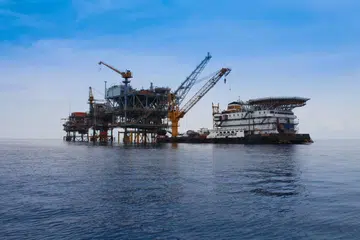
One of her most controversial appointments is Jacob Rees-Mogg as business secretary. He, along with others like Braverman, have been sceptics of the net-zero agenda. Rees-Mogg is vocally pro-fracking, has expressed concerns about “climate alarmism”, and has said that “every drop” of fossil fuel energy should be squeezed from the UK’s North Sea.
While Rees-Mogg’s appointment has therefore been criticised by some green NGOs, there will be some offsets to any big changes in UK climate policy. First off, the new finance minister Kwarteng was the main architect of Johnson’s 10-point plan to reach net- zero emissions by 2050. Secondly, Graham Stuart, who has been appointed climate minister, is firmly signed up to the net-zero agenda and Truss has asked him to also attend Cabinet. Moreover, Johnson has warned Truss he’s ready to defend his climate legacy and she knows he’s still very popular with the party grassroots.
Amongst all the key challenges Truss faces, the most pressing is a major UK energy market intervention, expected on Thursday, which may cost between £100-150 billion over the next 18 months. With this massive extra spending on the horizon, plus significant tax cuts, UK benchmark borrowing costs hit their highest level on Sep 6 in more than 11 years as markets worried that Truss’s plans to combat the UK’s cost-of-living crisis would mean a sharp increase in supply of government debt.
On Sep 6, Deutsche Bank FX strategist Shreyas Gopal warned that the risks of a “sterling crisis” should not be underestimated. He said the “risk premium on UK gilts (government debt) is already rising, coincident with unusually large foreign outflows. If investor confidence erodes further, this dynamic could become a self-fulfilling balance-of-payments crisis whereby foreigners would refuse to fund the UK external deficit. A balance-of-payments funding crisis may sound extreme, but it is not unprecedented: a combination of aggressive fiscal spending, severe energy shock, and a slide in sterling ultimately resulted in the UK having recourse to an IMF loan in the mid-1970s”.
Geoff Yu, FX and macro strategist at BNY Mellon, said Truss’s expected new tax cuts and spending plans “set the UK up for some serious questions on fiscal credibility – it is already being tested in bond markets. We share concerns regarding the right balance of fiscal plans in the UK and expect some degree of fiscal risk premia to feature in the near term. However, we think fears of unfunded tax cuts and energy subsidies precipitating a fiscal collapse are not justified”.
To add a further headache for Truss, a new opinion poll released Sep 6 also shows the opposition Labour Party extending its lead to some 15 percentage points. That is a doubling of the party’s lead in just 1 week.
So, Truss is facing a growing economic and political storm. It is therefore inexplicable that the top team she has selected is not more fit-for-purpose to meet these challenges.
Andrew Hammond is an associate at LSE IDEAS at the London School of Economics