Embracing a future of wearable health technology
Developing the sector can boost Singapore's position as a leading global medical technology hub.
Singapore
A NEW age is arriving, or so the heralds say. People will be able to get medical tests done while walking on the street and doctors can run diagnostics and get key health readings without having to meet their patients - all thanks to wearable health technology, also commonly referred to as health wearables.
The benefits of this new technology are manifold. Not only can it be used by individuals to better monitor their health and activity levels, but healthcare organisations can also improve the standard of care and potentially reduce costs through remote care systems.
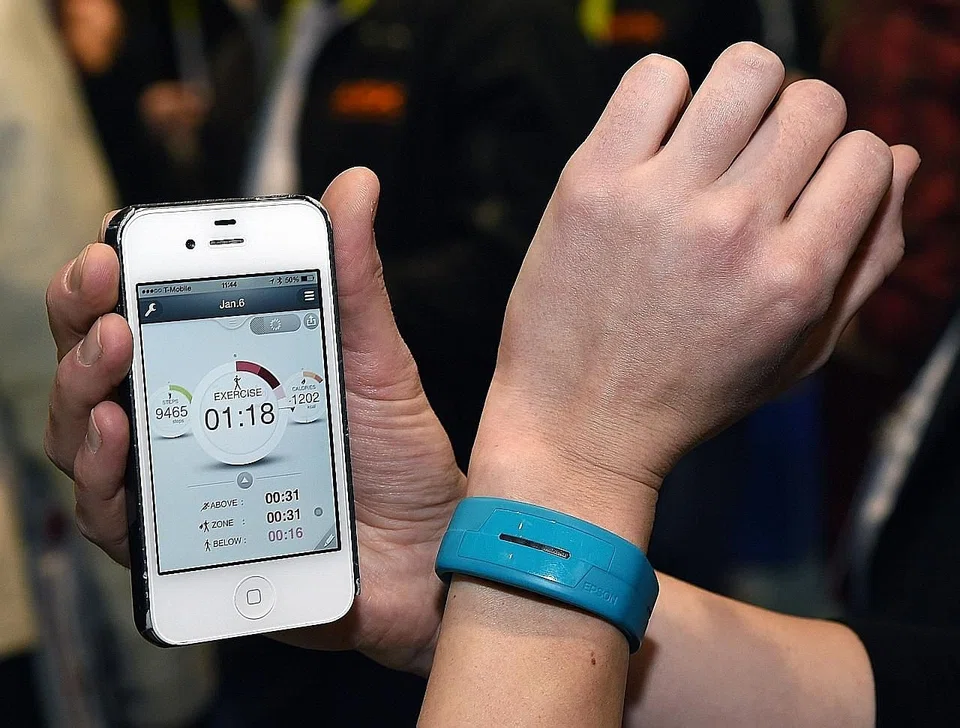
Technology companies have already created a myriad of health wearables, ranging from fitness bands that monitor physical activity and sleep patterns to patches that detect body temperature, heart rate, hydration levels, and more. Smart watches such as Samsung Gear and the highly anticipated Apple Watch (to be released this year) also come with applications to measure health and fitness.
The possibilities for these applications are endless. They encourage wearers to be more engaged in managing their own fitness, help modify behaviour by reminding them to exercise or take medicine, and provide a platform for patients and physicians to share data and collaborate on health strategies.
With proper planning and application, wearable technologies should help to educate and empower individuals to take control of their health, by helping physicians and patients monitor and diagnose diseases such as diabetes; and making personal fitness more fun by providing goals, challenges, and facilitating social interaction.
In addition, wearable devices can significantly improve the collection of clinical data, thus facilitating the delivery of healthcare to remote locations where patients would otherwise have to travel extensively to gain access to healthcare providers.
The challenges
Singapore, with its penchant for new technology adoption, certainly appears poised to leverage this opportunity. But before we can achieve wide-scale adoption of this new paradigm in healthcare, an ecosystem needs to be built by all stakeholders to address two key points: encouraging people to use the technology, and integrating the technology with the existing primary and secondary healthcare systems.
The main reasons why people worldwide are not adopting the wider use of wearable technology in healthcare are, understandably, cost, data privacy, and sustainability. These reasons also apply in Singapore and unless addressed, they may prove to be stumbling blocks in the adoption of health wearables.
To address these and related issues, one should consider the following.
Cost
Health wearables, although relatively available, come at a premium. While prices are not phenomenal, they are not at a level which would encourage mass adoption.
There are a few ways to subsidise the cost of health wearables. Tax incentives could be given to employers to encourage them to subsidise their employees' adoption of these devices. Further, employers could be given sponsorship for adopting wellness programmes for their employees that involve the use of mainstream wearable devices.
Data privacy
As consumers embrace health wearables, they may start to worry about how the data collected is used and who gets to access it. Although patients would typically be expected to be comfortable sharing such health data with their doctors, organisations seeking to use data for clinical studies, trials or research would need to be transparent about how they handle confidential data in order to maintain an overall level of trust.
In this respect, the Personal Data Protection Act will provide a starting platform for drawing up privacy guidelines and policies to address people's concerns regarding data privacy.
Sustainable use
This is a tricky issue. Often times, people buy these devices but do not use them on a sustainable basis. One way to encourage people to sustain the use of these devices is to offer them reduced health insurance or MediShield premiums in return, as long as they use health wearables and provide regular updates to healthcare organisations.
The data they generate daily can also be used to study common health and medical conditions, and provide more current data than clinical studies or trials. Patients who allow their data to be used for these purposes could be paid or given other incentives to encourage them to keep their health wearables on.
Even after addressing the relevant concerns, wearable technology can only be successful if it can be integrated with the primary and secondary healthcare systems.
This will not be easy as more than 80 per cent of primary care in Singapore is managed by private healthcare practitioners while secondary care is managed though public hospitals. Significant steps would need to be undertaken in these areas including introducing appropriate regulations, creating common IT platforms, integrating the public and private healthcare systems and improving analytics for better healthcare delivery and treatments.
Singapore is facing the inevitability of an ageing population and a changing demographic profile, and their impact on the healthcare system. The successful development of the health wearables industry in Singapore will not only complement Singapore's focus on preventive measures to avoid future health complications, but also reinforce its position as a leading global medical technology hub.
Perhaps in the near future, Singaporeans will be able to expect more proactive and integrated healthcare services where wearable smart devices will monitor vital signs of patients "24/7" and provide readings directly to the hospital's integrated medical records system.
Overall, Singapore's healthcare landscape can benefit tremendously from the use of health wearables and we should certainly look forward to embracing a "wearable future" in time to come.