

Emergence of the G-2 system
US and China will continue to have an interest in strengthening their ties with their client states and trade partners, while at the same time reaching global deals that serve their interests
Washington
THE collapse of the bipolar international system - the US versus the Soviet Union - after the end of the Cold War was followed by the so-called Unipolar Moment when the US seemed to be running the global military and economic show for a few years.
But in the aftermath of a series of US strategic setbacks in the Middle East and the meltdown of the American financial system in 2008, there has been a lot of talk about the return to the kind of multipolar international system with the US occupying one pole in the new international system side-by-side with new and old powers, including China, India, Russia, the European Union (EU), Brazil and South Africa.
In a way, the emergence of the Group of the 20 (G-20) largest economies was seen as one step in the direction of this shift towards Multipolarism to be followed by the expansion of the United Nations Security Council (UNSC) - to include India, for example - and the changes in the voting mechanisms in multilateral institutions, for example, by giving China more power to affect decision making in the International Monetary Fund (IMF).
While these ideas sounded good on paper, they didn't seem to work when it came to actually making crucial decisions on policy issues, ranging from the nuclear programmes of North Korea and Iran, to reforming the UNSC or the IMF.
Bodies such as the G-20 tend to give the same voting weight to the US and to, say, Italy, to China and to, say, Saudi Arabia, despite the fact that only the US and China each enjoy the kind of blend of global military and economic might that makes each a Great Power in the real sense of the word. Hence, the EU and Japan are economic superpowers but are military midgets compared to the US or China, while Russia could use its nuclear military force to intimidate the US but is at the same time a second-rate economic power.
So when it comes to making decisions on trade rules, nuclear arms control or climate change policy, both the US and China can be compared to two Gullivers that are bound by the global midgets around them. Not only can these lesser players band together against them and constrain their ability to promote their respective agendas, they can also try to lobby one Great Power to resist the policies proposed by the other Great Power instead of creating incentives for the two giants to cooperate.
From that perspective, the historic agreement on dealing with the threat of climate change that US President Barack Obama and Chinese President Xi Jinping signed last week bucks the trend of recent years and may create the conditions for establishing an informal special relationship between the US and China - that some have described as the Group of Two (G-2) - a global directorate of sorts that could help provide a greater sense of stability to the international system at a time when many warn that without anyone in charge, multipolarism may be creating the conditions for global chaos.
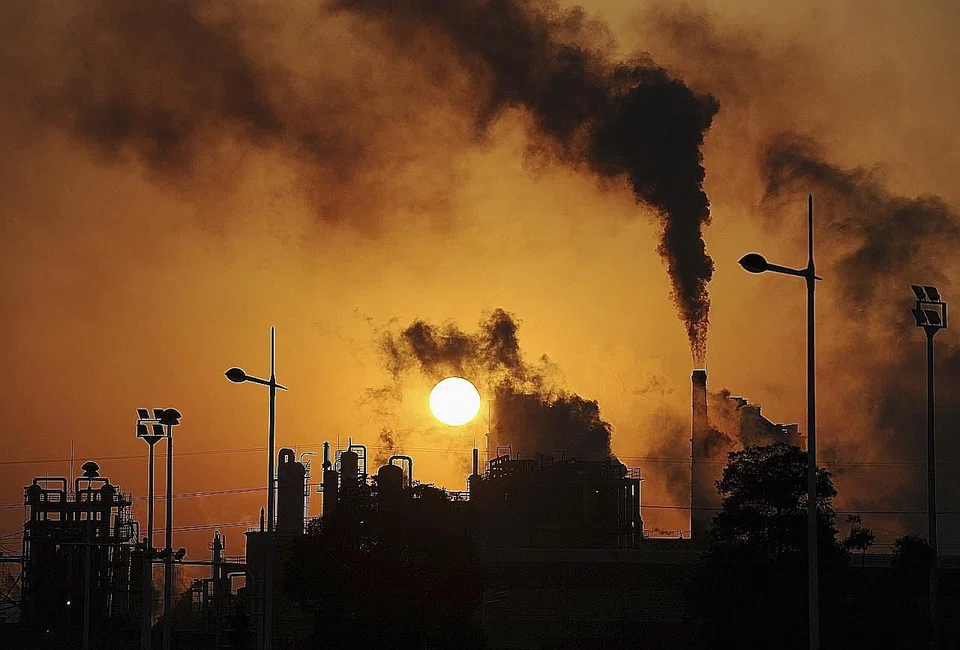
Indeed, the significance of the joint Sino-American plan on targets for carbon emission reductions is that when the world's two largest polluters make a deal, it may, well, work - by leading to negotiations for a new global climate accord by next year. Hence, developing countries such as India or Brazil won't be able to act as spoilers by pressing China to force tougher restrictions on the US and other industrialised nations. Like other governments, they understand that their choices would be to either join an international agreement on climate change or to remain outside the international climate policy regime.
The Sino-American deal on climate change demonstrates once again that a global agreement isn't viable without a bargain made between the US and China. The other side of the coin is that they can each torpedo any serious move towards a global bargain on most critical policy issues. It's important to stress that the bilateral deal to cut carbon emissions - as well as the military and trade deals that the American and Chinese leaders and their aides worked out in Beijing - doesn't reflect a new sense of idealism in Beijing or Washington, but resulted from calculations of national interest.
Hence the agreement that provides for rules for notifying each other of major military activities and of behaviour for encounters at sea should be seen in the context of the growing military tensions between the two countries that resulted in turn from the rising territorial disputes between China and its neighbours.
Neither Washington nor Beijing has an interest in being drawn into a full-blown military confrontation as a result of incidents that could be triggered by governments in the region that may have an interest in having the Americans flex their military muscle vis-à-vis China so as to strengthen their hands in negotiating the territorial disputes with Beijing.
At the same time, both presidents want to ensure that there isn't a trigger happy general on either side that could risk a military confrontation between the two countries. Or to put it in a historical perspective, Mr Obama and Mr Xi have a common interest in preventing their current military tensions from turning into a new Cold War. Also serving both sides' interests is a pact to drop tariffs on semiconductors and other information technology products that could affect US1$ trillion in trade.
That the two governments have reached this trade deal is intriguing when one considers that Washington and Beijing are each trying at the same time to form new competing free trade agreements.
The US has proposed a free trade agreement among the 12 Pacific economies that doesn't include China, the Trans-Pacific Partnership (TPP), while the Chinese have been pushing their own regional trade pact known as the Free Trade Area of the Asia-Pacific (FTAAP). It's not clear yet whether the two sides would be able to get their respective free trade deal off the ground. Paradoxically, the notion that China and the US can reach bilateral trade deals over the heads of their potential partners is now placing pressure on Japan - in the case of the TPP - to conclude a free trade agreement with Washington.
Which may point to the shape of things to come in the Sino-American relationship. The process of moving towards a G-2 system wouldn't necessarily mean that the two governments are about to run the world. The two largest economies and trading nations - and potential military competitors - will continue to have an interest in strengthening their ties with their client states and trade partners, while at the same time reaching global deals that serve their interests and which these client states and trade partners would have no choice but to accept.
TRENDING NOW
Singapore expects all parties to honour commitments, says PM Wong after Indonesia cuts gas exports
China’s US$3.5 trillion stock rout deepens as profits sink, major stimulus stays elusive
Gas supply cut from Indonesia accounts for less than 2% of Singapore’s daily gas demand: EMA

Singapore’s central gas buyer affirms Indonesia’s role as ‘important partner’ amid export review warning

