

Emerging markets raise voice at COP27
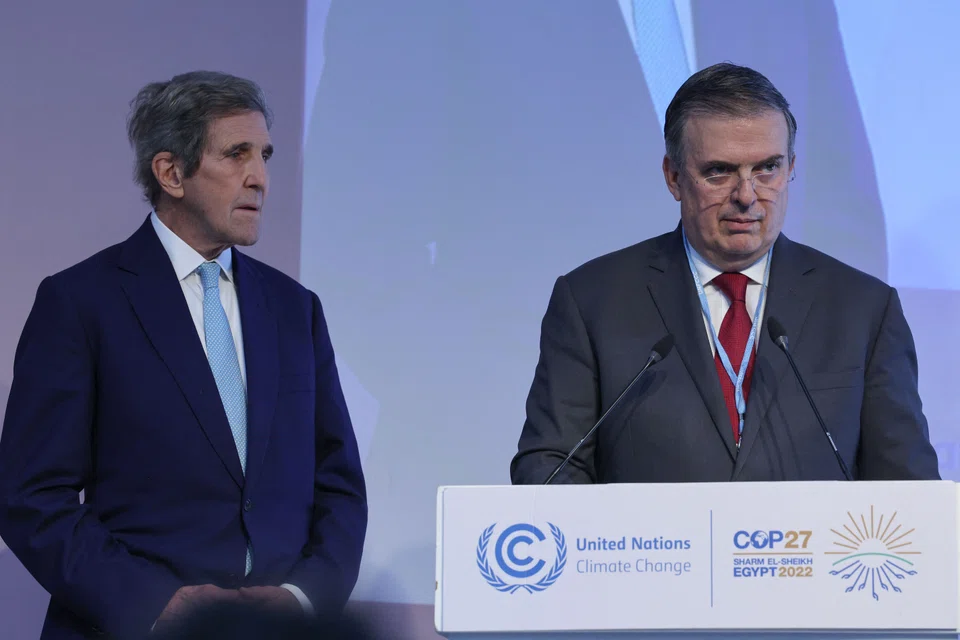
WHILE COP27 is only just past the halfway stage, it is already clear that one of the key, distinctive features of the Egyptian-hosted climate summit is the way that the voice of emerging markets has been brought to the fore.
This is reflected in the issues being discussed, with, for instance, “loss and damage” being on the official COP agenda in Sharm el-Sheikh for the first time ever. To be sure, however, it is not the case that Egypt is the only time that the Global South has shown its influence.
Indeed, for a number of years now, developing countries in Africa, Asia and South America, which will provide the motor of global economic growth in coming decades, have been leading the way in providing a legal framework for climate security. Many are concluding it is in their national interests to reduce greenhouse gas emissions by embracing low-carbon growth and development, and that it is better for them to prepare for the impact of climate change by advancing climate change laws and policies.
Take the example of Mexico, which around a decade ago passed its General Law on Climate Change. This is a comprehensive, economy-wide legislative framework to tackle climate change, together with the first REDD+ (Reducing emissions from deforestation and forest degradation) readiness legislation to tackle deforestation.
While Mexico, which is South America’s second-biggest greenhouse gas emitter, has much further to travel on its climate commitment journey, it is one of the very few states to raise its ambition at COP27. In Egypt, Mexico announced at the weekend that it will raise its target to unconditionally cut emissions by 35 per cent compared with doing nothing by 2030, lifting its previous target of 22 per cent. The nation will also raise its target for conditional emission cuts – a goal dependent on external support – to 40 per cent, from 36 per cent previously.
To deliver on these ambitions, Mexico will double its investments in clean energy over the next eight years, expand protected forest areas, boost electric car use and reduce methane emissions from its natural gas industry. Unlike many national climate targets, Mexico does not define cuts in relation to a specific baseline year but compared to what’s projected under a “business as usual” scenario.
So it is not new that developing countries have had impact at COPs. However, this latest Sharm el-Sheikh summit highlights how much the Global South’s “voice” has grown, as the influence of key emerging markets grows significantly.
Perhaps the best illustration of this at COP27 is the issue agenda. Loss and damage is officially on COP’s agenda for the first time following climate-related events, such as the catastrophic floods in Pakistan in 2022, which have prompted heightened calls for action by activists and government representatives, especially those in the Global South.
At COP26, last year, the Glasgow Dialogue on Loss and Damage was established to discuss possible funding arrangements. The first session of this forum was at the UN negotiations in Bonn in June 2022 where several emerging markets made their views clear that talks must lead to a finance facility soon.
Representatives from the Global South hope that Egypt can use its “middle income” status to facilitate a stronger platform at COP27 for loss and damage. Ambassador Mohamed Nasr – Egypt’s chief climate negotiator and lead negotiator on finance for the African Group in climate talks – has suggested Cairo can potentially be an interlocutor between the Global North and South.
Egypt has appointed ministers from Chile and Germany to coordinate loss and damage discussions under the Glasgow Dialogue. However, since Scotland’s First Minister Nicola Sturgeon kicked off a push for such loss and damage funding at COP26 last year – with a pledge of about US$2.7 million dollars – very few governments have followed suit.
Soon after Scotland, the Wallonia region of Belgium pledged around US$1 million too. However, the first UN member to do so was Denmark which has pledged around US$13 million.
Developing nations, minimally, want COP27 to kickstart a process to formalise funding arrangements to respond to loss and damage under the UN process, plus also operationalise the Santiago Network on Loss and Damage to provide knowledge or technical assistance to address these issues.
Another example of how the issue agenda is being influenced at COP27 by the Global South is the increased prominence of wider climate finance. In 2009, developed countries committed to providing US$100 billion a year to developing countries to support climate action. Yet, official UN and independent reports show that developed countries are missing the target. For example, an OECD assessment found that developed countries delivered some US$83.3 billion of climate finance in 2020.
Pressure is growing at COP27 too for multilateral development banks (MDBs) to do more with their current capital structure, as called for in the 2021 Glasgow Pact. MDBs continue to be a key element of the climate finance debate, and there are calls for them to boost their climate action.
A critical mass of nations is also preparing to outline a new collective finance goal to come into effect after 2025. The extensive lessons learned on the provision of the US$100 billion target are an important takeaway for issues regarding the scale, scope, quality and accountability for this key new goal.
Moreover, South Africa announced a partnership in 2021 with the EU, France, Germany, the United Kingdom, and the United States to raise US$8.5 billion to support a just transition to a low-emissions, climate-resilient economy. There have been announcements at COP27 on progress by donor nations to ensure funding meets South Africa’s specific needs.
Building from this South African model, the G7 noted in June at the leadership summit in Germany the growing interest in moving forward with comparable “just energy” transition partnerships with other key emerging markets including India, Indonesia, Senegal and Vietnam. Whether these partnerships successfully deliver the appropriate scale of finance and support, the transition hoped for now in South Africa is being closely watched at COP27.
Taken together, all of this underlines the crucial, but often under-appreciated, change in the centre of gravity of the climate change debate. And it mirrors a potential broader crossroads in international relations, with continuing economic uncertainty in the West being counterpoised with an increasing shift of power to emerging economies.
Andrew Hammond is an associate at LSE IDEAS at the London School of Economics






