Enabling Singapore's youths to adapt in an era of climate change
Nudging them towards more eco-friendly behavioural habits is arguably a feasible approach to build greater climate resilience.
IN ITS 2020 government budget, Singapore committed close to S$1 billion for climate change mitigation and adaptation efforts. Key strategic measures to build a low carbon economy included quadrupling solar energy production by 2025; phasing out internal combustion engine vehicles by 2040; actively investing in low-carbon solutions; and promoting green financing through a US$2 billion Green Investments Programme.
The climate matter is of utmost importance not least because Singapore is heating up twice as fast as the rest of the world - at 0.25 degrees Celsius per decade - according to the Meteorological Service Singapore (MSS). Projections by the Centre for Climate Research Singapore suggest that the city-state could experience an increase in daily mean temperature of 1.4C to 4.6C towards the end of this century.
Climate researchers have attributed Singapore's rising temperatures to both global warming and the Urban Heat Island (UHI) effect. Asphalt and concrete from urban development have replaced greenery and waterways, trapping more heat. The UHI effect (Singapore's Central Region has the highest mean UHI intensity according to research) increases energy costs due to a higher usage of air conditioning which in turn contributes to air pollution triggered by increased electricity consumption.
The UHI phenomenon reduces thermal comfort and discourages people from walking or cycling. Besides heat-related illnesses, other climate-related concerns include flash floods and sea level rise. As a low-lying coastal island, Singapore's mean sea level rise is estimated to be up to one metre by 2100. MSS data suggests that the average sea level around the island today is 14cm above pre-1970 levels. In view of these challenges, "good" climate education plays an important role in imparting climate resilience into our youth. At SMU, all undergraduates get some exposure to sustainability issues in the course of their university education, particularly via compulsory core curriculum courses such as Big Questions and Ethics & Social Responsibility, various sustainability-related course initiatives (eg SMU's Lee Kong Chian School of Business offers a second major in Sustainability) and projects with industry.
Vision-driven learning outcomes in our own courses on communication, information systems and smart city management include effective climate change communication so that students understand climate change risks (and act on climate change); prototyping mobile applications (Apps) to calculate (and reduce) one's carbon footprint or food/water wastage in line with the 5Rs methodology (refuse, reduce, reuse, repurpose, recycle); and designing (executing) appropriate responses to protect oneself from negative climate change consequences.
Through guided educational trips to one of Singapore's waste-to-energy plants (with their huge waste storage bunkers), students also see for themselves how the incineration process works with real time exposure to national waste management issues such as the plastic pollution crisis. Without actionable climate literacy, climate change risk perceptions will remain low, and pro-environmental behaviours of students will run into the void.
MORAL PERSUASION DOESN'T ALWAYS WORK
While our youths are generally very obliging and eager to participate in actionable assignments such as measuring the total amount of greenhouse gases that are generated by their actions or explaining the role of carbon pricing in sustaining a green environment, translating concrete offsetting ideas - such as planting trees or mangroves - into reality is tough. Moral persuasion does not always work. Some of the barriers we have come across include competing priorities such as GPA concerns, no real acknowledgement that the climate catastrophe is indeed "real" (it seems inconceivable that the perennial Arctic ice cap has shrunk by more than a million square miles over the past half century), strong system trust in the ability of the government to take care of combatting urban warming, and lack of deep knowledge of local climate impacts and solutions.
Key climate change messages about the risk of global warming (even those formulated by expert panels) don't always work as intended for a number of reasons: one, humans suffer from confirmation bias, which is the tendency to seek out and interpret information in a way that confirms our pre-existing opinions, values and beliefs - it is one of the strongest biases we hold. Conversely, we have a tendency to disregard or ignore information that contradicts or challenges our opinions, values and beliefs. Another challenge is that our mental models have narrow temporal boundaries and focus on the short term. This short-term focus leads to judgment errors and biases in situations where the consequences of our actions span swathes of space and time.
What then can be done to enable Singapore's youths to better understand what lies ahead in an era of climate change, appreciate the limits of growth, and effect constructive change? Nudging them towards more eco-friendly behavioural habits (using fans rather than air-con; walking rather than driving; composting organic waste; harvesting of rainwater; reducing consumption; decreasing social media consumption etc) is arguably a feasible approach to build greater climate resilience.
Since Thaler and Sunstein's 2008 publication of "Nudge: Improving Decisions About Health, Wealth, and Happiness", there has been great interest across public policy domains in what drives the behaviour and decision-making logic of individuals and groups. Instead of traditional compliance methods such as education, legislation or enforcement, nudging puts emphasis on reinforcement and indirect suggestions as influence strategies.
According to Thaler and Sunstein, a nudge is "any aspect of the choice architecture that alters people's behaviour in a predictable way without forbidding any options or significantly changing their economic incentives". Examples of nudges are the deterrent disease pictures on cigarette packs encouraging smokers to reduce cigarette consumption through emotional responses or the rumble strip on highways that let drivers know if they are drifting out of the lane.
In the context of urban climate change mitigation, nudging can be used to become carbon-neutral in support of sustainability and liveability goals. For example, commuters can be influenced to modify transport-related choices aimed at minimising carbon emissions and congestion through personalised "active" push notifications that nudge them to optimise personal (green) routes without getting stuck in traffic.
To be sustainable, successful climate education must be embedded into science-based, experiential teaching and learning approaches on site. Two useful preparatory resources are Al Gore's documentary film An Inconvenient Truth (2006) and the author videos featuring Dennis Meadows (emeritus professor of systems policy and social science research at the University of New Hampshire), co-author of the 1972 book "The Limits to Growth" with his concerns for the declining availability of energy, rising disruptions from climate change, falling agricultural yields from loss of arable land, growing costs of environmental services such as breathable air and survivable temperatures.
Relevant local sites for nudge-related excursions include the redeveloped Kallang Bishan waterway which transformed a concrete 2.7kilometre canal (Kallang River) into a 3km sinuous, natural river, with bio-engineered river edges using various plants and bedding materials; Cambridge Road Estate, a low lying site with a historical record of flooding and limited capacity to increase drain size any further (where several stakeholders including government bodies, citizens and design firms collaborate to build community resilience and blue-green infrastructure); Pulau Ubin's Chek Jawa Wetlands with its six natural habitats (sandy beach, rocky beach, seagrass lagoon, coral rubble, mangroves and coastal forest) and sea-based fish farms.
A weekend stay on a kelong to study the impact of shifting climatic patterns on traditional fish farming (the increase in water temperature can lead to more bacteria, viruses and microbiomes) combined with a boat trip to the new AI-powered Singapore Aquaculture Technologies' (SAT) smart fish farm (Aquaculture 4.0) or an excursion to Lazarus Island to see how its man-made sea walls with its "rescued corals" can reduce the loss of marine biodiversity, seem like attractive climate education and learning approaches. However, the empirical evidence base to come up with the "right" behavioural (nudging) interventions during such site visits is still very weak.
CLIMATE CATASTROPHE
Other nudging-related challenges faced by climate stakeholders include ethical implications (eg "unacceptable paternalism") and a lack of understanding of how to design effective technology-mediated nudges. With regard to digital commitment nudges towards more eco-friendly behaviour (an interesting example is Powerbar developed by Stanford ChangeLabs whose unique behaviour-changing interface design is aimed at reducing residential energy consumption), there is a need to skillfully manage the iterative behavioural design processes and systems testing for optimal behaviour-change purposes. While specialised behavioural design consulting firms and behavioural insights teams (= nudge units) will have the required competencies to alter people's behaviour in predictable ways, an open question is: to what extent do "non-tech" university instructors command such specialised competencies?
In view of the climate catastrophe (a "hard problem" which requires sacrifices now to reap benefits later, according to Professor Meadows), climate-related skills upgrading measures with an emphasis on earth science, climatology, behavioural science-informed technology interventions (nudging), human-centric design, systems thinking-inspired games relevant to climate-change communication, public-private-people partnership (4P) approaches, citizen science, volunteer conservation action etc are indispensable if we want to effectively support our youth in adapting to life in a changing climate and to engineer a new sustainable system.
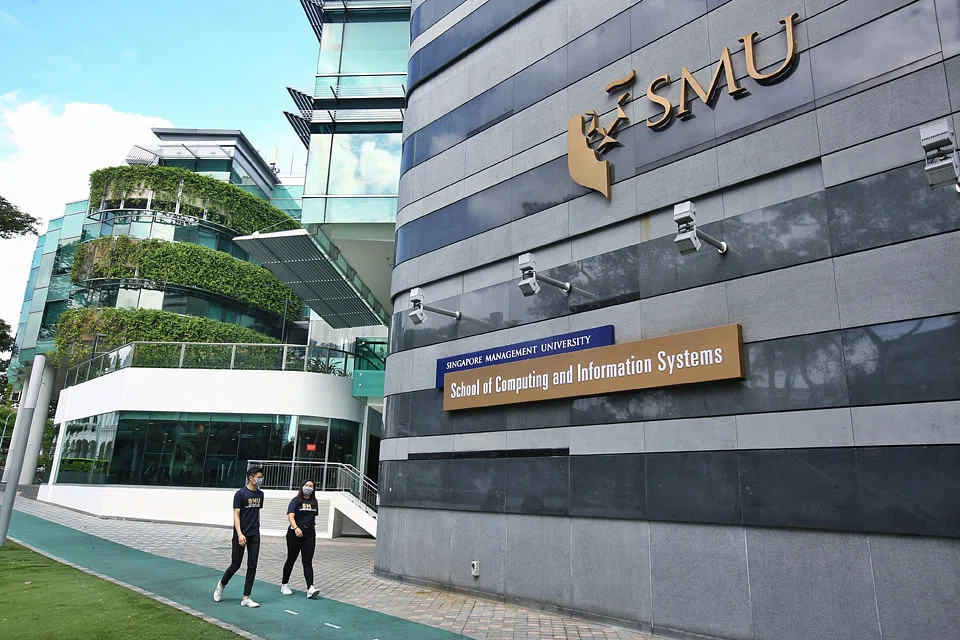
- The writers are from Singapore Management University (SMU). Thomas Menkhoff is professor of Organisational Behaviour and Human Resources (Education), Lee Kong Chian School of Business; Mark Chong is associate professor of Communication Management (Practice), at the School. Benjamin Kok Siew Gan is associate professor of Information Systems (Education), School of Computing and Information Systems.