End of pandemic boom may push some food delivery firms into survival mode

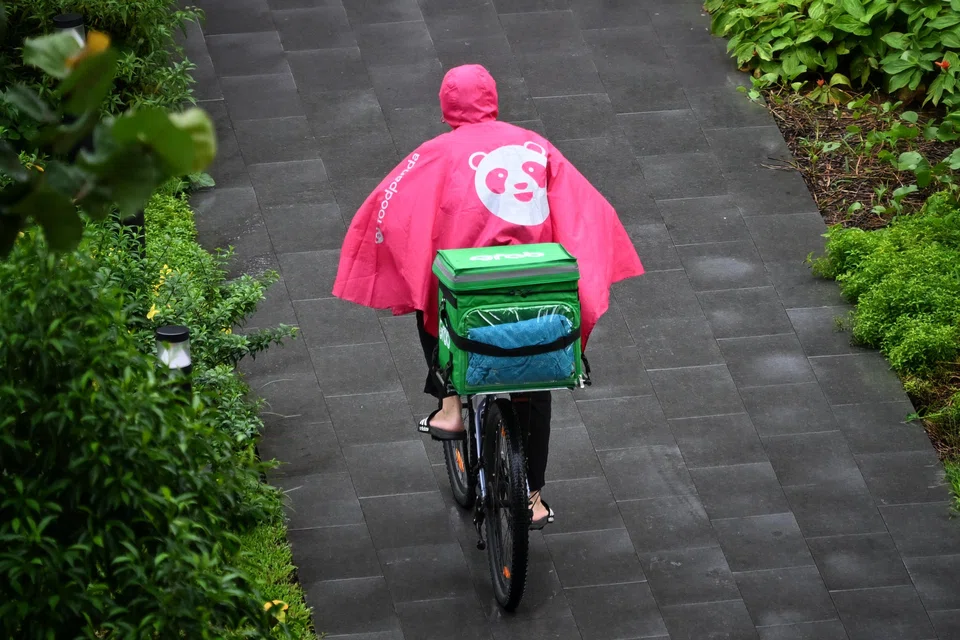
FOOD delivery has come off the heady growth experienced in the early days of the pandemic.
Gross merchandise value (GMV) for South-east Asia jumped 183 per cent between 2019 and 2020, and climbed a further 30 per cent between 2020 and 2021.
Since then, though, growth has been nothing to shout about.
A report by consultancy Momentum Works indicated that GMV for the region has grown from US$15.5 billion in 2021 to US$16.3 billion in 2022 and US$17.1 billion in 2023 – at a constant pace of 5 per cent each year.
Across South-east Asia, the food delivery sector in each market recorded low single-digit growth in GMV in 2023. The exception was Vietnam, where GMV increased almost 30 per cent.
Grab has outpaced the rest of the players, netting about 55 per cent of South-east Asia’s food delivery GMV, by Momentum Work’s estimation.
Coming in at a distant second is foodpanda, which snagged only about 15.8 per cent of the market in the region.
As growth slows, there are signs that some players are taking their foot off the pedal.
Sea has now integrated its ShopeeFood into Shopee, with a focus on defending its e-commerce lead from TikTok Shop.
Delivery Hero, the parent company of foodpanda, appears to be looking to sell the food delivery platform, with Grab identified as the likely buyer.
For the others still active in the game, there is a narrative being spun about supporting both food and beverage (F&B) outlets and riders.
Deliveroo, for instance, has released a self-commissioned report on its impact on Singapore’s economic activity.
The report claimed that Deliveroo in 2022 generated S$100 million in gross value added (GVA), or additional money generated from using the food delivery platform.
This also resulted in 4,900 jobs through additional staff hired at restaurants, the report said.
Remaining relevant
These claims are perhaps a sign that food delivery platforms are trying to remain relevant at a time when the F&B sector has been struggling, with many operators scrapping new outlet openings.
The biggest food delivery platforms in South-east Asia are owned by listed companies, and will have to find ways to grow.
Should the rumoured Grab-foodpanda deal go through, it is still unlikely to result in a profitable food delivery business for Grab. Merging two loss-making businesses does not necessarily create a profitable entity.
There is also renewed talk of a merger between Grab and Indonesia’s GoTo. GoTo recently sold off a majority stake in e-commerce platform Tokopedia to TikTok, which aligns its business units more closely with Grab.
Even if the merger takes place and competition regulators put in various anti-monopoly measures, this is still similar to a potential foodpanda acquisition. Again, combining two loss-making entities is unlikely to make it profitable, though there will be more levers and options to chart a path to profitability in a Grab-GoTo deal.
Pivotal year
This year will prove to be pivotal for food delivery players as macroeconomic headwinds and inflation continue to batter the region.
Perhaps other revenue streams such as advertising could help sustain the food delivery business, but this is not a big revenue driver for companies such as Grab.
In its latest results for the third quarter ended September 2023, the food delivery and ride-hailing platform’s enterprise and new initiatives segment – which includes advertising – brought in only US$28 million in revenue.
This is about 4.6 per cent of the total revenue generated by Grab for the quarter, and is just 9.2 per cent of delivery revenue.
There will be opportunities to improve margins by optimising operations; for instance, through group orders where users in the same office order together, and batch orders where riders deliver multiple orders in one trip. But optimisation is unlikely to be sufficient to turn the loss-making operations profitable.
Still, there are some silver linings: Momentum Works estimated that there is still an untapped population of about 95 per cent in South-east Asia for food delivery. The problem here is they are largely priced out.
Grab has been embarking on capturing the priced-out segment with its Saver product, which has lower delivery fees but longer waiting times.
This is something that Anthony Tan, chief executive officer of Grab, mentioned in his last earnings call, saying that he aimed to provide customers with “more affordable services”. Whether this strategy will pay off will be seen in Grab’s upcoming results on Feb 22.
Should these platforms fail to chart a path to profitability, it seems likely that closure or consolidation is on the cards, with food delivery a luxury rather than a commoditised service.