

Entrepreneurs have to align their priorities
Business, profit and purpose are not mutually exclusive - in fact, together they can achieve a more meaningful long-term impact.
IN THE months since Singapore launched the Green Plan 2030, the country has remained committed to the transition from oil to greener alternatives, despite the ongoing evolution of the Covid-19 pandemic. This has been happening in tandem with rising economic and social tensions. Facing this collection of crises, it can be difficult for entrepreneurs to align their priorities. With tight timelines, budgets and margins, stretching their business any thinner may seem impossible.
Often, startups focus on building their business to a point where they can make a change from their platform. Elsewhere, purpose-driven entrepreneurs rely on grants to develop a market-ready product. But why must founders choose one over the other?
Here, we're looking at purpose as an organisation's focus that aligns with, but does not depend on, financial goals. For-profit businesses are pursuing financial performance. Often, a company is profit- or purpose-driven, focusing on one in the hope the other will follow.
With the global workforce and economy still on shaky ground, there's no clear incentive for returning to the way things were. So why are we not trying a new, integrated approach to business-profit-purpose?
BETTER BUSINESS MODELS
Increasingly, profit and purpose are colliding, presenting an opportunity. Informal networks of entrepreneurs, mentors, stakeholders, and funders, are formalising into 'Entrepreneur Support Organisations', or ESOs. These organisations guide founders to build businesses, often with a profit-purpose focus.
These new networks are perfectly positioned to establish new business models. The circular economy brings profit and purpose together to promote closed-loop production. It reduces the creation of new resources, reuses those that are already made, and recycles anything that can no longer be used. This creates a circle of sustainable resource usage.
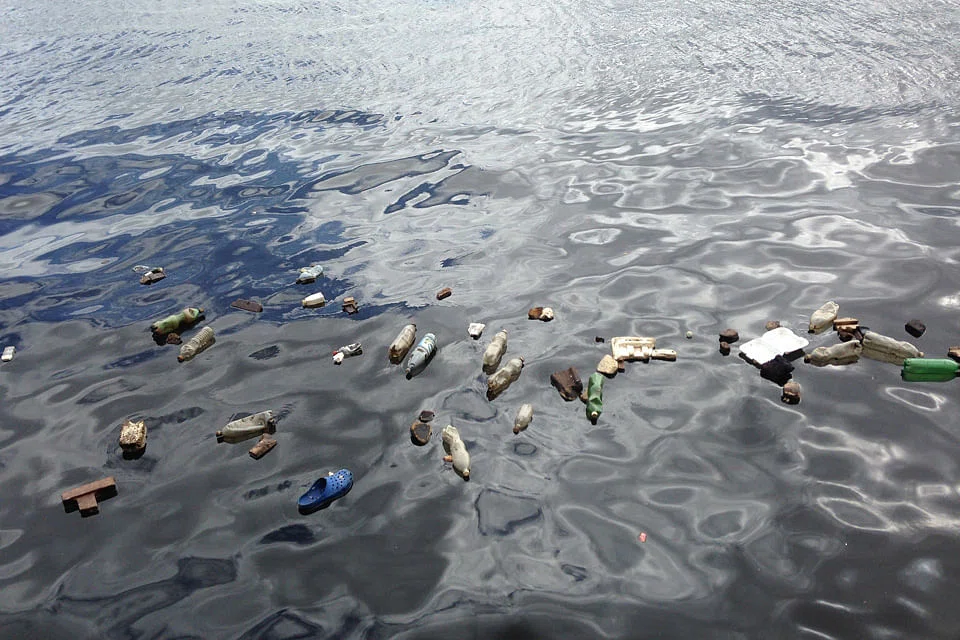
The Asean community has proposed a plan to combat marine plastic waste, showing the political appetite to adopt a circular economy approach exists at a regional level. Locally, ESOs leverage their connections to accelerate startups creating solutions to this issue. Supporting startups at all stages of the circular journey - from manufacturing alternatives to plastics to capturing and recycling waste better - ESOs are providing critical capacity-building support on the ground. The Incubation Network's Plastics X Circularity Curriculum is striving to give other ESOs the ability to do this, by sharing our tools at scale.
The problem in our region is great - but so is the opportunity for change. According to the WWF, around 60 per cent of plastic waste in the ocean flowed from just five Asian countries. This has been worsened by the pandemic, with an uptick in the consumption of single-use plastics. Meanwhile, a report issued by Circulate Capital found more than 80 per cent of the recycling value chain has ceased operations in two of those five countries; there is an urgent need to plug this gap and impact-driven entrepreneurs could be leading the charge.
The impact of recycling this waste could be phenomenal. Preventing all plastic leakage in India and Indonesia by 2030 would eliminate nearly 150 million tons of greenhouse gases - that's the same impact as closing down 40 coal-fired power plants.
MULTIPLIER EFFECT
There is certainly reason to be optimistic, with consumer demand clearly showing a desire to reduce plastic waste. Research has shown that 93 per cent of Singaporeans will do their part to minimise the impact of climate change, with nearly 80 per cent willing to pay more for products that contain environmentally friendly or sustainable materials.
To achieve meaningful results, local people need to develop solutions for their communities. Greenhope, headquartered in Jakarta, has developed compostable and biodegradable cassava-based bioplastics. The base ingredient comes from Indonesia, while their solutions have been distributed across Asia, Africa, Europe and the United States.
For a startup to reach this scale, they need a solid foundation. The multiplier effect is the increased output that a small input can create, which increases the next input in a growing circle of investment.
ESOs play a multiplier effect in incubating startups. As super-connectors in their local ecosystem, they are able to connect emerging startups to the experts and tools they need to grow. That growth creates further opportunities, all within the communities that are investing in the solution.
Research estimates that if a subset of European Union manufacturers transitioned to a circular economy approach, they could save a net of US$340 billion to US$380 billion annually. That's almost 2 per cent of the total EU GDP in 2010.
The business case is strong, but one of the primary barriers to the circular economy is the market (or lack thereof). This is where a structured approach comes in, with regional initiatives like the Asean regional action plan for combating marine debris. If we can unite to reduce the amount of plastic in the ocean, we spread the wealth this opportunity offers with job opportunities throughout the supply chain. The proof is in the proverbial pudding: business, profit, and purpose together form a circle that extracts less virgin materials and creates more opportunities with existing waste to reduce the amount of plastic in the South-east Asian seas.
MAKING INNOVATION INCLUSIVE
The challenge, and opportunity, presented by the marine plastic crisis is far too big to handle alone. It doesn't make sense for different organisations to compete, when we have a shared goal.
One of the major road bumps to circular economy adoption is competition. It's tempting for organisations to establish a circular supply chain, under their control. However, this may lead to a landscape of small circles that cannot interact - and exclude players. By bringing together ESOs and ecosystem players behind the mission for one, inclusive circular economy, we can share power with under-engaged stakeholders, such as workers in the informal waste sector, and extend our impact beyond what was previously possible.
With more supportive infrastructure, innovation opens up to entrepreneurs who cannot access traditional routes into startups. Research shows that companies with diverse teams - of mixed genders, backgrounds, and nationalities - are more innovative, generating higher revenue from those new products and services.
Taking inspiration from previous programmes, The Incubation Network actively encourages diversity in participation, catering for different learning approaches. This enables a variety of entrepreneurs to take part. When the Circular Innovation Jam had to pivot online in the initial Covid-19 lockdowns, diversity increased as people with land-based or household duties could now participate. Some 87 per cent of startups had at least one woman on the team - more than quadruple the global average of female founders. This included a team of women in their 50s, who sat physically distanced while sharing a single computer to take part from rural Bogor, West Java, Indonesia.
Business, profit and purpose are not mutually exclusive - in fact, together they can achieve a more meaningful long-term impact. As a global community, we have most of the ingredients to solve the issues of the marine plastics crisis. We just need to combine them with entrepreneurs ready to bring them to life - and the support organisations who will support their growth.
This combination will snowball, accelerating the adoption of a business-profit-purpose model. By taking an inclusive approach to innovation, we have the opportunity to uplift people from diverse backgrounds while meeting significant global goals of stopping plastic from entering the oceans, while creating economic opportunities from previously untapped waste. We can close the circle - and make it inclusive of all.
- The writer is global head of circularity for SecondMuse and director of The Incubation Network
Decoding Asia newsletter: your guide to navigating Asia in a new global order. Sign up here to get Decoding Asia newsletter. Delivered to your inbox. Free.
Share with us your feedback on BT's products and services
TRENDING NOW

One-third of Singapore-listed firms at risk in severe AI downturn: MAS
‘We don’t want to stay as we are’: CEO Patrick Ng builds a more resilient Huationg

He built the Vingroup empire. Now South-east Asia’s richest man is handing some key roles to his sons
Radiant World table shows six lenders with US$870 million exposure

