

Ethical standards in finance still fall short
 Add BT as a preferred source
DeeperDive is a beta AI feature. Refer to full articles for the facts.
THE 2008 financial crisis so epitomised greed and misselling of investment products that one thought one had seen the worst of the finance industry. But then came the scandal over the manipulation of the benchmark Libor interest rate, over which a number of banks have been fined. Then there are rumblings over the possible manipulation of exchange rates. And as if all that was not enough, there is now the allegation of price fixing in the gold market.
While the principle of "buyer beware" generally applies to most things that are bought and sold, that does not and should not apply to aspects of the financial market which depend on confidence in market benchmarks, and where the setting of benchmarks such as Libor and forex indices is rife with information asymmetry.
The forex market in particular is touted as the most efficient financial market with US$4.7 trillion traded daily. Yet it is also the least regulated. As it takes place outside exchanges, the potential for manipulation, as alleged in a Bloomberg report last June, is huge. The largest banks are market makers themselves, who buy and sell on clients' behalf and also on their own accounts. The conflicts of interest are obvious, and the so-called code of ethics or best practices may not be worth the paper they are printed on. Absent regulation, the alleged practice of front-running, where a dealer favours trades for selected clients or for himself at the expense of others, should perhaps not be surprising. But what was also egregious was that trade information was apparently shared among dealers and counterparties through chatrooms and instant messaging.
Copyright SPH Media. All rights reserved.
TRENDING NOW
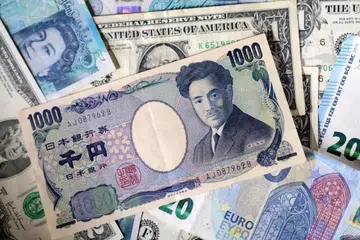
Singaporeans can now buy record amount of yen per Singdollar

Beijing’s calculated silence on the Iran war

China pips the US if Asean is forced to choose, but analysts warn against reading it like a sports result

StarHub hands Ensign InfoSecurity control back to Temasek in S$115 million deal, books S$200 million gain

