

Even if Trump loses, it'll be on a high note
He has the support of angry white fans who see him as their saviour
Washington
I WAS preparing to receive my PhD from an American university a few years ago, when I received a phone call from the dean who asked me to drop by his office.
He had good news and bad news. The good news was that taking into consideration my grades and the quality of my dissertation, he thought that I should be receiving the award for the outstanding student of the class. Great! I said. So what was the bad news?
Well, there was an African-American woman in the class that year who did quite well. Since there weren't many female and black students in the programme, and the dean wanted to encourage more of them to apply, he decided to give the award to her. And being a team player, I didn't challenge the decision, hoping that my gesture would pay off in the future. (It didn't).
This was my first exposure to the policy of affirmative action that is based on the notion that members of a disadvantaged group who had historically suffered from discrimination in America should enjoy preferential treatment when they applied for school admissions, for jobs, or for financial assistance.
The policy evolved in the 1960s as part of an effort to compensate African Americans for the oppression that they had experienced in the forms of slavery and racial segregation. The assumption was that providing them with certain headway in education and the job market would help blacks advance socially and economically and would bring most of them to the level of the members of the white majority.
But since the 1960s, affirmative action policies have been expanded beyond African Americans to include other designated "disadvantaged" groups, including women, Hispanics, Asian Americans, Native Americans, gays, bisexuals and most recently, transgender people, who supposedly didn't enjoy the societal "privileges" that have benefited white people, or more specifically white men.
Tell that to the 55-year-old unemployed white mineworker in West Virginia who lost his job a few years ago and who - along with his family - continue to survive on meagre disability insurance payments. Or the unemployed white steel worker in Ohio whose kid has become a drug addict and who has himself considered committing suicide.
The mineworker knows that unlike the programmes that are available to assist, say, Hispanic immigrants, white American men don't have access to special funds. He is aware that the son of a wealthy African American man would have preference over his poor white son in admission to college. And why can everyone make fun of people like him and mock them as "white trash", while joking about blacks and Latino could get you into trouble. White privilege, you said?
Meet the proverbial "unemployed white blue-collar worker" of the 2016 presidential campaign, AKA the Trump Voter.
The proponents of the politically correct culture - the educated whites in academia and the media or the politicians who speak on behalf of African Americans and Hispanics - perceive the Trump Voter to be the embodiment of white privilege, racism, and sexism.
But the way these Americans see themselves is as victims of the current political narrative. Abandoned by the educated and the wealthy, the elites, who are sending them to fight in never-ending wars and are pursuing trade policies that deprive them of their jobs, while being pushed down the social-economic ladder by the beneficiaries of affirmative action and open immigration policies.
Not only are they not enjoying any white privilege, they are losing the little that remains of their eroding economic-social status. And the only thing they have in common in addition to being losers? They are all white, members of a demographic group that is turning into a shrinking majority, and unlike the blacks, Hispanics, gays, etc, they have had no politicians or lobbies to come to their assistance and protect their identity. Until Donald Trump showed up, that is.
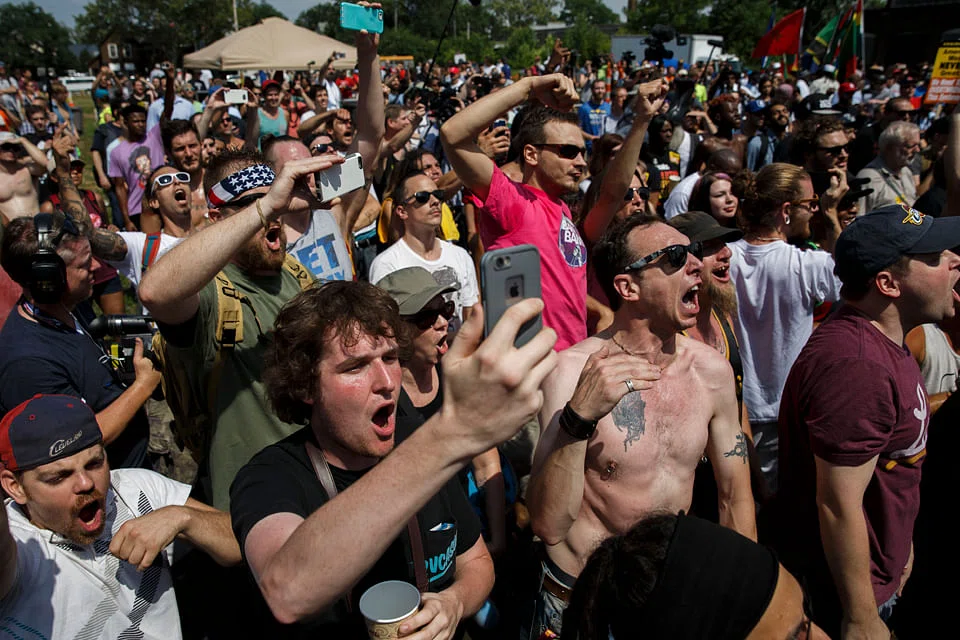
Indeed, watch one of those Trump rallies, where thousands of his enthusiastic supporters applaud the Donald, their Man, and blast Hillary (Clinton) and her supporters. With few exceptions, most of the crowd are middle-aged white men, who bring along their wives (who may be working part-time as a waitress) and kids (who aren't planning for careers in the Silicon Valley).
They don't read The New York Times, (but watch Fox News), or drink cappuccino or sip red wine (American coffee and beer for them), or frequent artsy movie theatres (they go to church and watch football games on television).
And they love the Republican presidential nominee. He may be a billionaire from New York City, where leading members of the despised elites reside. But he talks like them and makes so much sense: No wonky policy stuff about this or that government programme and no politically correct [*#BLEEP!]talk. He says what he means and talks right to the point as he targets for criticism the villains in Washington and Wall Street; those illegal Mexican immigrants; the Chinese who steal their jobs; and the Muslims who are threatening to kill them. And unlike all the other politicians, he plans to do something about it!
And although Mr Trump never utters any racist comment, his mostly white audience can figure out what he means when he defends the police officers who have been accused of targeting black men while criticising the black protesters demonstrating against police brutality, and pledges to impose law and order in the cities. He blames black crime for the recent incidents of violence in places such as Milwaukee, Wisconsin, where protests took place recently after the fatal shooting of an armed black man by police.
In response, the Republican presidential nominee decided to hold an event in Milwaukee last Monday in which he addressed the issue of law and order. He noted that African Americans were the main victims of crime in the inner cities and called on them to support his campaign.
But there was one problem: There were very few African Americans in the audience at his address. In fact, a recent Fox News polls indicated that one per cent (!) of black voters support Mr Trump (compared with 85 per cent who support Mrs Clinton).
Which leads to one of the intriguing questions that journalists and political scientists have been posing during this political year: Has racism or economic insecurity been the force driving Mr Trump's electoral surge? Are the Trumpists attracted to the Donald because his persona and ideas play into their sense of identity as whites, Trumpism being a form of White Nationalism, or are they counting on him to pursue policies that would improve their economic conditions, Trumpism being a right-wing version of economic populism.
The answer: It's probably both. The decline of the manufacturing industry - as a result of the combined pressure of globalisation, automation, and immigration - have shattered the economic security of white blue-collar workers.
And that economic security has fuelled a political backlash that reflects a sense of a crushed cultural identity: Us, white has-beens versus Them, the coalition of educated and well-to-do whites, who are rewarded by globalisation, and the members of disadvantaged groups, who benefit from affirmative action policies.
There is no doubt that this political backlash explains to a large extent the electoral success of Trumpism as well as the electoral constraints in which Mr Trump is operating. The Donald and his politically incorrect and nationalist message and persona - that smack of vulgarity, bigotry, sexism, and occasionally even of racism, combined with the social-economic populist battle cry - helped Mr Trump secure the Republican presidential nomination.
Allowing Mr Trump to be Mr Trump made it possible to transform the angry members of the white lower-middle class and underclass into a powerful electoral force. But it also alienated not only African American and Hispanic voters, but also antagonised educated professional white men and women who reside in the big cities and the suburbs, many of whom seems to be moving in Mrs Clinton's direction.
This is why since the Republicans selected Mr Trump as their presidential nominee, his then campaign chairman Paul Manafort had been pushing the Donald to moderate his presentation and pitch for the general election: Less vulgar and bigoted language and more emphasis on policy ideas; less shooting from the hip and more reading the teleprompter; be less populist and become more presidential.
In short, in order to win in the general election, Mr Trump needed to move beyond his electoral base of less educated and economically stressed white voters and try to win the hearts and mind of educated white men, suburban women, minorities, and Millennials.
But that is probably not going to happen after the Trump campaign announced last week that Mr Manafort has been sacked and that Stephen Bannon - a former banker who runs the influential conservative outlet Breitbart News, and is known for his anti-establishment politics - has been named the Trump campaign's chief executive.
The move indicated that the real estate tycoon has decided to spend the last three months of the presidential campaign as his own man and doesn't plan to tamper his style. Mr Trump wants to continue to be Mr Trump, pursuing the kind of combative populism that helped unleash Trumpism and mobilise the support of his angry white fans who see him as their saviour. He might lose the race, but on a high note and with them by his side.
TRENDING NOW
Despite the de-dollarisation debate, demand for dollar liquidity in Asia is growing
URA to review guidelines on floor space to give developers more design flexibility: Chee Hong Tat

He built the Vingroup empire. Now South-east Asia’s richest man is handing some key roles to his sons
Can a first-time homebuyer couple earning S$18,000 a month afford a new EC unit?

