

Evergrande's teeter may clear path for Singapore players in China
Singapore developers should be positioned for opportunistic bargains, amid a change in landscape in China that is turning conservative on debt

FOUNDED in 1996 and listed in Hong Kong in 2009, Guangdong-based Evergrande Group rode China's epic property boom and made its founder Xu Jiayin one of China's richest men.
Evergrande has around 163,000 employees and its real estate footprint spans more than 280 cities in China.
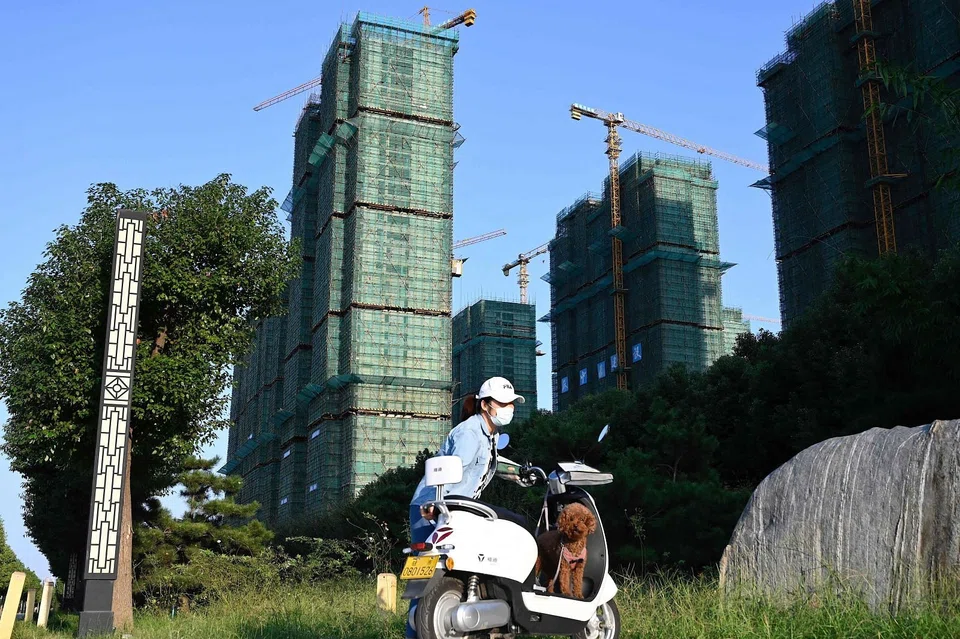
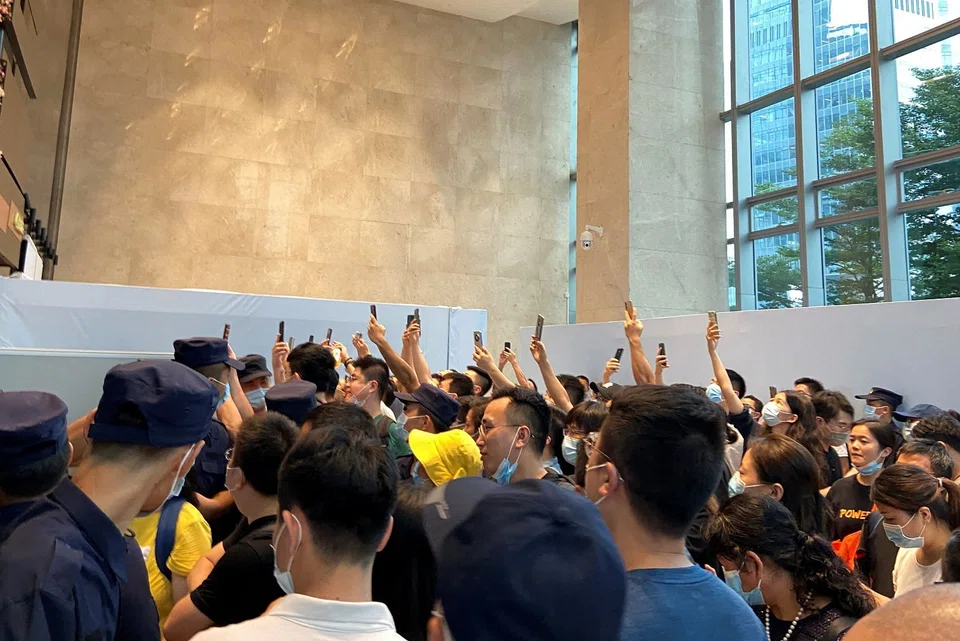
But Evergrande is now faced with over US$300 billion in liabilities, hundreds of unfinished residential buildings, angry suppliers who have shut down construction sites, and furious homebuyers who have made down payments for stalled projects.
In its results announcement on August 31, Evergrande said "some payables related to property development were overdue, leading to the suspension of work on some projects".
Earlier this week, the group said it has engaged advisers to examine its financial options and warned of default risks.
Large losses loom for banks, bondholders, suppliers and home buyers should Evergrande collapse.
The fall-out
Will Chinese regulators make good on their pledge to clean up the country's corporate sector by letting debt-laden groups like Evergrande collapse?
A collapse of Evergrande will affect the property market, the financial system and the overall economy, as well as present risks of social unrest.
Panic from investors and home buyers could spill over into the property market and hit prices, damaging household wealth and confidence. There could be a credit crunch for the entire economy as financial institutions become more risk averse.
Some bond analysts expect to see a government-supervised deal that ensures Evergrande delivers homes and pays suppliers, with debt holders getting a fraction of their money back.
Questions abound over whether Evergrande's debt woes can be managed in an orderly manner. Some Singapore property players could be watching all this unfold nervously.
Singapore property groups, like their Hong Kong peers, have rode China's property boom and built up large China businesses. Amid rapid urbanisation and growth in household income, profits have been made from building new homes, malls, offices and business parks.
CapitaLand achieved S$1.11 billion of earnings before interest and tax (EBIT) from China (including Hong Kong) in the first six months of 2021, which is 52 per cent of the group's total EBIT.
Reporting on its residential trading performance in H1 2021, the group said it sold 2,625 units in China with a total sales value of 8.0 billion yuan (S$1.67 billion).
Conglomerate Keppel Corporation is active in residential and commercial development as well as building townships in China. For the first half of 2021, the group sold 1,367 units from projects in Shanghai, Wuxi and Nanjing with a total sales value of 6.6 billion yuan.
GuocoLand is involved in large projects such as Guoco Changfeng City, a mixed-use office and retail development in Shanghai, and its inaugural project in Chongqing - Chongqing GuocoLand 18T, a mixed-use residential and commercial development.
Ho Bee Land has been active in the China market for around two decades and has ongoing projects in China.
Opportunities
In the near term, Evergrande's debt problems could adversely impact China's property market as lenders tighten extending credit to the property sector.
That said, Evergrande's debt woes and its aftermath may present opportunities to Singapore and Hong Kong property groups.
Armed with advantages in capital, track record and skill sets, property players from outside China enjoyed an edge in the later part of the last century and the early part of this century post China's opening up of its economies in the late 1970s.
Malaysian tycoon Robert Kuok's Kuok Group was involved in developing the landmark China World Trade Centre in Beijing's Chaoyang district, where construction started in 1985.
Today, China World Trade Centre has around 1.1 million square metres of floor area with components such as hotels, malls, offices, apartments, convention rooms and an exhibition hall.
Hong Kong tycoon Vincent Lo's Shui On Land is associated with the success of Shanghai Xintiandi, a redevelopment project, consisting of residential, office, retail, entertainment and cultural properties in the heart of the city.
Debt binge
In more recent times, Singapore and Hong Kong property groups, which tend to be conservatively geared, have likely found the going in China tougher.
Chinese groups such as Evergrande, helped by binging on debt, have grown enormously in scale.
With scale, these groups were competitive in attracting talent, and building relationships with local officials, suppliers, contractors and other service providers. Some Chinese parties became very aggressive in bidding for land, making it challenging for Singapore and Hong Kong groups to secure development sites.
Debt is both a friend and an enemy of a property developer. Taking on more debt allows a group to undertake more projects and potentially make larger profits. Monies can then be recycled into new projects thereby creating a virtuous cycle of growth.
However, Evergrande is not the first and nor will it be the last property developer for whom having trouble with servicing debt may be fatal.
City Developments Limited (CDL) recently faced major problems from its investment in a debt-laden China property group.
To scale up its presence in China, CDL took a stake in Sincere Property Group, which is based in Chongqing and headquartered in Shanghai, in 2019, and then announced its 51.01 per cent acquisition in Sincere in April 2020.
However, Sincere's liquidity challenges mounted following China's implementation of the "three red lines" policy to cap borrowings for property developers.
CDL announced in February that it had booked a S$1.78 billion impairment on its investment in Sincere for 2020, effectively writing down 93 per cent of its investment in Sincere.
In September, CDL announced its exit from Sincere by selling its effective interest in Sincere for US$1.
At the same time, CDL said it is raising its stake in a company that owns 65 per cent of Shenzhen Longgang Tusincere Tech Park (Shenzhen Tech Park) from 84.6 per cent to 100 per cent.
Long haul
It appears that while CDL has paid a hefty price for a mis-adventure in Sincere, the group is not shying away from the China market.
Singapore property groups look keen to stay the course and grow in China over the long haul.
The handling of Evergrande's debt woes and the new landscape that arises in China's property sector thereafter will be keenly watched.
Chinese developers may be much more lowly geared from here on.
Banks may become more cautious in lending to developers and owners of developers may be more careful in assuming debt as they focus on long-term sustainability of their businesses.
Opportunistic bargains could present themselves to well-capitalised groups including those from Singapore if debt-laden Chinese groups are in a hurry to sell assets to pare gearing.
Also, Singapore groups may see a landscape where Chinese parties are more circumspect in bidding for land and where local officials place greater emphasis on working with groups that have strong credit standing.
After confronting some short-term weakness in the Chinese property market, overseas groups, including Singapore players, may face somewhat more conservative Chinese competitors.
If developers here are well-positioned, that could make navigating a Chinese property landscape beset by digitalisation, a fight for common prosperity and ageing demographics, slightly easier ahead.
READ MORE:
TRENDING NOW
ComfortDelGro appoints two new independent directors

Once staunchly pro-China, Malaysian Chinese businesses are now distancing themselves from Beijing

NoonTalk needs continued financial support from CEO Dasmond Koh, auditors warn

DP Architects sets the benchmark for sustainability disclosure and design

