

Explosive year for energy sector
Mayhem will erupt in commodities and financial markets, warns economic analyst
Tokyo
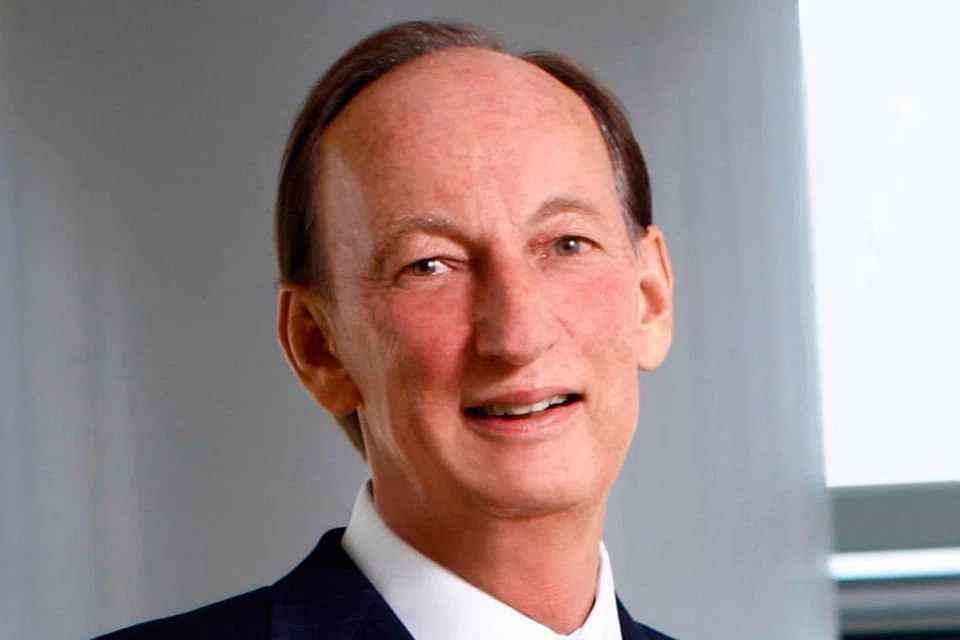
THE energy sector, says prominent former Goldman Sachs investment banker Kenneth Courtis, is "going to be a blood bath this year", and that will by no means be the limit of the mayhem that can be expected in energy and other commodities as well as in financial markets during 2016.
It all has to do, Mr Courtis says, with the massive distortions in just about all markets that have been brought about by central bank interventions in recent years and which are now erupting into producer distress, investor fears and the possibility of a global crisis.
These distortions are also impacting world trade and pricing structures to an extent not yet fully appreciated even in financial markets, he argued in an interview with The Business Times. This, he said, more or less guarantees continuing turbulence in markets generally.
Since ending his term as a vice-president of Goldman Sachs Asia, the veteran Canadian economist, analyst and business strategist has (among other things) assumed the chairmanship of Starford Holdings of Australia, which includes commodities among its investments.
The prospective listing on the Saudi Arabian stock exchange of shares in state-owned oil giant Saudi Aramco, the world's biggest oil company, via a massive IPO is but one symptom of the distress likely to come to light in the energy sector this year, says Mr Courtis.
For a company such as Saudi Aramco, with a potential market capitalisation 10 times that of Exxon, to be forced to go to market in order to raise funds for a "fabulously wealthy" Middle Eastern oil state suggests that something must be seriously amiss - and it is, he suggests.
The problem, says the former Deutsche Bank chief Asia economist and strategist, has its roots in the same cause that is generating turbulence in equity, bond and currency markets - quantitative monetary easing (QE) by the US Federal Reserve, European Central Bank, Bank of Japan and others .
"In debt markets we don't have (real) markets anymore, we only have (central market) intervention. So the normal signalling that would (indicate) where bond prices are at just doesn't work any more. In Japan close to 100 per cent of all new government debt is being purchased by the Bank of Japan and the ECB is now buying up to 60 per cent of some bond issues.
"The purpose of all that is to push people into riskier assets and that also distorts the price of riskier assets. On top of that you have direct intervention by central banks in equity markets. A good example is Japan where the BOJ is buying 60 per cent of all exchange-traded funds (ETFs).
"If debt markets and equity markets cannot adjust properly, a lot of adjustment has to take place in currency markets.There is intervention in these markets too but given the US$4 trillion daily turnover in currencies they are too big to manipulate in the way that bond and equity markets are.
"This means that distortions from bond and equity markets are also part of the volatility which in turn distorts real trade flows and real investment flows." This, Mr Courtis suggests, is the missing link in many analyses of why commodity and financial markets are in such disarray.
China is often portrayed as the "villain" behind the commodity price slump as the country's rate of economic growth slows. But Mr Courtis sees things in a different light. He cites the case of Australia where the local currency has fallen by 40 per cent against the dollar over the past three years.
Australian commodity producers "have probably chopped their costs by 75 per cent over the last three years. Had we had adjustments in other markets and not in the currency market then you would have had a lot of the coal mines in Australia closing.
"That hasn't happened and Australia is not the most egregious example; Russia has gone from 28 roubles to the dollar to 74. If you look at South Africa, the currency has never been weaker. If you look at Canada, the currency there is also down by 40 per cent. Brazil too.You can imagine what that does to trade flows, for example of soy beans, sugar, coffee, iron ore, corn - all of which come out of Brazil, big time.They are now at unbeatable prices and Brazilians are increasing production in all those areas where there is already a huge surplus of supply."
In Central Asia too, where currencies are also plunging in value, the story is the same, especially in Kazakhstan and Azerbaijan, both major energy producers. They "are making money on oil and gas today where they could not have been making money had the currency remained stable".
All this is "because other adjustment channels are closed, which is leading to over-adjustment in currency markets. That in turn is leading to a huge messing up or distortion of trade flows,which then leads to all kinds of problems in the global economy".
Returning to the energy sector, Mr Courtis says the problem is that so many countries are so dependent upon energy exports. "They developed models during the energy bubble or the commodity super cycle which were based upon high volume exports, which in turn financed consumption."
But as output soared and the US moved from being highly dependent upon energy imports to approaching the point where it can become a net exporter, producers "resorted to increasing volume because they are low cost producers and want to maintain their position in the market".
In order to do that "you have a number of countries going into aggressive devaluations so they can keep market share", Mr Courtis points out, citing Russia, Azerbaijan, Kazakhstan and Colombia as examples.
Meanwhile, there are "trillions of dollars of loans out there to the energy sector that were granted on the expectation of much higher price levels". Oil will break below US$30 a barrel this year, Mr Courtis predicts, and "when it does a lot of higher cost energy operations with high debt loads are just going to have to declare bankruptcy".
Much of the lending to the energy sector comes from the so-called shadow banking sector institutions such as hedge funds and private equity providers. "Already a number of companies like Carlisle, KKR and some big Japanese trading companies also have made huge write offs and much more is coming," he says.
Meanwhile, "Middle East sovereign wealth funds, because of the pressure on their economies, are taking money out of markets and repatriating it and the money is going into government budgets". Hence, he adds, "the Saudis now are talking about listing Saudi Aramco and other energy assets on stock markets".
TRENDING NOW

Nvidia reinstates Jensen Huang as CEO; Trump says move poses no national security risk

Beyond the greenback, Vietnam’s big borrowers turn to Asian-currency bonds

Indonesia’s coal tycoon Low Tuck Kwong replaced as Bayan Resources president-director

Six workers file employment claims against Crystal Jade Food Manufacturing

