

Fed rate hikes spell trouble for investors
Rising interest rates could slow economic growth, cast uncertainty over earnings forecasts and erode excessive valuations

THERE is no easy way to say this. Everything is going to fall, and there is really nowhere to hide.
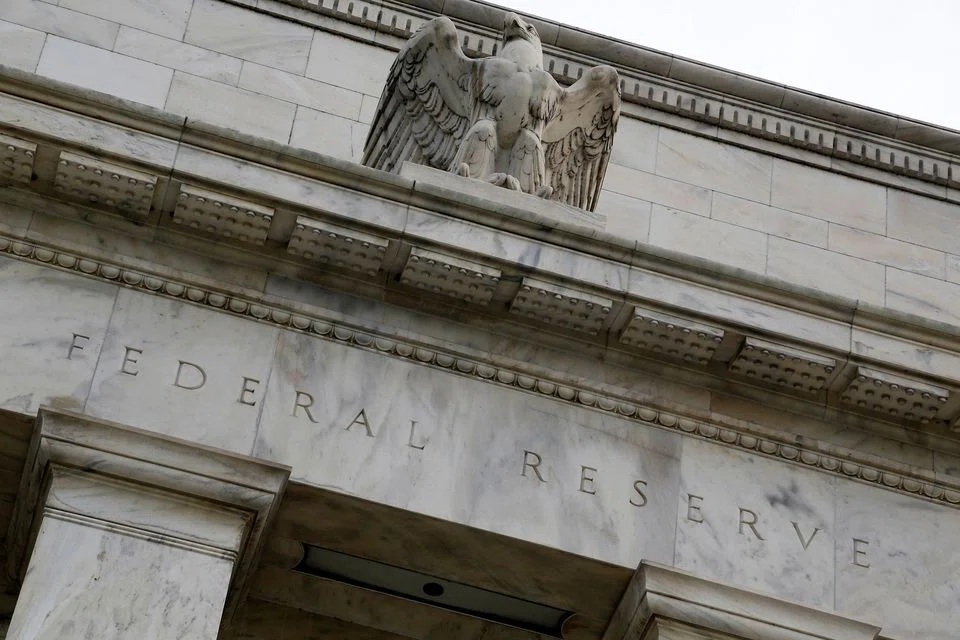
The US Federal Reserve’s quantitative tightening and interest rate hikes are weighing down global asset prices across the risk spectrum, and may well trigger pockets of instability in some corners of the market. Meanwhile, the value of cash is being eroded by inflation.
Big sell-offs are generally good buying opportunities for long-term investors, but getting inflation under control could mean a lengthy period of tighter monetary policy and a recession – which would cloud the outlook for corporate earnings for some time.
Investors should also be wary of excessive valuations garnered by some companies during the pandemic, when governments unleashed aggressive fiscal and monetary stimulus. As interest rates rise, forecasts of strong earnings far in the future are likely to be much less potent drivers of stock prices.
Over the last few months, it has become increasingly clear that accelerating inflation is not being caused by transient supply chain bottlenecks alone.
US unemployment came in at 3.6 per cent for the third month in a row in May, with some 6 million people unemployed. These economic indicators are now very close to where they were before the pandemic suddenly halted economic activity.
Back in February 2020, US unemployment was running at 3.5 per cent with some 5.7 million people unemployed.
This data suggests that strong demand has been a significant factor behind accelerating US inflation – and that tighter monetary policy is now required.
In fact, after consumer price data on June 10 showed inflation in May had accelerated to 8.6 per cent – up from 8.3 per cent in April and 7 per cent in December – the market began to anticipate that the Fed would hike the federal funds rate by more than the 50 basis points it had previously indicated.
On June 15, the Fed raised the federal funds rate by 75 basis points to 1.5-1.75 per cent – its biggest hike in nearly 3 decades.
The Fed is now also reversing its quantitative easing policy. Since Jun 1, it has been allowing principal payments of its securities holdings to roll off its balance sheet at the rate of US$47.5 billion per month. The pace of this roll-off will double in September to US$95 billion per month.
The impact of these moves by the Fed is now being felt by investors across the globe. Since the beginning of June, the S&P 500 has fallen 11.1 per cent while the Nasdaq 100 has declined 10.9 per cent.
The S&P 500 and Nasdaq 100 are now 22.9 per cent and 31 per cent lower, respectively, than they were at the beginning of the year – more than the 20 per cent threshold that marks a bear market.
Closer to home, the Straits Times Index (STI) held up better. It has slipped almost 4.2 per cent since the beginning of June. Year to date, the local benchmark index is down 0.8 per cent.
Protracted market pressure
Some investors may feel the urge to jump into the market now. And, there may indeed be some bargains to be had. My own view, however, is that markets are likely to remain under pressure for some time.
Bear markets tend to end when central banks begin loosening monetary policy. For now, the Fed seems to be a long way from that inflection point.
Median projections by the Federal Open Market Committee participants put the midpoint of the federal funds rate at 3.375 per cent by the end of 2022 – suggesting the federal funds rate could more than double over the next 6 months.
As interest rates rise, economic growth projections and corporate earnings forecasts are likely to be revised down – casting a cloud of uncertainty over stock valuations.
It is also worth putting the recent stock market sell-off in perspective. Even after its steep year-to-date decline, the S&P 500 is still more than 13 per cent higher than it was at the beginning of 2020.
This is partly because of strong recent gains in energy stocks. But it also reflects the trajectory of the big technology-oriented stocks that were widely viewed to have been impervious to – or even beneficiaries of – the pandemic.
For instance, Apple is down 25.9 per cent since the beginning of the year but it is 81.6 per cent higher than it was at the beginning of 2020.
Similarly, Alphabet and Microsoft have declined 26 per cent and 26.4 per cent this year. But they are still 58.2 per cent and 55.8 per cent higher than they were at the beginning of 2020.
Facebook and Netflix have taken more severe beatings, falling 51.3 per cent and 70.9 per cent this year, respectively. Facebook is now 21.3 per cent lower than it was at the start of 2020 while Netflix is down 46.7 per cent.
It remains to be seen whether the declines suffered so far by these heavyweight technology stocks – and, consequently, the S&P 500 – have fully offset their overvaluation during the pandemic and discounted the possibility of a recession.
Banks, Reits struggling
By contrast, the STI is 4.1 per cent below where it was at the beginning of 2020 despite holding up better than the S&P 500 this year.
Yet, the local market benchmark could be vulnerable in the months ahead.
In the first place, 7 of its 30 components are real estate investment trusts (Reits), which are susceptible to rising interest rates.
Moreover, some industrial property Reits – including Frasers Logistics & Commercial Trust, Mapletree Logistics Trust, Mapletree Industrial Trust and Keppel DC Reit – had garnered premium valuations during the pandemic that are now eroding.
On a year-to-date basis, only 1 out of the 7 Reits that are components of the STI has charted a gain – namely CapitaLand Integrated Commercial Trust (up 5.9 per cent).
Of the 6 that have fallen since the beginning of the year, 4 of them have recorded double-digit percentage declines – namely, Frasers L&C Trust (down 12.5 per cent), Keppel DC Reit (down 21.3 per cent), Mapletree Commercial Trust (down 11.5 per cent) and Mapletree Logistics Trust (down 13.2 per cent).
Then, there are the 3 local banks – which account for nearly half the STI.
This column noted a fortnight ago that DBS, OCBC and UOB are widely seen to be beneficiaries of rising interest rates and were leading the STI higher early this year. But amid growing concern that curbing inflation might mean slower economic growth, the banks have rolled back.
DBS – which trades at the highest premium to book value by far – has fallen 8.5 per cent so this year. OCBC and UOB are almost flat year to date.
Until the Fed’s anti-inflation campaign runs its course, investors should tread carefully.
Note: Mark to Market will take a break next week while the writer clears some leave.
TRENDING NOW

8 public officers referred to police over property buys near unannounced MRT stations: Chan Chun Sing
DBS tops trades in smaller board lots on debut of revised SGX framework

Grab CEO’s wife Chloe Tong on life with Anthony Tan and finding her purpose

Retrenched PMETs who return on lower pay see median 25% wage cut

