

The Fed should get ready for higher unemployment
ANNOUNCING another interest-rate increase on Wednesday (Jul 27), United States Federal Reserve chair Jerome Powell said that the path toward a soft landing — with lower inflation and no significant rise in unemployment — has narrowed. The question is whether there is any such path.
On Thursday, the first estimate of US second-quarter gross domestic product (GDP) showed a fall of 0.9 per cent at an annual rate. This came after a drop of 1.6 per cent in the first quarter. Two consecutive quarters of lower GDP are generally termed a “technical recession” — although it’s too soon to say whether this one is the real thing. The data get revised and, more important, the labour market still looks exceptionally tight. Under current circumstances, Powell would be delighted with a pause in output growth that causes no rise in unemployment yet still presses down on inflation. That would be deemed a soft landing.
But would this kind of slowdown suffice to get inflation back under control? Monetary policy can curb growth in demand — somewhat uncertainly, and with a lag. How that demand resolves into changes in output, employment and prices is beyond the Fed’s reach. The central bank’s choices boil down to this: Does it try to curb demand gradually (which risks letting high inflation get entrenched) or abruptly (which risks a severe recession and much higher unemployment)? It has no finer control than that.
Despite two quarters of declining output and what many commentators see as a hawkish turn in monetary policy, the Fed has so far chosen gradualism. The Fed funds rate now stands at 2.25 per cent to 2.5 per cent. With consumer-price inflation at 9.1 per cent in the year to June and core PCE (personal consumption expenditures) inflation at 4.4 per cent in the second quarter, the policy rate is still substantially negative in real terms. By that standard, at least, monetary policy is still loose — just not as loose as through the spring of this year. Powell said he and his colleagues expect further rate increases to be “appropriate,” but he was notably much more vague than before.
That vagueness means the Fed has taken a big step from “forward guidance” on interest rates to “let’s see what happens”. Amid much uncertainty about the true state of the economy, this is wise. Even so, it would be helpful if the Fed said more about its intentions not for the path of interest rates but for the path of demand. In particular, it should be more forthcoming about whether bad news on unemployment combined with bad news on inflation would push it toward more gradualism or less.
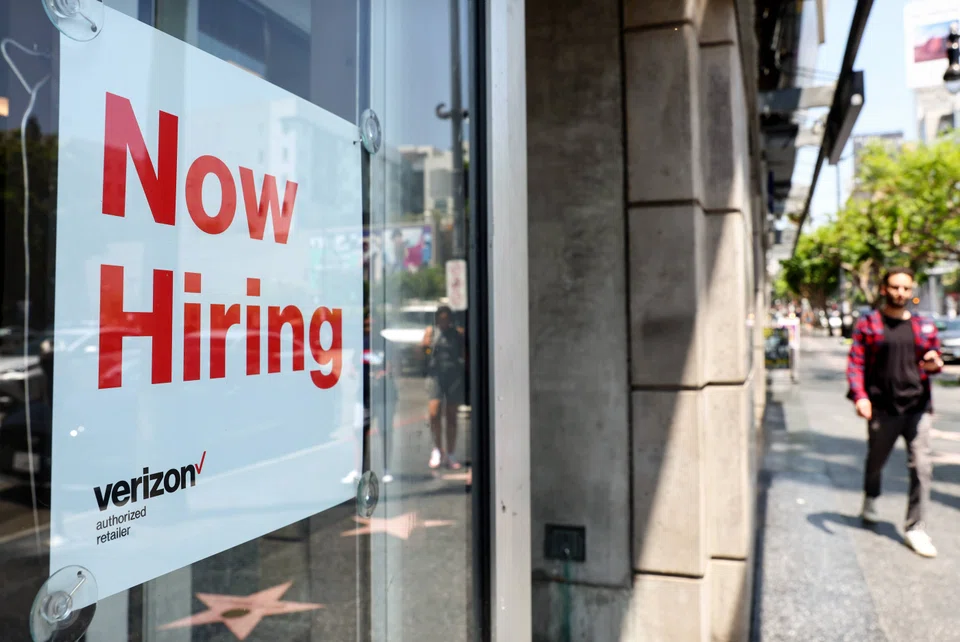
Powell said he hoped that a slackening of demand might reduce pressure in the labour market without raising unemployment. This isn’t fanciful, because the level of vacant positions — and, in particular, the ratio of vacancies to the number of people looking for work — is currently off the charts. It’s plausible to think that this is pushing up wages and risks entrenching high inflation. You’d think that lower demand could trim the number of vacancies and reduce that pressure without causing more people to lose their jobs.
The problem is that it never seems to work that way. A new paper by Olivier Blanchard, Alex Domash and Larry Summers for the Peterson Institute for International Economics shows that, historically, whenever vacancies come down substantially, unemployment goes up. Digging into the reasons, the study emphasises the importance of the process that matches unemployed workers to vacant positions. Improving the efficiency of this matching process can indeed reduce the number of vacancies at any given level of unemployment, but there’s no sign in the data that this is happening.
In fact, it’s worse than that. During the pandemic, so-called matching efficiency fell sharply (as you might expect, with workers moving more than usual between kinds of work and from place to place). It remains much lower than in 2019. The implication is that a higher rate of unemployment will be needed to hold inflation constant. Before the pandemic, the study says, this so-called natural rate of unemployment was probably about 3.6 per cent — equal to the current rate. Now it’s 4.9 per cent, conservatively estimated. If this is correct, the Fed can’t expect unemployment to stay put as it brings down inflation.
The new GDP figures show that demand — measured as current-dollar output — grew 7.8 per cent at an annual rate in the second quarter, following a rise of 6.6 per cent in the first quarter. Those numbers are still too high, and moving in the wrong direction. This justifies the latest increase in interest rates. Depending on what happens next, more might be needed. In any case, as it continues to restrain demand, the Fed should expect — and shouldn’t be deflected by — higher unemployment. BLOOMBERG
TRENDING NOW

ComfortDelGro appoints two new independent directors

Once staunchly pro-China, Malaysian Chinese businesses are now distancing themselves from Beijing

NoonTalk needs continued financial support from CEO Dasmond Koh, auditors warn

DP Architects sets the benchmark for sustainability disclosure and design

