Fed won’t let up until investors get a lot more nervous
Monetary policy decisions translate to slower economic growth through their effect on financial market conditions

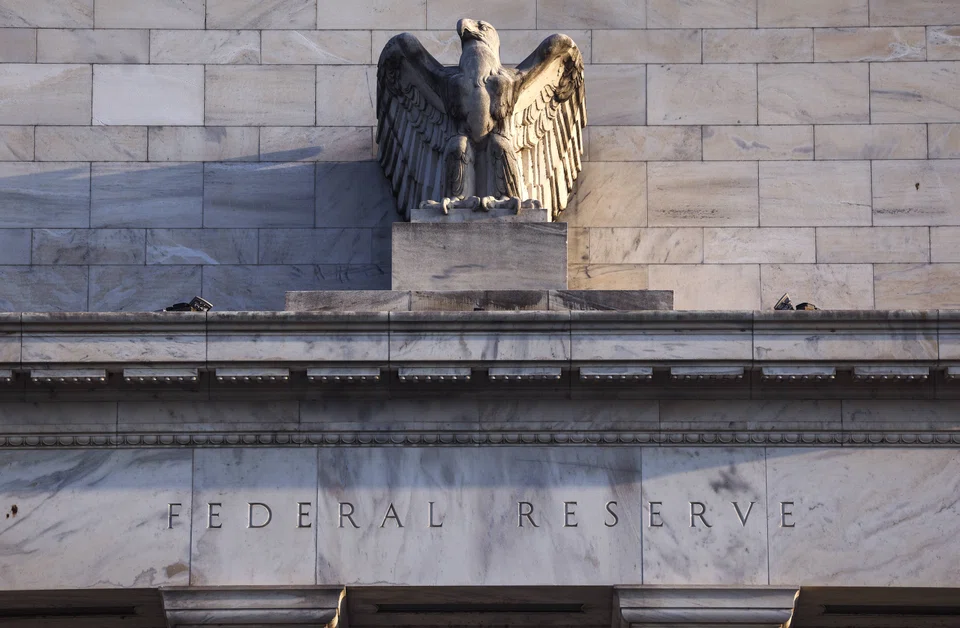
WHEN the US Federal Open Market Committee (FOMC) statement was released on Wednesday (Sep 21), there was a brief spike in the benchmark S&P 500 index.
A week earlier, unexpectedly strong US inflation data had some market watchers fearing the US federal funds rate might be raised by 100 basis points. Instead, the FOMC opted for a 75-basis-point hike – for the third time in a row.
The respite didn’t last long, though. The S&P 500 ended Sep 21 in the red, and tumbled even lower over the rest of the week.
The selling seemed to be a reaction to the Fed’s now overtly hawkish tone and dour economic projections as it works to get US inflation down to its long-term goal of 2 per cent.
Fed chair Jerome Powell, during a press conference on Sep 21, left no doubt that the federal funds rate – currently at 3-3.25 per cent – is likely to be pushed significantly higher in the months ahead.
“Restoring price stability will likely require maintaining a restrictive policy stance for some time. The historical record cautions strongly against prematurely loosening policy,” Powell said in his opening remarks.
Responding to a question during the press conference, he added: “We’ve just moved, I think, probably into the very lowest level of what might be restrictive.”
Consumer price index (CPI) data released on Sep 13 showed headline US inflation in August was running at 8.3 per cent – down from 8.5 per cent in July and 9.1 per cent in June.
But core inflation appeared to be accelerating. Excluding the food and energy segments, the CPI in August charted a 12-month increase of 6.3 per cent – up from 5.9 per cent in June and July.
Median projections by FOMC participants put the mid-point of the federal funds rate at 4.375 per cent by the end of 2022, and 4.625 per cent in 2023.
The Fed has also become less ambiguous about what this tightening might mean for the US economy.
The FOMC participants are now projecting real gross domestic product (GDP) growth in the United States of 0.2 per cent for 2022 and 1.2 per cent for 2023. In June, they were projecting GDP growth of 1.7 per cent for both years.
Meanwhile, they see US unemployment coming in at 3.8 per cent in 2022 and 4.4 per cent in 2023. In June, they were projecting US unemployment of 3.7 per cent in 2022 and 3.9 per cent in 2023.
Market sentiment waning
The Fed’s increasingly tough stance is likely to colour market sentiment for the rest of this year, in my view.
Instead of looking past the current tightening of monetary policy to an eventual loosening, investors are likely to begin focusing on the depth and breadth of the economic slowdown the Fed is engineering.
The reason I am fairly certain this will happen is because Fed policy decisions translate to slower economic growth through the effect they have on financial market conditions.
Falling bond prices drive up the cost of raising debt. Slumping stock markets make it more expensive to obtain equity capital. And, a soaring US dollar generally draws liquidity out of asset markets around the world.
These trends are already unfolding, and it seems unlikely that the Fed will let up until investors become a lot more nervous.
Until US inflation decelerates and stays low for some time, any rallies in US bond or equity markets in the months ahead will only be met with further Fed tightening.
The S&P 500 closed Friday at 3,693.23 – down 4.2 per cent since the Fed hike last week, and down 10.1 per cent since the August CPI data was published a fortnight ago.
Since the beginning of the year, the S&P 500 is now down 22.5 per cent.
Singapore holding up
The Singapore market has held up relatively well in the face of tightening global monetary policy, though.
While the Straits Times Index (STI) was buffeted by Fed-related market themes over the past fortnight, it closed Friday at 3,227.1 – up 3.3 per cent versus the beginning of the year.
The STI’s recent outperformance is due to its composition.
Components of the benchmark index such as Singtel and Singapore Airlines are riding the post-pandemic recovery. The 3 local banks – DBS, OCBC and UOB – are beneficiaries of rising interest rates. Then there are the likes of Sembcorp Industries and Keppel Corp, which have posted big gains on value unlocking initiatives.
Yet, investors in the local market should not be too complacent.
For one thing, growing risk aversion in global markets is likely to cast a pall of uncertainty over the Singapore market in the months ahead.
Singapore’s economy is also showing signs of slowing despite the post-pandemic reopening. And stronger inflation data for August released this past week has some analysts expecting further tightening in monetary policy.
The appreciating Singapore dollar and generally higher borrowing costs will naturally create headwinds for exporters and companies whose fortunes depend on the availability of cheap credit.
Interestingly, real estate players are showing signs of bidding for development sites less aggressively.
So, what should investors do now? Some experts suggest adopting a dollar-cost averaging strategy in order to gradually gain exposure to the markets as they weaken in the months ahead.
My own preference is to wait and watch. Bear markets tend to end when central banks begin loosening monetary policy. But that seems unlikely to happen until the current tightening cycle causes some real damage to investor sentiment.