

Finding the middle way to strike a Japanese-gaijin balance
Tokyo
I SPENT the New Year skiing in "Australia". At least it felt like Australia even though the Northern Japan ski resort of Niseko in Hokkaido is more than 4,000 miles away from anywhere like Mount Buller in Victoria. Niseko has become an Australian enclave within Japan - and by so doing, has become a possible model for other parts of Japan.
"Australianisation" of Niseko is not new. It has been going on for years since Aussie powder-snow freaks decided that this was the place for them to come and get happily drunk (and to do a bit of skiing in between bouts). But the process has reached the point now where Niseko no longer feels like Japan, and where the lingua franca is English.
This phenomenon might not strike anyone from Australia itself (or from China where legions of skiers also descend on Niseko at this time of year) as being particularly odd. But for those who - like myself - have spent many years in Japan, it is truly extraordinary from a cultural point of view.
Japan is ethnically homogeneous (or even "xenophobic", as Japan's former "Mr Yen", Eisuke Sakakibara, once put it) to an almost unparalleled degree. The country has from time to time been forcibly "opened" to the outside world but the Japanese have still managed to keep foreigners or gaijin at a distance.
Enter, for example, any Italian, Thai, Chinese or other "foreign" restaurant in Tokyo and elsewhere, and you will find authentic cuisine in the style of the country concerned. But you will very rarely find foreign staff. Everyone from owner and chef to waiter is Japanese.

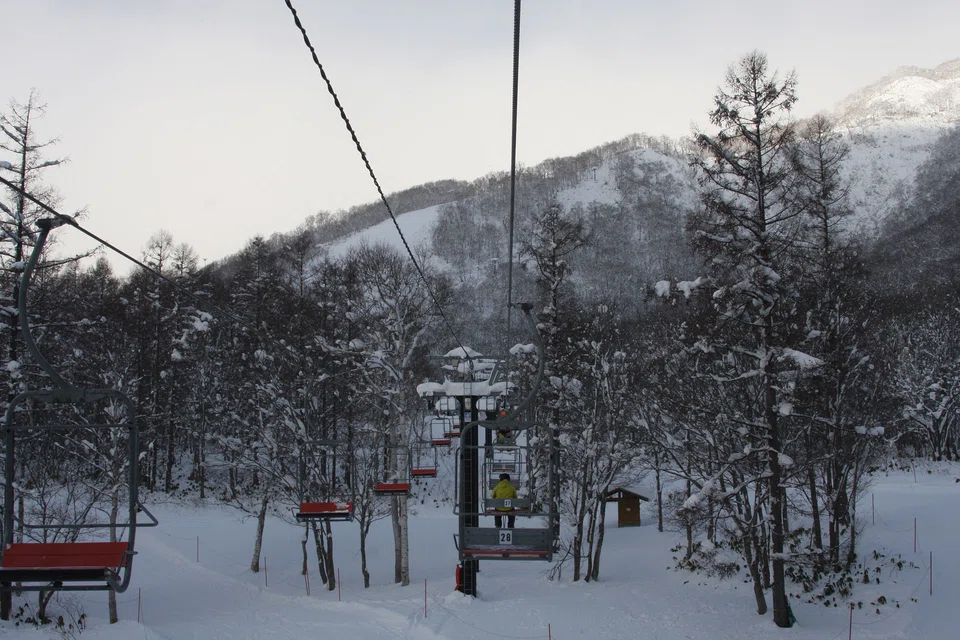
That is why Niseko is so singular. Its snowy streets (in winter) are lined with bars and restaurants bearing English or Australian names, the staff will be from just about anywhere outside Japan, and English (spoken as often as not with a heavy Australian accent) seems to be de rigueur.
All very odd to native Japanese and to long-stay expatriates. To someone such as myself used to skiing in the much remoter resort of Hakkoda in Aomori prefecture where the culture is very Japanese and English rarely spoken, the Niseko experience comes as a distinct shock.
But while something has been lost (definitely not least the quality of the cuisine) in the Australianisation of Niseko, a good deal has been gained too - things that other Japanese resorts which struggle to preserve their populations and to maintain a livelihood might do well to emulate.
So many small Japanese towns and villages appear semi-deserted, their quiet streets lined with empty houses and shuttered shops. There is an obvious lack of young people (who have left home for the bright lights of Tokyo and elsewhere) leaving ageing relatives behind. Children are quite hard to find.
Niseko by contrast has a distinct look and feel of prosperity about it. Its streets bustle with people (mainly foreigners admittedly), the shops and and restaurants are as lively as they are numerous while smart new (though traditional-style) houses and public buildings proliferate.
That is what comes from opening to the world rather than living in (not so) splendid isolation. It is true that Niseko may have gone rather overboard in its concessions to Australianisation and in being generally gaijin-friendly. But the balance needs only to be adjusted somewhat.
Gaijin, even Chinese and other Asians, clearly find it useful to be able to speak the universal language of English. If more Japanese young people could improve their English, instead of using foreign intermediaries as in Niseko, plentiful job opportunities could await them in Japan's rural areas.
It is not just in ski resorts such as Niseko - understandably popular though they are, for their excellent powder snow - that opportunities might be opening up in future for Japanese people young and old who are willing to embrace the challenge of opening to the world.
Japan has launched agricultural reforms aimed at easing the country's entry into the Trans-Pacific Partnership (TPP) and at making agriculture an industry, and farming a business. Modern marketing and shipment of Japanese produce to Asia and beyond point to abundant job opportunities. Insisting on doing things "the Japanese way" can invite narrow mindedness and decay, and even hostility towards foreigners. It is not necessary to do things entirely "the Niseko way" (admirable though that is in many respects) in order to bring life back to rural Japan. There must surely be a "middle way" that preserves a Japanese-gaijin balance.
Share with us your feedback on BT's products and services
TRENDING NOW

Nvidia reinstates Jensen Huang as CEO; Trump says move poses no national security risk

Beyond the greenback, Vietnam’s big borrowers turn to Asian-currency bonds

Indonesia’s coal tycoon Low Tuck Kwong replaced as Bayan Resources president-director

Six workers file employment claims against Crystal Jade Food Manufacturing

