

Ford vs Tesla: an enlightening tale of two car companies
The two world-famous brands are separated by exactly 100 years. How they financed their growth could not have been more different.
 Add BT as a preferred source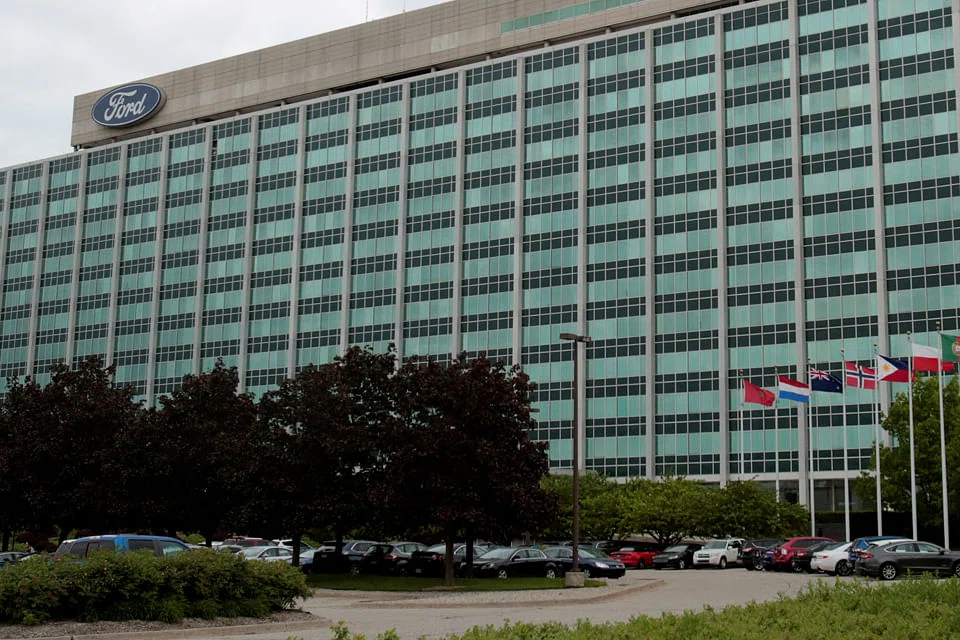
IN AN age of startups, a curious mind should ask the question how early-stage companies were financed in the industrial age. Did banks play a bigger role then? How did the entrepreneurs manage substantial equity holding in the companies they founded?
Delving into the stories of Ford Motor Company and Tesla Inc, separated by exactly 100 years, was illuminating. This article draws heavily from Allan Nevins' book on Ford, information from Benson Ford Research Center, Ford Motor's archives department, and Tesla's Securities and Exchange Commission filings.
Henry Ford entered the fulltime workforce at age 16 and worked for nearly 20 years before starting his first venture. His day job was not only a way for him to support his young family, but also a means of acquiring knowledge as he switched jobs to learn things that he did not already know. He rose quickly and by age 29 was chief engineer at Edison Illuminating Company.
While he held down a day job, he worked evenings and nights on his larger goal of using an engine in a self-propelled vehicle - an idea conceived at age 13 when he saw a stationary steam engine for the first time. He finally started off on his own at age 36 with, as his main assets, the patents and knowledge acquired over two decades of toiling in the evenings.
Elon Musk, probably in keeping with the times in 1990s, ventured into entrepreneurship at age 26 soon after graduating. He started Zip2 (raising money from angel investors) and later Paypal, making substantial money in exits before entering Tesla in 2004 as an investor at age 33. He was already wealthy by then.
When he finally ventured out full time, Mr Ford turned to wealthy individuals in Michigan for financial backing. His reputation helped him secure the equity capital he needed. The first venture in 1898 (when he was 36) raised US$2,000 from four investors to experiment with a "motorwagon". In 1899, Detroit Automobile Company was formed and capitalised with US$150,000 from 11 investors although only US$15,000 was actually paid in with Mr Ford a "small shareholder". This venture failed after making about 25 cars. Mr Ford later said "the cars would not sell".
Navigate Asia in
a new global order
Get the insights delivered to your inbox.
RACING CARS
He then turned his attention to building one-off racing cars where he was successful. Seeing his machines perform in races, in 1901 the shareholders of Detroit Automobile Company regrouped to form Henry Ford Company with US$60,000 capitalisation and US$30,500 paid in. But, Mr Ford was engrossed in racing and it was also believed he was unhappy with the small shareholding (one-sixth) he was allotted.
The shareholders then brought in Henry Leland, a brilliant and dominant figure to manage the company. This led to parting ways with Mr Ford and the company was renamed Cadillac. Mr Ford was allowed to take the drawings for the racing car and was given US$900 as part of his exit.
In 1902, Mr Ford partnered Alexander Malcomson, a successful if leveraged coal trader, for a new venture that became the Ford Motor Company we know of today in 1903 with US$100,000 committed for 1,000 shares and US$28,000 actually paid up. Mr Ford and Mr Malcomson received 510 shares (255 each) for US$10,000 of machines and US$40,000 of patents that they contributed to the company.
In the first year of operations from 1903-1904, Ford Motor sold 1,745 cars and booked revenues of US$1.1million. Dividends of US$98,851 were paid just in the first year which returned almost the entire capital raised. In the following year of 1904-05, Ford Motor booked revenues of US$1.9 million and profits of US$290,000.
When it was decided to build a new factory with larger capacity, there was adequate internal cash for the US$50,000 investment in land and buildings. Ford Motor's spectacular financial success straight out the gates - profitable and dividend paying from the first year - was a stunning achievement.
INTERNAL RESOURCES
Ford Motor funded its growth internally from thereon. Mr Ford did borrow funds personally from the owner of a local bank to buy out Mr Malcolmson for US$175,000 before merging Ford Motor Company and Ford Manufacturing Company in 1907 that gave him a nearly 60 per cent shareholding.
In 1907, Ford Motor invested US$530,000 from just internal resources to expand manufacturing to its Highland Park location, then the largest automobile plant in the US.
In 1908, Model T was launched and the rest, as they say, is history. IPO came in 1956, 53 full years after Ford Motor Company was established! And even that was secondary shares offered by Ford Foundation. Page 3 of the prospectus notes that "the company has no funded debt or short term loans..."
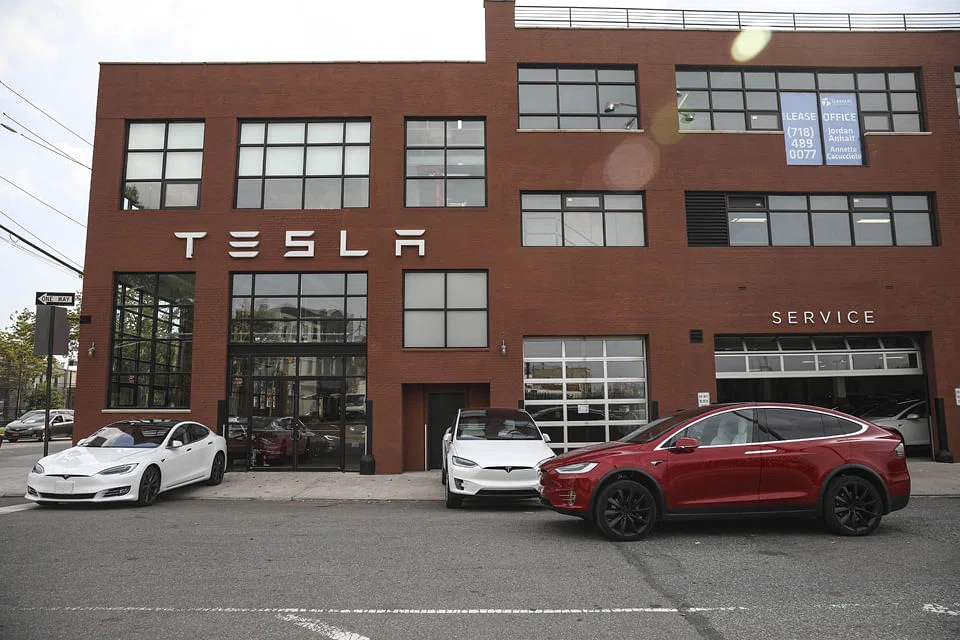
Tesla - which started exactly 100 years after Ford Motor Company in 2003 - was self-funded by its founders. Elon Musk entered Tesla as an investor in 2004. Between 2004 and 2010, Tesla raised US$319 million via Series A-F preferred stock financing and an additional US$465 million loan in 2009 from the Department of Energy.
PRICE OF A CAR
IPO proceeds of US$226 million in 2010 brought total cash raised in seven years since formation to over US$1 billion. At the time of the IPO, Tesla had sold 1,063 Roadsters with some US$111 million in revenues and around US$55 million in losses in the most recent year.
In 2013, Tesla reported its first profitable quarter, 10 years after the company started operations, and first profitable year in 2019, another six years later.
The question that naturally arises is how Ford Motor Co could be profitable right away while Tesla has struggled. Did it have anything to do with the price of a car? At the turn of the 20th century, per capita GDP of the US was around US$4,000 and average salary was about US$450 a year. Ford cars were selling at US$650-750 at that time - about 1.5 times the average annual salary.
In comparison, around 2010, the per capita GDP, mean individual income and median individual income were some US$45,000, US$40,000 and US$27,000. Tesla's Roadster models at some US$100,000 (with a US$7,500 Federal tax credit) seems expensive for the average American individual or family.
The Model S base model was planned in 2010 for around US$50,000 with a US$7,500 Federal tax credit. With rising incomes and falling car prices, maybe a Model T moment is just around the corner for Tesla.
Ford did not make its profits as a monopoly. In 1904 there were over 170 companies attempting to make cars, with some large ones such as Oldmobile quite formidable competitors.
But it can also be said that its rivals were all equally young companies. None had advantages of vastly superior financial and engineering resources or an established distribution network that Tesla faced as it entered an entrenched industry with an established and cheaper technology.
UNIQUE ACHIEVEMENT
Also, the minimum capital required to manufacture cars is significantly higher today. Hence, some allowance for Tesla's unprofitable years and constant financing needs ought to be given. Still, Ford's straight "out of the box" financial home run was a unique and fantastic achievement.
It took Henry Ford 25 years of round-the-clock work to be in a position to generate sufficient intellectual capital that gave him a 25 per cent initial share and subsequently a bit of manoeuvring to get to a control stake. Clearly, the large shareholding was made possible only by the immediate profitability of Ford Motor Company which meant growth could be funded internally and Henry Ford could also borrow to buy out Mr Malcomson.
By contrast, Marc Tarpenning (one of the founding engineers of Tesla) was diluted down to a little over 1 per cent by the time of Tesla's IPO. Mr Musk - including and because of the funds he invested of some US$70 million - had a 28.5 per cent stake by the time of the Tesla IPO.
In contrast, New Economy company founders Mark Zuckerberg (with close to 30 per cent economic stake in Facebook) and Jeff Bezos with 16 per cent in Amazon (until his recent divorce) have had very different outcomes without having to invest cash. The generosity of capital providers, public or private, to founders is difficult to explain or justify other than by way of different valuation metrics used for New Economy companies.
As I conclude, I must also mention some ironies when looking at these two companies. Mr Ford's boss at Edison Illuminating Co, Alex Dow, insisted that electric was the future while Mr Ford bet on gas. Mr Ford's view was "no storage battery was in sight of a weight that was practical". He was right. It has taken over 100 years to make electric cars practical. The other irony is - when Ford went public in 1956, it was supposedly the first time that the discounted cash flow model was used to value a company. How else, other than looking into the distant future, can one explain Tesla's current US$550 billion market capitalisation as it enters the S&P 500 index this week.
Decoding Asia newsletter: your guide to navigating Asia in a new global order. Sign up here to get Decoding Asia newsletter. Delivered to your inbox. Free.
Share with us your feedback on BT's products and services
TRENDING NOW

Middle East-linked energy supply shocks put Asean Power Grid back in focus

Malaysia’s 8th richest man Jeffrey Cheah wants Sunway business to last 10 generations

US-China rivalry and the Kindleberger Trap: Why inaction – not escalation – is the biggest risk

How China’s young workers are securing their future even as AI disrupts job market, triggers pay cuts

