Forming corporate diamonds under pressure
Organisations with a focus on innovation through the 2009 financial crisis outperformed the market average.
 Add BT as a preferred source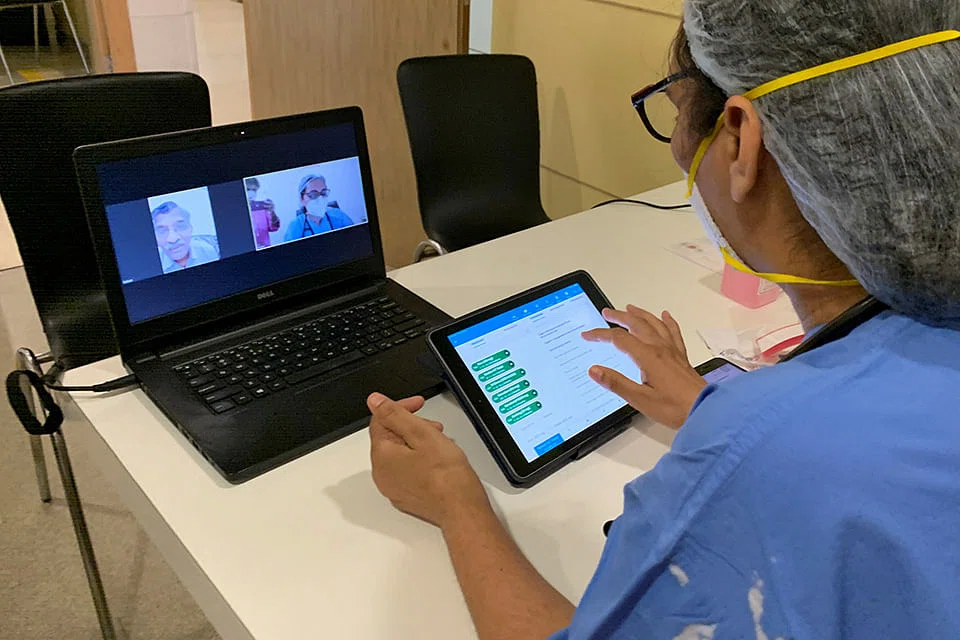
COVID-19 has brought profound changes to our way of life and challenging times for businesses. Yet, amid the turbulence, we have seen many organisations respond to today's immense challenges with rapid innovation, even seizing opportunities that have been presented by the pandemic.
Rather than battening down the hatches as some have chosen or been forced to do, forward-looking organisations have taken the opportunity to innovate and are proving more successful as a result. They are spinning off or building new businesses from scratch, in response to a significant acceleration in digital adoption by consumers and structural shifts in the market.
Prior to Covid-19, similar projects had taken years to come to fruition; today, things are moving much faster. A variety retailer was recently able to launch a brand-new fully functioning e-commerce business in just 13 weeks. As Microsoft's CEO Satya Nadella put it" "We've seen two years' worth of digital transformation in two months."
Businesses taking this approach because the business environment is evolving so rapidly that building new businesses is often the fastest way to catch up or get ahead. Inevitably, some of these new ventures will become the major success stories of this decade - just like Amazon or Dell, which were both born out of adversity. The real key to success, though, will be the ability to repeatedly build and launch new businesses as China's Ping An, for example, has demonstrated with several successful ventures.
ACCELERATING TRENDS
One obvious example of accelerating innovation is the trend towards telemedicine, as nations progressively seek to make healthcare accessible and affordable across South-east Asia, especially during Covid-19. Singapore-based startup, Doctor Anywhere, which enables users to consult a licensed local doctor via its app, has seen a 300-500 per cent increase in users since the start of the outbreak, and currently has more than one million users.
But this is not just happening in healthcare. All sectors need to take account of the structural shifts accelerated by Covid-19: most notably, rapid digitalisation, automation, and new remote operating models. Since the pandemic hit, 96 per cent of businesses have changed their go-to-market model, with the vast majority turning to digital customer engagement; 50-80 per cent of new online shoppers in large economies intend to continue with this channel post-crisis.
Digitalisation is especially popular in Asia; the region is coming online fastest, and enthusiastically embracing digital.
Several factors are driving this trend, not least that working from home sky-rocketed in response to lockdown. By February 2020, around 200 million people across China were working remotely, and many companies turned to platforms such as Alibaba's DingTalk or WeChat Work. As Covid-19 spread, the number of monthly active DingTalk users jumped by over 500 per cent in a year to more than 280 million in March 2020, with 62 million new installs in March alone.
PATH TO RECOVERY
No one knows what the precise path to economic recovery will be post-Covid-19. Fortunately, with 43 per cent of the world's largest companies (by revenue) headquartered in Asia, the region is fast becoming the epicentre of innovation.
A strong business-building capability - including creating entirely new businesses off the back of established companies - is one route to success. Building a new business is one of the boldest and most impactful forms of innovation, and can lead to the highest returns when done right.
There is a precedent for this: Organisations that maintained their innovation focus through the 2009 financial crisis outperformed the market average by more than 30 per cent and continued to deliver accelerated growth over the following three to five years.
Today, business building offers the opportunity to embed digital capabilities and incorporate the agility and long-term resilience necessary to thrive in a more uncertain world. Business leaders should reflect on these questions: If I were to start my business from scratch today, what would it look like? If I could build new businesses harnessing my unique advantages over any competitor, such as proprietary technology or data ecosystems, what would they be?
FIVE CRITICAL BUSINESS-BUILDING SUCCESS FACTORS
Building new businesses is hard. Generally, fewer than 10 per cent of business builds succeed; however, when enterprises take a more structured approach the success rate jumps very significantly to 67 per cent. Key factors here are having a clear strategy, entrepreneurial talent, and the proper balance between corporate support and operational freedom.
Moreover, successful business builders pay attention to long-established truths from the outset: get sponsorship from leadership; pressure-test assumptions; and build dedicated teams.
Working remotely adds further considerations: avoid letting remote working upend lively debate; keep process structure in place; maintain your external orientation; and prioritise culture. Building on these fundamental truths, here are five critical success factors to take you forward:
Incumbents usually have various advantages (such as distribution, existing client base) that startups lack. Those that successfully launch new businesses almost always tap into existing strengths while simultaneously benefiting from the flexibility, innovation, and speed of a startup.
Although every organisation believes it is good at serving customers, the emergence of startups shows that the primary driver of adoption is a significantly higher customer focus based on value, convenience, or superiority of experience. Be willing to challenge old assumptions in pushing the new business idea to be significantly more customer-centric.
The single biggest challenge that incumbents face in realising a new business idea is to create an environment that attracts and allows creative talent (design, product, analytics, technology) to thrive. Allowing for a small group of "founders" to create a culture that attracts talent, is a make or break.
Corporates are fundamentally used to planning and aiming for predictability in execution. Launching a new business idea involves trial and error to determine what works with customers and rapidly testing the assumptions underpinning the business case.
The best companies build an institutional "muscle" that lets the new business maintain the pace of innovation. Important structural elements beyond talent and culture include setting up underlying technology and data capabilities that allow for rapid experimentation.
The challenges may be significant, but it is a fact that pressure forges diamonds. History tells us that some of today's most successful companies were created during the last crisis. We now have the chance to forge some new diamonds as we continue to emerge from this pandemic.
Decoding Asia newsletter: your guide to navigating Asia in a new global order. Sign up here to get Decoding Asia newsletter. Delivered to your inbox. Free.
Share with us your feedback on BT's products and services