

Frasers Property’s board should act with some urgency to address weak share price

FRASERS Property (FPL) has started the year off by showing, once again, that it is a good real estate investment trust (Reit) sponsor. But its minority shareholders may now want the group to turn its attention to the value of FPL’s shares.
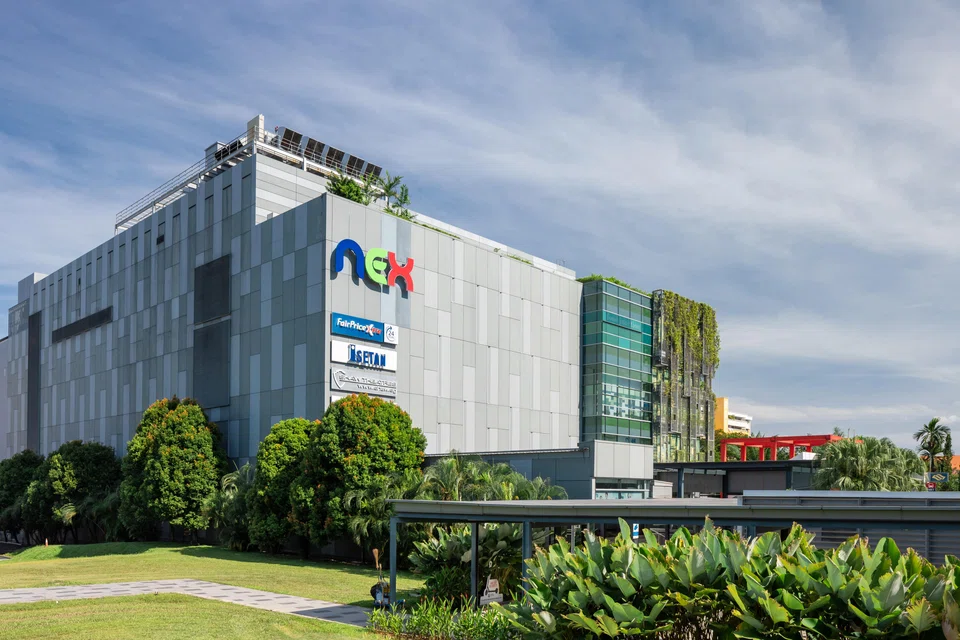
On Feb 6, Frasers Centrepoint Trust (FCT) and its sponsor FPL completed the joint purchase of a 50 per cent stake in Nex. FCT and FPL hold effective interests of 25.5 per cent and 24.5 per cent, respectively, in Nex.
Located in Serangoon Central, Nex is the largest mall in the north-east region of Singapore. It was bought at an agreed property value of S$2.08 billion, in line with its valuation as at end-2022, and a net property yield in the high 4 per cent region.
FCT is funding the purchase with debt and existing cash resources, and the deal should boost FCT’s distribution per unit.
Post-acquisition, FCT’s aggregate leverage could reach 38.5 per cent. FCT’s manager would likely not want its leverage to go much higher than this. By partnering FPL, FCT grows its Singapore suburban mall footprint without overly stretching its balance sheet or needing to raise equity in an uncertain market.
Nex could be a good buy for FCT. Analysts from DBS Group Research and Citi Investment Research noted that buying Nex makes FCT the “largest suburban retail landlord” in Singapore, while diversifying its portfolio.
Yet, buying Nex may add little value for FPL’s shareholders. FCT may be a fairly efficient vehicle to hold Nex, but not FPL.
FCT and FPL are trading at discounts to their end-September 2022 net asset values (NAVs) of 7 per cent and 66 per cent, respectively, based on their closing prices on Feb 20 (Monday). Implicitly, FPL’s stake in Nex is being severely marked down.
FPL’s participation in the Nex deal is not the first time the property group has shown that it is a good sponsor of its listed trusts. Last year, FPL offered to privatise Frasers Hospitality Trust (FHT) at above book value and at a large premium to historial trading price. That deal narrowly missed gaining sufficient support from the holders of FHT’s stapled securities.
Among property groups, FPL’s undervaluation is not unique. But FPL does trade at a steeper discount to NAV versus peers. GuocoLand trades at a discount to end-2022 NAV of 57 per cent, and UOL Group trades at a discount to end-June 2022 NAV of 45 per cent, based on their share price at the close of trading on Monday.
Distributing in specie a Reit
FPL needs to do more to create value for its minority shareholders. Perhaps it can put its Singapore commercial assets into a listed Reit to be distributed in specie to its shareholders.
Such a Reit could comprise 51 Cuppage Road, Alexandra Point, Valley Point Office Tower & Shopping Centre, as well as a 50 per cent stake in Frasers Tower in Tanjong Pagar. Based on book value as at end-September 2022, the said portfolio is worth over S$2.1 billion. FPL could add some overseas assets or a retail asset to boost the trust’s size. One of its retail properties is The Centrepoint on Orchard Road, which was valued at S$593 million as at end-September 2022.
Chairman Charoen Sirivadhanabhakdi and his spouse, Khunying Wanna, have a deemed interest of about 87 per cent in FPL. They can consider getting the entities that they have interest in, which hold FPL’s shares, to place out some of the Reit units that these entities will receive. This can help improve free float of the said Singapore-centric commercial Reit.
FPL is positive on growth prospects for Singapore’s office-property sector, given Singapore’s stable economic outlook, back-to-office momentum and limited new office supply in the pipeline. A Singapore-centric commercial Reit could be well received by the market.
FPL’s shareholders would gain if units of the new Reit trade at a far better NAV multiple versus FPL, as is likely to be the case.
Improving free float
Much blame for FPL’s poor share price can be placed on its small free float, which is 11 per cent, going by the latest annual report. The free float of UOL, which is a member of the Straits Times Index, is over 48 per cent, based on the latest annual report.
FPL is tempting for chairman Charoen and family to privatise. All of a high-quality business could potentially be bought at a discounted price. A privatisation offer may succeed with an offer price that represents a large premium to share price, but a big discount to NAV.
Still, it would be sad for stock investors here to see an established property name such as FPL exit the local bourse. Perhaps FPL’s board of directors can persuade chairman Charoen to improve FPL’s free float by having the entities linked to him place out their FPL shares.
Placing out shares at a steep discount to NAV hurts. But if placing out some shares improves FPL’s trading liquidity and share price performance, both Charoen and minority shareholders stand to gain.
FPL’s business looks to be doing fine. Recently, the group said in its business update for the quarter ended December 2022 that sales of residential projects in Australia and Singapore remained healthy despite interest rate hikes and inflation. FPL noted that its hospitality portfolio is positioned for recovery, with all properties reopened to capture demand as the industry rebounds from the Covid pandemic. But, better operating performance may do little to lift FPL’s share price.
With higher interest rates, investors’ cost of capital has risen. Boards of all listed companies need to be mindful of this new reality. Addressing share price undervaluation has to be a top priority.
FPL’s latest annual report is titled “Leading With Purpose”. The group’s board of directors should lead in urgently unlocking value for the benefit of all shareholders.
The writer holds shares in FPL






