Free banking in the crypto world
All stablecoins and crypto exchanges will eventually be fully backed. The question is when.
THE crypto world has just gone through some turbulent days.
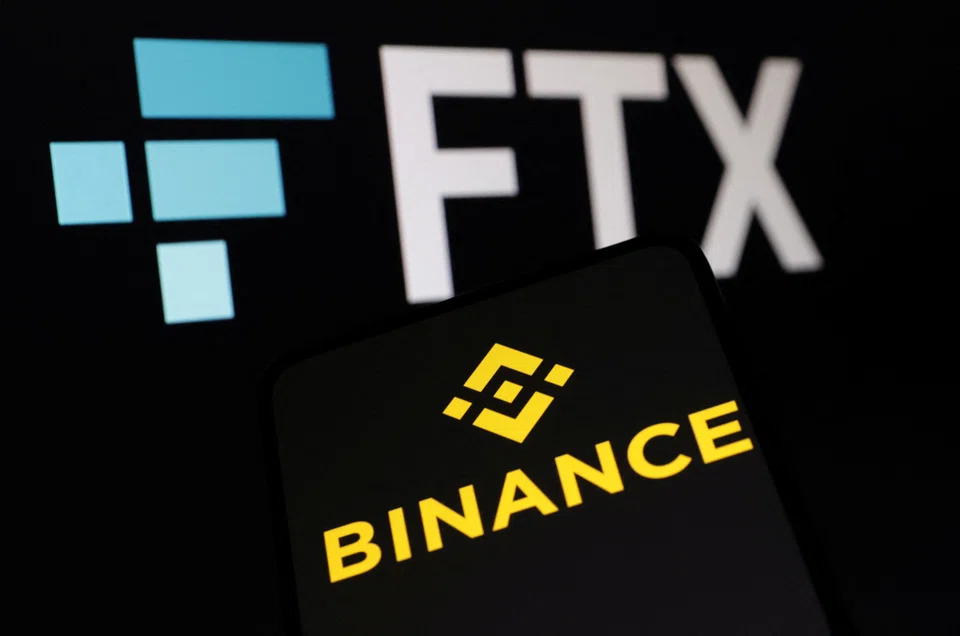
The value of FTT, a digital token, crashed after Changpeng Zhao (CZ), chief executive officer of Binance, tweeted about liquidating his company’s holdings of FTT, sending shockwaves across the cryptocurrency market. FTX, one of the world’s largest cryptocurrency exchanges and the issuer of FTT, soon suffered a liquidity crunch as the value of FTT plunged.
It is certainly not the first time that concerns around a crypto exchange’s asset holdings resulted in a market crash, but the impact this time seems to be larger.
CZ later tweeted that Binance will conduct a proof-of-reserves, an auditing procedure, to make it transparent that the clients’ asset holdings with his company are intact. This announcement has gained support from investors.
Crypto exchanges and stablecoins function like banks these days: They take investors’ assets and issue their tokens. The proliferation of stablecoins and crypto exchanges reminds us of the free banking system, in which everyone can issue banknotes and there is no regulator.
What does the classic theory on free banking tell us about the future of stablecoins and crypto exchanges? In short, without a lender of last resort, all stablecoins and crypto exchanges will eventually be fully backed by assets. Regulations will smooth the transition.
Free banking
Before a national currency or a central bank existed, banks were free to issue banknotes.
Contrary to common beliefs, limits on banks exist in a free banking market even without a regulator; if a bank fails to provide sufficient assets that the banknote holders try to redeem, the bank goes bankrupt.
Payment settlements between clients of different banks could be considered a context where banknote holders would redeem their banknotes. If Bank B, the recipient’s bank, does not accept banknotes from Bank A, the sender’s bank, then the sender must instead exchange his banknotes for a commonly accepted asset, for example, gold, and transfer that asset to the recipient’s bank.
Interbank payments are out of the question if there is only one bank in the world, but when it comes to a free banking market with hundreds of banks, each having a handful of clients, interbank payments are inevitable. This is when a bank always needs to be ready for its clients’ redemption requests.
To survive in this free banking market without a lender of last resort, banks must ensure that all their banknotes are 100 per cent backed by a commonly accepted asset.
Crypto exchanges, stablecoins, and free banking
Stablecoins and crypto exchanges have some characteristics of a free banking model.
There is almost no entry barrier. Anyone with essential knowledge of the key features or items, such as smart contracts, may issue tokens, claiming that the tokens are backed by one or a basket of assets.
Also, more often than not, the wallets of two tokens are incompatible. An exchange medium, for example, the US dollar, is therefore required for payments between owners of different tokens. Frequent exchanges between the US dollar and the tokens are expected.
If every issuer foresees the frequent need to exchange between the tokens and the US dollar, he will never issue more tokens than the assets backing them, because doing so endangers his business.
Unfortunately, token issuers may not have considered this downside risk. Some tend to be overconfident about their tokens being widely adopted in payments, and that exchanges with other assets would not be frequent. As a result, there is over-issuance of the tokens, or poor choices of backing assets.
We have witnessed several incidents of market crashes. The dollar value of Terra crashed in May 2022. This stablecoin is not pegged to an asset commonly accepted by other token issuers. As more users from other ecosystems picked up Terra, managing exchanges between Terra and other assets grew more challenging.
The USD Tether (USDT), however, has a first-mover advantage, being one of the first stablecoins used by crypto exchanges. After investors exchange their US dollars for USDT, they only convert it back upon cashing out. Its large clientele reduces the risk of a run. Nonetheless, USDT’s asset holdings have constantly been questioned.
Binance attacks
Binance’s move to audit its user holdings is likely to reinforce the credibility of its exchange. Other stablecoins and exchanges may go out of business if they do not follow suit. This is because once Binance’s balance sheet becomes transparent, the other stablecoins and exchanges also need to prove that they are trusted currencies to hold, to retain their clients.
Without making the balance sheets transparent, two scenarios may ensue. First, clients who do not trust the tokens will redeem their holdings, only to find out that the token issuers are indeed not fully backed.
Second, clients trying to redeem their tokens find that the tokens are always fully backed. The issuers then gain their reputation without having to actively “prove” or show their assets.
Such market competition automatically eliminates token issuers with unsound fundamentals. The stablecoins and exchanges surviving are those with healthy balance sheets.
Regulations speed up the process
Regulations help to ensure a faster transition, with fewer investors hurt by crashing tokens. The Monetary Authority of Singapore‘s recent proposal to support a “responsible digital asset ecosystem” becomes relevant in this context.
The proposed regulatory framework on “stablecoin-related activities” only encompasses stablecoins pegged to a single currency (SCS) due to its strong use case for payments. The regulations on SCS are widely differentiated based on the nature of the issuer. Banks, as the issuer of SCS, are subject to leaner regulations, with no additional reserve backing and prudential requirements.
The approach changes markedly for non-bank issuers. Such SCS need to be fully backed by liquid assets that must be denominated in the pegged currency, which can only be Singapore dollar or G10 currencies. These issuers must publish a white paper that discloses details such as redemption provisions. Additionally, issuers should meet a capital requirement of S$1 million or 50 per cent of annual operating expenses, whichever is higher. The issuers cannot partake in lending or investing activities either.
Regardless of regulations, all stablecoins and crypto exchanges will eventually need to be 100 per cent backed. Regulations, however, will promote an ecosystem without speculation, and a conducive environment for advancing payment technology.
The writers are from the Asia Competitiveness Institute, Lee Kuan Yew School of Public Policy, National University of Singapore. Xie Taojun is an assistant director (research) and senior research fellow. Ammu George and Liu Jingting are research fellows.