

Game of Thrones 2016: the plot thickens
Forget about it being a straight fight between the House of Clinton and the House of Bush
Washington
FOR a while, it seemed that when it came to the approaching 2016 US presidential race - dominated by expectations that Democratic Hillary Clinton would be facing Republican Jeb Bush - some political satirists were doing a better job in analysing the evolving campaign than serious political pundits.
The real "Game of Thrones" was beginning, explained late-night television comedians. In the Land of the Fifty Kingdoms, it was going to be the House of Clinton vs the House of Bush in 2016, a national drama that could prove to be more absorbing than the HBO series.
Drawing an analogy from the popular culture to make some sense of the coming presidential race between America's two great political dynasties that have each occupied the White House in the last 30 years makes the political reality sound entertaining.
Here was Lord John Ellis aka "Jeb", the young heir to the House of Bush, George Herbert Walker (who celebrated his 88th birthday in June), and his older brother, George Walker, who had sat upon the Oval Throne, preparing for what was expected to be a bloody confrontation with Lady Hillary, wife of former King William Jefferson of the House of Clinton, who believed that her time had come to become the first queen to rule the Land of the Fifty Kingdoms.
But on a not-very-entertaining level, the Game-of-Thrones analogy actually raised some serious issues. There was the Land of the Fifty States with its old but thriving democratic political system, with its dynamic economy and its ever-changing society that has been attracting the world's best and brightest to its shores. And yet its presidential vote was shaping up to be not a contest between the representatives of the people but as a fight between two old dynasties.
Popular democracy? If anything, the notion of a Clinton versus Bush presidential race only helped accentuate the destructive role that patronage and money was playing in American politics.
Indeed, there was an element of a sad irony here. We live in a time when members of the American middle class feel that they are being financially squeezed, and the political conversation is dominated by complaints about growing economic and social inequalities symbolised by the sense that the rewards are going to the infamous "One Percent". But there were the two representatives of the rich and the powerful who would be fighting over the distribution of economic and political power in the country.
But then perhaps things are about to change in the 2016 American version of Game of Thrones, as our two noble families are about to face challenges from two rising knights in their respective political parties.
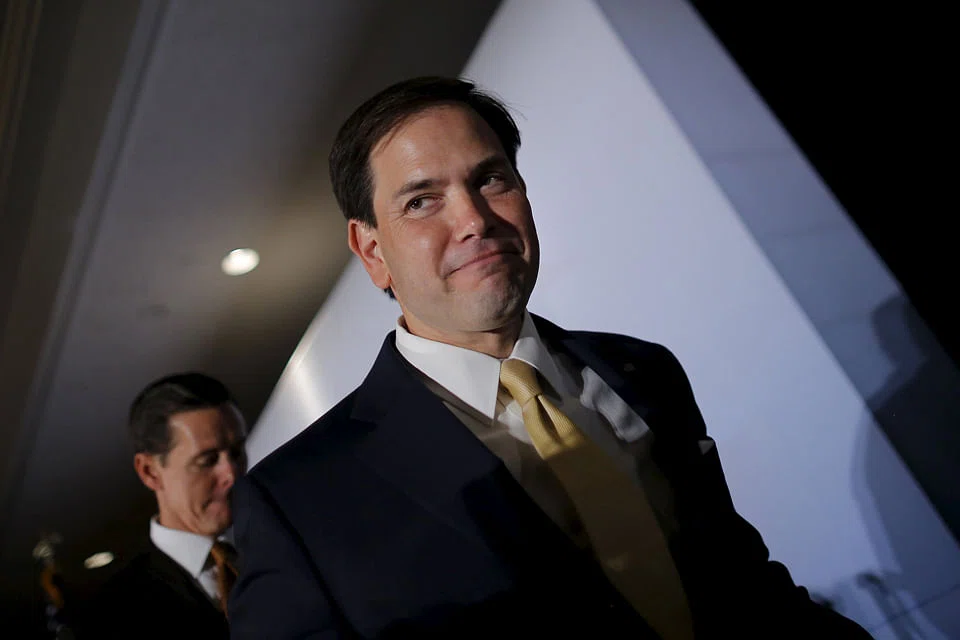
We first meet the roaring young Republican lion, Senator Marco Rubio from Florida, who until recently was regarded as just another politician on the long list of Republican presidential hopefuls. In fact, with Mr Mario being a political protégé of the former governor of Florida, the earlier expectation was that the 44-year-old senator would wait his turn and refrain from entering the race and challenging the 62-year-old Mr Bush.
But the son of relatively poor immigrants from Cuba concluded that, unlike in Game of Thrones, in America a simple peasant has a chance of beating a member of an esteemed royal family and decided therefore to challenge the latest Bush running for the White House.
And according to the most recent Wall Street Journal opinion poll, Senator Rubio and former governor Bush are running even among Republican voters, with three-quarters of polled GOP primary voters saying they could see themselves supporting either of the two candidates.
Mr Rubio has been playing up his humble family roots and his youth and ethnic background during the campaign. He has been arguing that no one is "entitled" to become a president and that he could do very well against the ageing member of the other political dynasty, the 67-year-old Mrs Clinton, describing her as the candidate of "yesterday".
At the same time, being an Hispanic or Latino should certainly be an electoral asset for Mr Rubio when it comes to attracting voters from an expanding demographic group that tends to vote for Democratic candidates.
In any case, it seems that notwithstanding all the political and economic power that the Bush name represents, the third member of the family running for the president may not make it to the White House. Mr Rubio would at least make it more difficult for Mr Bush to win the Republican presidential nomination and prepare for the electoral fight with . . . Lady Hillary?
Enter the roaring old Democratic lion, Bernie Sanders. Unlike Mr Rubio, the 73-year-old senator from Vermont is not a symbol of youth and ethnic diversity. And if the young Latino Floridian may have a 50-50 chance of winning the Republican presidential nomination, very few political gamblers are likely to bet their money on a win by the elderly Jew from New England (and formerly from New York) with a heavy Brooklyn accent.
Mr Sanders, who describes himself as a "social democrat" - the only self-proclaimed socialist in the US Congress - is an old-fashioned politician who writes his own speeches and doesn't use a teleprompter. In a way, Senator Sanders is the "anti- Clinton" in a sense that he doesn't have at his disposal an army of strategic advisers and the inputs of daily opinion polls, and doesn't rely on the financial backing of wealthy investors.
Moreover, as a resurgent populist movement is in the process of taking over the Democratic Party, Mr Sanders seems to be more effective in representing a progressive agenda that responds to the concerns of Main Street America than Mrs Clinton with her close personal and political ties to Washington and Wall Street.
"What I'm doing in this campaign is trying to tell the people the truth - but a truth which is not heard a whole lot in Washington or discussed a lot in the media," Mr Sanders said recently at a picnic in Iowa's Warren County, south of Des Moines.
"So let me lay it out on the table for you," he told the crowd of around 5,000 Democrats. "You're living in a country today which has more wealth and income inequality than any major industrialised nation on earth."
This blunt talk about the economy and the gap between the rich and poor is helping Senator Sanders close the gap with Mrs Clinton among Democratic primary voters in Iowa and New Hampshire, where he has been drawing sizeable crowds, but it is doubtful that he would be able to beat her in the primaries in the South.
But Mr Sanders could end up giving Mrs Clinton a run for her money, and it's not inconceivable that he would gain more electoral momentum that would help tighten the Democratic race and certainly make it more interesting and even suspenseful.
But then (spoiler alert) those who will be watching the coming episodes of the presidential Game of Thrones should remember that the House of Clinton and the House of Bush continue to hold the reins of power in their political parties. And the safe bet is that a member of one of these two dynasties will reclaim the presidential throne in 2016.
TRENDING NOW

One-third of Singapore-listed firms at risk in severe AI downturn: MAS

‘Not done’: Keppel CEO Loh Chin Hua transformed the group, but says there’s ‘still a lot to do’

He built the Vingroup empire. Now South-east Asia’s richest man is handing some key roles to his sons

‘We don’t want to stay as we are’: CEO Patrick Ng builds a more resilient Huationg

