GE2020 marks shift to left - but heed lessons from West
Singaporeans may wish to see greater social redistribution but nonetheless, resist more radical socialist policies. This is an important distinction.
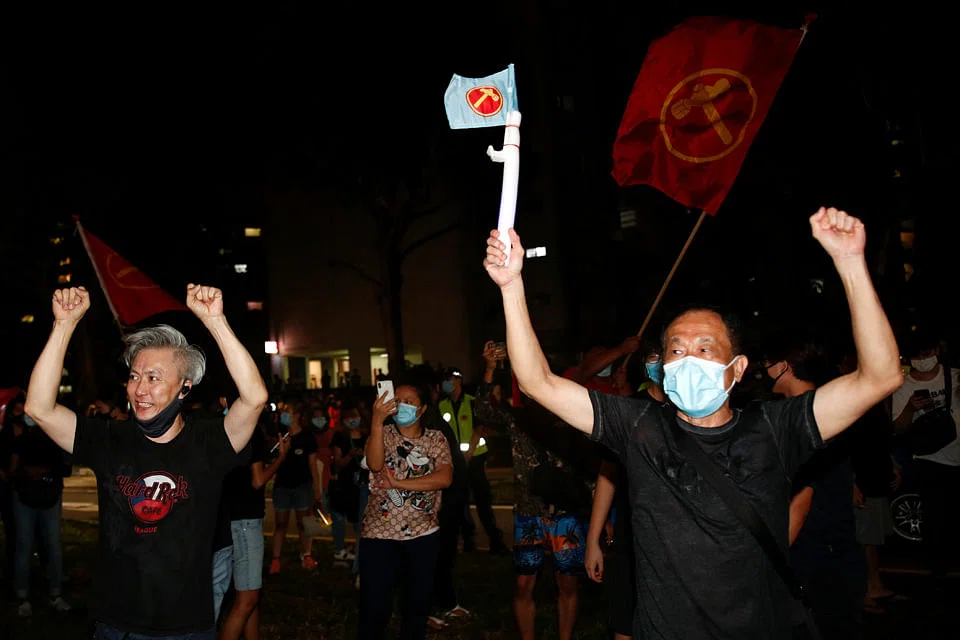
FOR the first time in Singapore's history, the opposition won two Group Representation Constituencies (GRCs), achieving for them an unpredicted 10 seats in Parliament. Many have applauded this development for promoting greater diversity in the political space.
Yet, there are also policy constraints that local discourse must work within. A BT commentary "More diverse voices in politics, but policy constraints remain" has articulated how these include our small size, reliance on globalisation and the need to maintain investor-friendly policies.
Such constraints have always influenced Singapore's leaders in their policymaking. Yet, they are never constant and always evolve from generation to generation.
RISE OF DEMOCRATIC SOCIALIST IDEAS
The question is not so much about constraints, but about the fundamental values that the new opposition groups are espousing and the extent to which these reflect the views of Singaporeans, especially given the greater political consciousness of the young generation.
One major trend that Singapore's policy landscape will have to deal with is the rise of democratic socialist ideas.
Indeed, the newly elected parliamentarians from the Workers' Party (WP) in Sengkang are not just any vote-seeking political entrepreneurs, but are self-consciously and genuine progressive, leftist liberals.
Numerous opposition parties had put forward policies like the national minimum wage, more generous social provisions, amongst other signature social democratic policies. Chee Soon Juan - leader of the Singapore Democratic Party, and whose calls for a wealth tax, capital gains tax and estate duties make him the most progressive of them all - also made large gains to achieve his highest ever vote share.
In short, the recent general election marks a notable and distinct shift of Singapore politics towards the left. As opposition parties gravitate towards the left, and the Singaporean electorate begin to be exposed to these ideas, the historic constraints that Singapore faces will be even more pronounced.
What does this mean for the future?
For one, WP's rise will embolden a younger generation of voters who grow up in a world of social media and who are more concerned about progressive issues like mental health, climate change mitigation and social inequalities rather than the typical bread and butter issues typical of Singapore politics. This is reflective of a worldwide ascendancy of millennial socialists who, as TheEconomist magazine notes, "want to shake up the economy and save the climate".
Consequently, this may be worrisome to those who prioritise economic growth and business competitiveness. Economic research shows that big-spending nations do worse economically, since bigger governments crowd out the private sector, potentially stifle innovation and generate resource wastage.
Welfare state policies, where implemented, have also hit a roadblock. The United States federal government, since Lyndon Johnson's Great Society programmes, has spent more than US$12 trillion on poverty alleviation programmes. Yet, the country's poverty rate today is one of the highest, with a worsening homelessness crisis in California. The United Kingdom's National Health Service is in great need of reform. A report has found that it wastes more than £7.6 billion (S$13.3 billion) a year, with lagging health outcomes as compared to its European counterparts.
Singapore's shift to the left had already begun sometime back. PAP stalwart Tharman Shanmugaratnam had himself noted this back in 2013. The GE2020 results only crystallise this ongoing trend that had been underway. As Singaporeans continue to hear more diverse voices in Parliament, it would be wise to heed these abovementioned lessons from other Western developed nations. The danger for Singapore is that it loses its exceptionalism, built up over the years of carefully designed market-friendly policies motivated by the chief principle of self-responsibility, economic growth and community help.
Singaporeans are said to be a famously pragmatic bunch and may resist these trends. The public charisma of Dr Jamus Lim and WP's youth engagement may have made the difference in this case. It remains to be seen therefore, how far left Singapore may shift in the future.
Singaporeans may wish to see greater social redistribution but nonetheless, resist more radical socialist policies. This is an important distinction because various opposition parties have put forth proposals, some more radical than others. One key proposal that may become a focal point of debate in future, especially with more diverse voices in parliament, is the wealth tax, which is supported not only by SDP's Dr Chee but also academics like Donald Low and Yeoh Lam Keong.
MOVING AWAY FROM WEALTH TAX
It is interesting to note that, drawing lessons from the West, wealth taxes are not a new policy proposal. There were more than 10 European nations with wealth taxes as early as 1990. What is curious, however, is that the number has fallen to less than five today. Most have repealed them due to its counter-productive effects and economic damage.
Scandinavian countries, widely understood to be welfare states par excellence, have moved away from this proposal. Denmark cut its wealth tax rate in 1989 and repealed the tax altogether in 1997. Finland abolished its wealth tax in 2006, a reform "motivated by the fact that the tax had an unfair impact on enterprises and provided many possibilities to evade", noted a European Commission report. Sweden repealed its wealth tax in 2007 as it became clear that it was driving business people - such as the founder of Ikea, Ingvar Kamprad - out of the country. An analysis by Swedish economists found that wealth tax revenues were declining as "people could with impunity evade the tax by taking appropriate measures".
The next phase of Singapore's political development is sure to be a more contested one, where the PAP's traditional aversion to universal welfare entitlements will be increasingly challenged by newly empowered voices in Singapore society, a big part of them being youths.
The pendulum between markets and governments may once again swing in a different direction, as it always has in history. What, however, is important is that Singaporeans heed the lessons of other nations that have gone down the leftward path.
READ MORE: