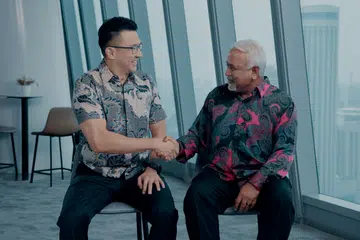
By George! BreadTalk's off the shelf
Tay Peck Gek
IT WAS only last October that George Quek, the executive chairman and chief executive officer of BreadTalk Group, told The Business Times that he had no plans to delist the homegrown food and beverage player.
But late on Monday, Mr Quek, his wife and a substantial shareholder announced a joint offer to take BreadTalk Group private.
It's been a challenging time for BreadTalk Group, the firm noted in the offer announcement. Indeed, the business environment the firm operates in has changed rapidly - and against its favour.
The civil unrest in Hong Kong went on for almost half a year, making a dent in BreadTalk Group's performance, as takings from the Special Administrative Region dropped as much as 40 per cent in some outlets.
BreadTalk Group operates food courts under the Food Republic brand, along with its BreadTalk bakeries and Toast Box cafes in Hong Kong, which contributed 8 per cent to the group's top line in 2018. Despite lower sales, it did not lay off staff there.
Then came the outbreak of the coronavirus, which is plaguing China, Hong Kong, Singapore, Thailand and several other countries where BreadTalk Group has a heavy presence. The deadly infectious disease has led to consumers largely staying home, dealing a heavy blow to several industries such as food and beverage (F&B), BreadTalk Group included.
Already, BreadTalk Group's bakery businesses in mainland China and Thailand are bleeding red ink in a highly competitive industry where consumers are often fickle.
The Restaurant Association of Singapore president, Vincent Tan, told BT that, on average, 28 per cent of food establishments here close shop every year.
Amid these operating headwinds, BreadTalk Group's chief financial officer cum chief investment officer, Chan Ying Jian, quit. He was the second key executive to resign in a short span of time, after former chief executive officer Henry Chu stepped down in December.
Last but not least, the company sank into the red in its latest financial full year results, reducing its accumulated profits. This has caused BreadTalk Group to be in a technical breach of the financial covenants in its S$100 million medium-term notes, and has triggered an event of default.
In the offer announcement on Monday, the bid vehicle for Mr Quek and his concert party said it believes that privatising BreadTalk Group will provide more flexibility for it to address the challenges it is facing.
Being a private company would also afford the owners greater autonomy to manage its business and optimise resources.
The offeror said it intends to reassess BreadTalk Group's businesses with a view to streamlining them, following privatisation. It will refocus on and strengthen its core business activities as well as explore potential corporate actions including the disposal of non-core property assets.
BreadTalk Group has achieved remarkable success since it started as a bakery outlet in Bugis Junction in 2000. Now, it manages 13 brands with close to 1,000 outlets spanning 16 countries and a global staff strength of 7,000. Also, it boasts a brand that is worth US$143 million.
However, as it expanded in recent years, it seemed to have taken on more brands than it could manage, and also possibly has overstretched its resources. For instance, did it overpay for its recent acquisition of Food Junction at S$80 million? Further, BreadTalk Group has to draw down about S$50 million in loans to finance the deal, the related interest costs of which analysts expect may eat into earnings.
As BreadTalk marks its 20th anniversary, it may be an opportune time for this company, lauded for constant innovation and improvement, to take stock of its businesses and strengths.
All it needs now is time and space to restructure itself.
READ MORE: George Quek leads offer to privatise BreadTalk; group unveils losses
TRENDING NOW
MAS allocates S$1.45 billion to five asset managers in third EQDP batch: Chee Hong Tat
‘My grandfather’s legacy’: Sherman Kwek lays out three-year plan for CDL to drive returns
He built the Vingroup empire. Now South-east Asia’s richest man is handing some key roles to his sons
‘How many will survive?’: Bubble fears arise as China’s humanoid robotics face reality check