Global confidence in the US is shaken
Steepest fall in confidence in Trump comes mostly from advanced economies.
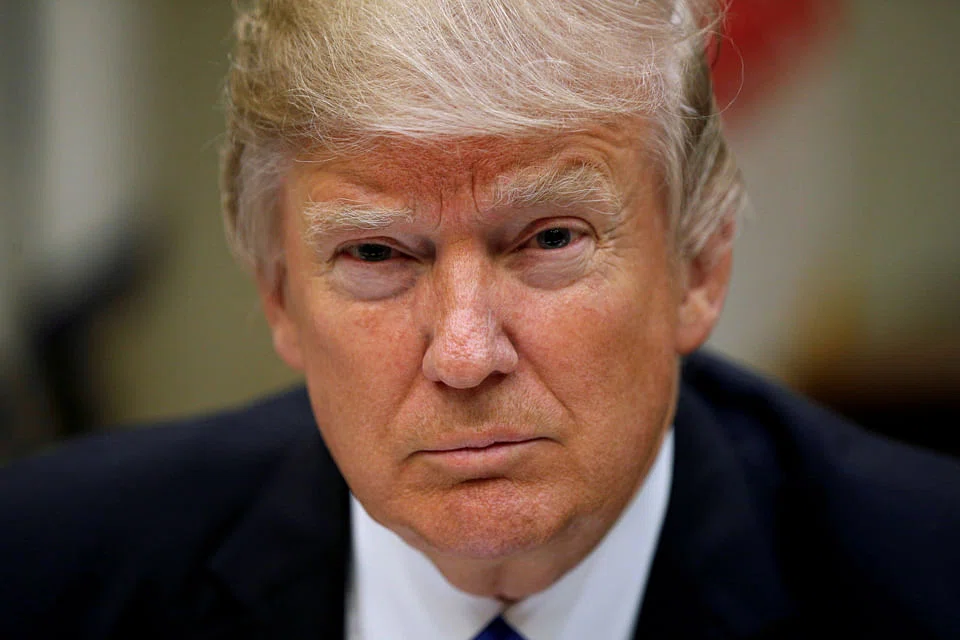
THOUGH just six months old, Donald Trump's presidency has already had a major impact on how the world views the United States. Mr Trump and many of his key policies are broadly unpopular around the globe. And ratings for the US have declined steeply in many nations, according to a Pew Research Center survey spanning 37 nations.
The rare country where confidence in the nation has grown is Russia, while both Russians and Israelis express greater support for Mr Trump than for his predecessor, Barack Obama. Criticism of the US and its president for stubbornly rejecting trade agreements such as the Trans-Pacific Partnership or policies that could stem climate change are an indicator of the lack of public will in many countries to have their leaders cooperate with the Trump White House.
A median of 22 per cent in the survey have confidence in Mr Trump to do the right thing when it comes to international affairs. This stands in sharp contrast to the final years of Mr Obama's presidency, when a median of 64 per cent expressed confidence in Mr Trump's predecessor. A median of 64 per cent had a positive view of the nation in the last years of the Obama presidency. Today, just 49 per cent are favourably inclined towards America.
The steepest decline in confidence in the US president has come mostly in advanced economies. But America's image has also suffered in emerging markets and developing countries, where some of Mr Trump's proposed policies - his promise to build a wall on the Mexican border and efforts to restrict entry into the US from Muslim-majority countries - are particularly unpopular.
A majority of Israelis (56 per cent) and 53 per cent of Russians - up from 11 per cent - have confidence in the US president. In Europe, a median of just 18 per cent have confidence in Mr Trump to do the right thing regarding world affairs. The Canadians at 22 per cent, Japanese at 24 per cent and Australians at 29 per cent are barely more confident. The president is not that much more popular in the rest of the world.
A median of 14 per cent in Latin America express confidence in him. This includes 5 per cent in Mexico, 12 per cent in Chile and 13 per cent in Argentina. In comparison, 49 per cent of Mexicans had confidence in Mr Obama in his last year in office, along with 60 per cent of Chileans and 40 per cent of Argentines. Mr Trump's ratings are far closer to some of those given to George W Bush in the final year of his presidency: 16 per cent in Mexico and 7 per cent in Argentina.
Such disapproval of Mr Trump in Latin America may, in part, be due to his policy to build a wall along the border between the US and Mexico to stem the flow of undocumented immigrants. A median of 83 per cent of Latin Americans disapprove of such plans. Not surprisingly, this includes 94 per cent of Mexicans along with 89 per cent of Colombians and 86 per cent of Chileans. Moreover, Latin Americans express harsh judgments of Mr Trump's personality. A median of 82 per cent suggest he is arrogant, 77 per cent suggest he is intolerant and 66 per cent state he is dangerous.
Low confidence in Mr Trump has marred the US' image in Latin America: 47 per cent report a favourable view of Uncle Sam, reflecting a 36 percentage-point decline in the US image in Mexico since the end of the Obama administration, a 29-point fall-off in Chile and a 23-point drop in Brazil. This relationship between the image of the US and confidence in the president is sharply delineated in Mexico.
With the advent of the Obama era, faith in the US president and favourable views of the country rose in parallel. Now they have declined together. A similar pattern is seen in sub-Saharan Africa, where a median of 50 per cent have confidence in Mr Trump. This includes 26 per cent in Senegal and 39 per cent in South Africa, while overall 56 per cent in the region have a favourable view of the US.
Confidence in the US president is down 51 points in Senegal, 33 points in Ghana and 27 points in Tanzania. And although more than half the public in Ghana, Senegal and Tanzania express a positive view of America, such sentiment is down 30 points in Ghana, 25 points in Senegal and 21 points in Tanzania.
Much of this decline may be attributed to opposition to proposed Trump administration policies. Only roughly a third of the publics in sub-Saharan Africa favour Mr Trump's proposals to pull out of international climate change agreements, restrict entry to the US from some Muslim-majority countries and withdraw from major trade agreements. Notably, despite lukewarm feelings about Mr Trump's policies, a median of 61 per cent of sub-Saharan Africans view Mr Trump as a strong leader and 51 per cent agree he is qualified to hold his office.
Views of Mr Trump and the US are low in the Middle East, except for Israel where 56 per cent have a positive opinion, up seven points over Mr Obama. In most of the region, views of America and its leader declined sharply during the Bush era and did not recover with Mr Obama. Just 9 per cent of Jordanians, 11 per cent of Turks and 15 per cent of Lebanese see Mr Trump in a positive light. This is down 34 points in Turkey and 21 points in Lebanon from assessments of Mr Obama.
Much of this may be due to strong opposition to Mr Trump's proposed restrictions on the entry into the US of people from Muslim-majority countries: 96 per cent of Jordanians and 88 per cent of Lebanese disapprove of such plans. But Mr Trump's image has done little to harm views of the US in Lebanon and Jordan, where US favourability is low and relatively unchanged compared with the Obama era.
Only in Asia do publics in emerging and developing countries have a mixed view of the US and its new president. In India, 40 per cent have confidence in Mr Trump, down 18 points from their view of Mr Obama last year, and 45 per cent voice no opinion, so Mr Trump remains unknown for many on the sub-continent. Only 23 per cent of Indonesians have faith in the US chief executive, down 41 points from their view of Mr Obama who spent a portion of his boyhood in the country. Views of the US are down 14 points in Indonesia and seven points in India.
At the same time, Mr Trump is relatively popular in both the Philippines, at 69 per cent, and Vietnam, 58 per cent, both of which give him his highest rating among the 37 nations surveyed. However, these assessments are lower than views of Mr Obama, down 25 points in the Philippines and 13 points in Vietnam. Still, Filipino and Vietnamese judgments of Mr Trump may be buoying opinions of the US: 84 per cent of Vietnamese and 78 per cent of Filipinos have a favourable opinion of America, the highest rating for the nation in the 2017 Pew Research Center survey.
The nation's image and global confidence in the US president suffered under the Bush administration after 2000, but recovered during Mr Obama's tenure. The Trump era began on a sour note throughout much of the world, including in emerging and developing nations. During the Bush years, opposition to the US and its leader often made it difficult for leaders of other nations to work with the US on issues such as Iraq.
So far, possibly aware of their citizens' wariness of the Trump administration, many leaders are proceeding with their own plans on climate change, trade, and conflicts in Syria, Afghanistan and North Korea.