The global issue of food waste: thinking beyond the table
As water is used in the production of food, food wastage means water wastage too. And food wastage is the third biggest contributor to global carbon emissions.
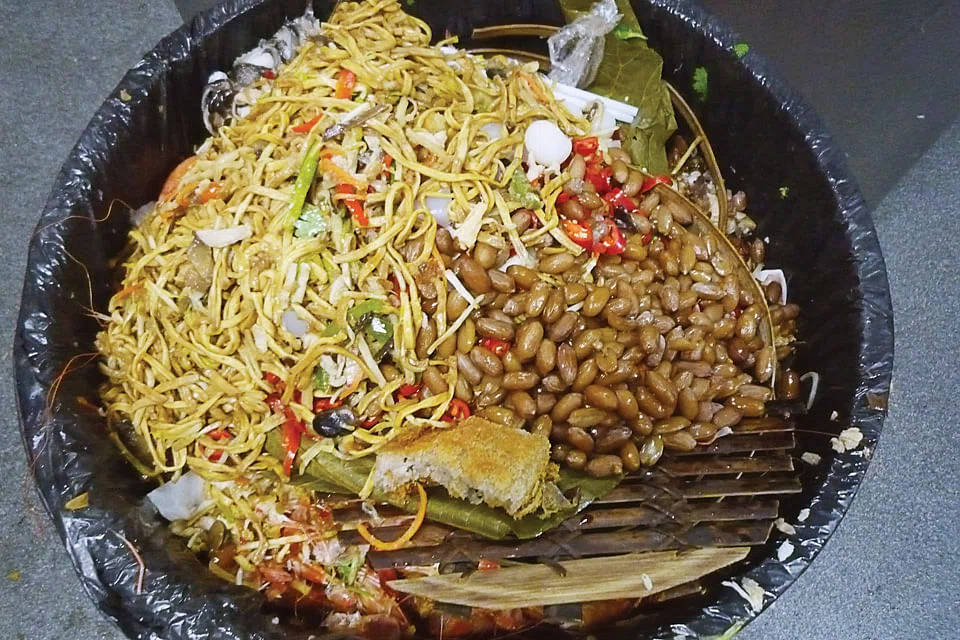
WE live in a world of diminishing resources - but growing appetites. In fact, about a third of the food produced for human consumption every year is lost or wasted, said the United Nation's Food and Agriculture Organisation (FAO).
Singapore alone generated about 800,000 tonnes of food waste last year - equivalent to two bowls of food per person per day - an amount which has risen by 45 per cent over the past 10 years.
Given the pride of place food holds in Singaporeans' collective identity and as a small island-nation that imports most of its food, this might come as a surprise. But this is a statistic that Singaporeans should be aware of, and, hopefully, endeavour to change by conserving, maximising, re-using and recycling, as much as possible, to reduce food waste.
THE CIRCULAR ECONOMY
In a circular economy, the value of products and materials is maintained for as long as possible; to minimise waste and resource use, resources are kept within the economy when a product has reached the end of its life, to be used again and again to create further value.
And that is where the challenge begins. Food wastage, unfortunately, occurs at various phases of its journey from farm to plate. This occurs mainly in the early stages of the food value chain for a variety of reasons, including inefficient harvesting techniques or inadequate storage facilities.
On the other end of the spectrum, consumer behaviour plays an important role in countries importing the food. For example, consumers tend to buy only the best-looking produce of the same price range, leaving perfectly edible but unsold items to be discarded.
All of this wastage adds up. The FAO estimates that nearly half of all fruit and vegetables, 30 per cent of cereals, 20 per cent of meat and dairy and 35 per cent of fish are wasted. The Washington-based Food Tank says that up to 40 per cent of the food produced in the United States, and about 1.3 billion tonnes of food globally, is wasted every year.
At the same time, more than 800 million people worldwide are going hungry. Up to 100 million tonnes of food are wasted annually in the European Union, potentially increasing by a fifth to 120 million by 2020; China generates more than US$32 billion in food waste every year.
The long-term impact of this wastage goes beyond just food. Agriculture uses 70 per cent of the global freshwater withdrawal and when food is wasted, so is water.
Food wastage would also be the third biggest contributor to global carbon emissions, producing an estimated 3.3 gigatonnes of CO²eq (carbon dioxide equivalent), including methane emissions from landfills. Methane gas is more than 25 times as potent as carbon dioxide in trapping heat. Failing to resolve the issue of global food waste would have far-reaching effects on global sustainable development and the creation of a circular economy.
CONCERTED GLOBAL EFFORT
These statistics have illustrated the impact of food wastage and signalled that world leaders should look into the issue with urgency.
Champions 12.3 was recently formed at the World Economic Forum in Davos to galvanise the international community to reduce food loss and waste. The group aims to accelerate the progress to meet Target 12.3 of the UN Sustainable Development Goal - halve per capita food waste and reduce food losses by 2030. It is led by a coalition of 30 members, including high-level executives from Nestlé, Tesco, the US Department of Agriculture, World Resources Institute and World Wildlife Fund (WWF) International, to name a few.
At the national level, countries have introduced initiatives to reduce food wastage, ranging from China's "Clean Your Plate" movement, to France's banning supermarkets from throwing away or destroying unsold food.
Last year, the United States Department of Agriculture (USDA) and Environmental Protection Agency (EPA) announced the country's first national food loss and waste goal - to cut food waste in half by 2030.
Under this scheme, a wide range of initiatives will be launched, including the development of innovative technologies that aim to increase the reduction, recovery and recycling of food waste. Consumer education about food loss and waste will also be a key focus, including an app to help consumers understand how to store food and read food date labels.
THE SINGAPORE CONTEXT
In Singapore, the National Environment Agency (NEA) is taking an active role in reducing food wastage in every link of the food chain, by cultivating an understanding of food wastage among consumers, businesses and organisations, kick-starting initiatives to reduce food wastage and ensuring that food waste is given a second lease on life where possible.
In January, NEA launched a pilot to test the feasibility of recycling food waste on-site at hawker centres; a second pilot will explore the collection and transportation of food waste from multiple premises to a demonstration facility for co-digestion with used-water sludge.
In addition, it is also now mandatory for large malls and hotels to submit reports on their waste data and waste-reduction plans to NEA.
With greater awareness, an increasing number of businesses in Singapore are taking a more proactive approach to reducing food waste.
NTUC FairPrice, Singapore's largest supermarket chain, developed a Food Waste Index that measures the annual total food waste against the total retail space of its stores in order to track its progress on various food waste-reduction initiatives.
To minimise wastage, McDonald's Singapore uses a production-management system that forecasts the quantity of products that need to be prepared; it also takes a "cook in smaller quantities but cook more often" approach, where food is prepared only after an order is received.
It also makes business sense to reduce and recycle food waste. Swissotel The Stamford Singapore, for example, uses a composter to convert its food scraps into organic fertiliser for the hotel's herb garden, which in turn supplies organically grown herbs, vegetables, fruit and edible flowers to all F&B outlets in the hotel.
The Swissotel Merchant Court uses a digester system to transform its 350 tonnes of food waste produced per year into water, which can be used for washing floors and plant irrigation. On-site food waste-treatment systems, on top of producing resources from waste, also mean that organisations benefit by paying less for waste that needs to be hauled away for disposal - a win-win solution that benefits both businesses and the environment.
CHANGING PUBLIC MINDSETS
The biggest challenge in reducing food waste will be to change longstanding perceptions and consumption patterns.
One approach is through educating consumers on the potential savings from reducing food wastage or refraining from overbuying.
To do so, NEA's food wastage-reduction programme encourages consumers to engage in smart food purchase, storage and preparation habits to extend the lifespan of groceries; this enables households to conserve valuable resources while saving on costs.
Materials have also been developed to provide suggestions on meal planning, food storage, as well as recipes and innovative ideas on how to use leftover food to create tasty dishes.
Initiatives by supermarkets to repackage and sell unsold, cosmetically imperfect food also educate consumers about the quality of food for consumption, while reducing the amount of food that businesses throw away. This not only helps to change consumer behaviour over the long term, but will also result in cost savings for businesses as well as consumers.
LEADING ASIA'S FOOD WASTE AGENDA
Achieving a circular economy with zero food waste is the collective responsibility of government, academia, private enterprises, non-government organisations and consumers. It is also a constantly evolving issue across the globe, with most countries now beginning to address the issue fully.
Singapore, with its track record of balancing the needs of urban development with protecting the environment, along with innovative waste and cleaning management solutions, is keen to lead the conversation on food waste.
The third edition of the biennial CleanEnviro Summit Singapore taking place next month will be a key platform for policy makers, academia and industry players to exchange ideas and insights on the circular economy, including the effective management and reduction of food waste. These insights will be critical for the long-term sustainable development of not only this food-loving nation of ours, but for the world at large.