

Global market rally may not be irrational
Markets are constantly looking to the future and if they expect a global economic recovery, then the rally is rational even if it diverges from the overall economic outlook.
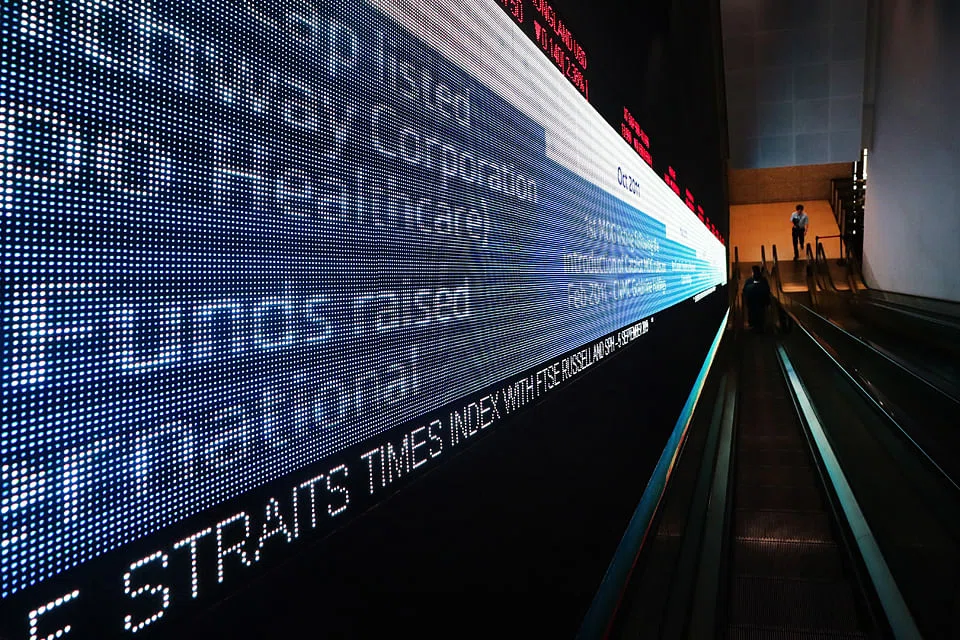
ECONOMIC activity over the past few months has plummeted to levels we have not seen in my lifetime, both in Singapore and globally.
Despite this, the global stock markets are in the midst of a remarkable rally. For the first time in history, a bear market, defined as a 20 per cent or larger fall, was followed by a bull market, a 20 per cent or larger rise, in consecutive months. This happened in March and April.
Since then, stock markets have continued climbing steadily, even as everyone agreed that the world was entering its worst recession since the Great Depression. In Singapore, the Straits Times Index has risen more than 400 points from a nadir of around 2,200 points at end-March.
The stunning divergence between the global economic and stock market trajectories presents strong challenges to our understanding of how financial markets work. We are used to economic numbers, corporate performance and stock prices moving in a broadly similar direction. Many investors now believe the market rally that began in April was fundamentally irrational. Was it?
This is an important question, because if the rally had no rational basis, then prices could plummet again at any moment, even with no material change to market expectations.
ANTICIPATING ECONOMIC RECOVERY
Markets are by nature forward-looking. In an economic recession, market participants not only want to know how drastic the fall will be but also when they can expect a recovery.
The answers can be difficult to figure out. But at the moment, there is a surprising level of consensus, with even fairly conservative economists saying the global economy should return to pre-Covid levels by the end of 2021.
This expectation is founded in part on the most aggressive fiscal and monetary response to any crisis in history by governments and central banks around the world, which has so far forestalled massive unemployment.
The prospect of a vaccine being discovered by the first half of 2021 also underpins recovery expectations. Leading health authorities such as Anthony Fauci, the US government's top infectious diseases expert, say that on vaccines, the question is no longer if one will be found, but when.
Most scientists are encouraged that humans develop neutralising antibodies that help patients stay naturally immune for some time after being infected with Covid-19. The chances of finding a vaccine that replicates this process is high.
Scientists also believe it is possible to fast track large-scale human trials - the phase that usually takes the longest. One way is by conducting them in an outbreak hotspot, instead of waiting for trial participants to be naturally exposed to the virus in an area with fewer infections.
In anticipating the end-point of the crisis, we are in effect rationalising that if the surf is eventually going to be up, we should all make an early move by swimming towards it now.
Given that equities have historically earned a return of 7 to 10 per cent per year, stock markets globally may have simply priced in that rate of return in their recent rally. That is, if stock prices continue to rise at the annual rate of 7 to 10 per cent between now and the end of 2021, they will approximately recover to pre-Covid-19 levels.
In other words, if we are sure about the end-point of an economic downturn, how we get there - whether it is through a U-shaped or some-other-shaped recovery - becomes less critical.
In line with this account of how markets are constantly looking to the future, we think that the global rally in stocks is rational, even if it diverges from the overall economic outlook.
A SQUARE-ROOT RECOVERY?
To be sure, many risks lie ahead. The virus appears to be receding in Europe, but in the United States and in many emerging economies - including Brazil, Russia, India and South Africa - it has not come under control. Within emerging markets, if the virus outbreak leads to more lockdowns, the economic impact may cause investors to lose confidence, which could, in the worst case scenario, snowball into a more serious currency crisis.
As the US approaches a presidential election in November, the global economy also faces the lingering threat of US-China trade tensions. That said, the financial markets are likely to conclude that both President Donald Trump and his opponent, the former vice-president Joe Biden, are reasonably market-friendly. Mr Trump has provided corporate tax cuts that the markets like, while Mr Biden can point to the stellar performance of the markets during both of the Obama-Biden terms.
In view of the unknowns that remain on the pandemic's trajectory and global trade relations, a W-shaped recovery in the stock markets, involving another sharp fall in stock prices, is possible. Our take, however, is that a square-root-shaped recovery is more likely. Equities rebounded steeply in April and have since been experiencing a drawn-out period of mediocre growth, similar to the near-flat or gently-sloping top of a square-root sign.
With limits on how much further stocks can rally, investment-grade corporate bonds are looking more attractive, as their prices are expected to normalise in the coming months, not unlike how the stock market has recovered since April.
In contrast, cash, which was "king" during bouts of panic among investors, no longer holds such clear advantages over other stable assets, such as gold.
As Singapore emerges from an election that clears the decks for a fresh term of government, Singapore stocks are a top pick within Asean. The Singapore dollar is also stable compared with other regional currencies and the government here has ample resources to support economic and employment growth.
RALLY WITH RATIONAL JUSTIFICATIONS
There is a fine line between resilience and delusion. Market behaviour is not always reasonable and level-headed - as we learned during the dot-com bubble of the late 1990s, when then-US Federal Reserve chairman Alan Greenspan coined the now-popular phrase, "irrational exuberance".
Still, the rational justifications for today's market rally are persuasive. This by no means guarantees that the journey ahead will not be choppy and uncertain for both the economy and the financial markets. However, appreciating the logic underlying recent market movements is important, because it can help us allocate resources and investments accordingly and avoid an unnecessarily despondent outlook.
Having a clearer understanding of today's situation will be useful to individuals, companies and governments as we make plans and take considered, if guarded, steps into the future.
TRENDING NOW
Despite the de-dollarisation debate, demand for dollar liquidity in Asia is growing

URA to review guidelines on floor space to give developers more design flexibility: Chee Hong Tat

He built the Vingroup empire. Now South-east Asia’s richest man is handing some key roles to his sons

Can a first-time homebuyer couple earning S$18,000 a month afford a new EC unit?

