

Global shipping sails into turbulent times as IMO 2020 nears
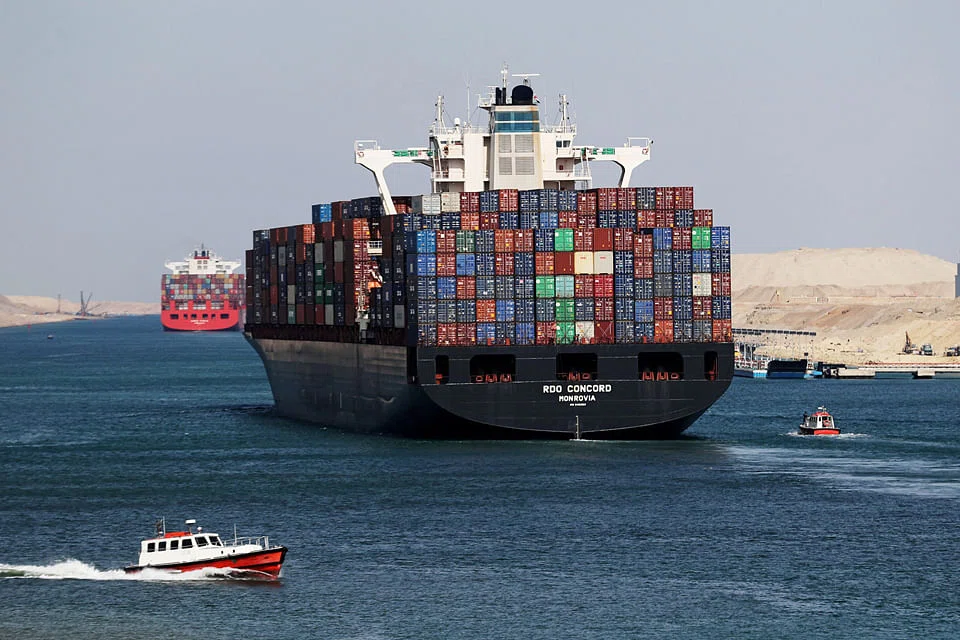
WHEN the shipping industry counts down to the New Year on Dec 31, industry participants are unlikely to be in a celebratory mood as global markets wake up to a whole new shipping regime come Jan 1: IMO 2020.
The new global regulation "IMO 2020" introduced by the International Maritime Organisation (IMO) mandates that the global shipping fleet will have to stop burning high-sulphur fuels, with the bunker fuel sulphur limit reduced from 3.5 per cent to 0.5 per cent from Jan 1. These measures to ensure cleaner emissions and combat air pollution are backed by 95 signatory states to this green shipping regulation.
With just days to go, opinions in the global markets on the specification of the new marine fuel, as well as the most competitive pricing method, remain as divergent as they were a year ago.
Singapore is the world's largest ship refuelling centre, or bunkering hub, and today imports huge volumes of high sulphur fuel oil (HSFO), which amounted to 49.8 million metric tonnes in 2018. The new low sulphur mandate will have a huge impact on the industry, given fuel oil with a sulphur limit of 3.5 per cent accounted for over 70 per cent of bunker activity. Singapore's oil product demand composition will undergo a drastic change, with HSFO demand dropping in 2020 while demand for marine gas oil (MGO) and low-sulphur fuel oil (LSFO) rises.
Yet in 2020, Singapore will still be a net importer of HSFO as vessels installed with "scrubbers" to filter out sulphur will continue to consume the fuel. However, much of its demand will switch to LSFO and MGO which complies with the IMO's new low sulphur limit of 0.5 per cent, creating new challenges to its supply chains.
Presently, high-sulphur bunker fuel is an oil product that suppliers blend to meet viscosity requirements. In order to comply with the new sulphur limit, the viscosity and other parameters will become drastically different due to blending.
Light touch, or tough enforcement?
The shipping industry is waiting to see how strictly port authorities will interpret the IMO 2020 rules.
The limit is defined legally as 0.5 per cent, meaning that a ship found to be burning a 0.51 per cent sulphur fuel could be declared non-compliant. Yet the bunker industry has typically taken a more lax interpretation in its commercial dealings.
Port states taking a strict interpretation of the rules could punish ships even for a small infraction. While fines on ship owners would be unwelcome, an even more problematic enforcement measure would be debunkering - forcing the offending ship to return to port, pay to remove its non-compliant bunkers and take on new fuel, imposing costly delays as well as additional expenses.
According to market participants, some authorities seeking to enforce the 0.1 per cent sulphur limit in north-west Europe have required debunkering in cases where the ship was found to be burning fuel with just a 0.11 per cent sulphur content.
Based on industry estimates, supply of the new marine fuel should be adequate in Singapore in the immediate term. The Maritime and Port Authority of Singapore (MPA) has worked with stakeholders to ensure an adequate availability of compliant fuel oil at its port ahead of 2020, with a list of suppliers made available in mid-2019. However, market participants are uncertain about the supply and quality of the new fuel once the inventory has been drawn down.
Uncertainty certainly prevails over how disruptive IMO 2020 could be to fuel pricing for ships. Demand for low-sulphur marine fuels in Singapore has climbed to record highs as the shipping industry prepares for the new IMO rules. The shipping industry will have to contend with differing specifications across a variety of marine fuel blends, and deciding on the pricing method to yield the most competitive price for the fuel. That task is likely to make for a turbulent start to 2020.
According to S&P Global Platts Global Analytics, the long-anticipated implementation of IMO 2020 will add another layer of interconnection across the energy complex, as HSFO will be forced to compete for power generation, and higher distillate prices and freight costs will change inter-fuel competition dynamics.
Despite some fundamental buoyancy stemming from an expected stronger macroeconomic framework, energy prices will struggle to post any gains over 2019 levels, and many fuels will see sizeable price declines. Oil pricing may well post the strongest pricing performance in 2020, benefiting from the uptick in demand from IMO 2020 and a commitment from OPEC to restrain supply, but this may well be short-lived.
TRENDING NOW
32 companies, 6 individuals bag accolades at Singapore Corporate Awards 2026

He built the Vingroup empire. Now South-east Asia’s richest man is handing some key roles to his sons
URA to review guidelines on floor space to give developers more design flexibility: Chee Hong Tat
Chagee, Mixue and Luckin won the market. Sustaining their edge is the harder part

