

GOP conservatives unlikely to back Trump
Despite the support of Republican voters for Trump and calls for unity, they regard the brash New Yorker as a dangerous demagogue and have no plans to vote for him.
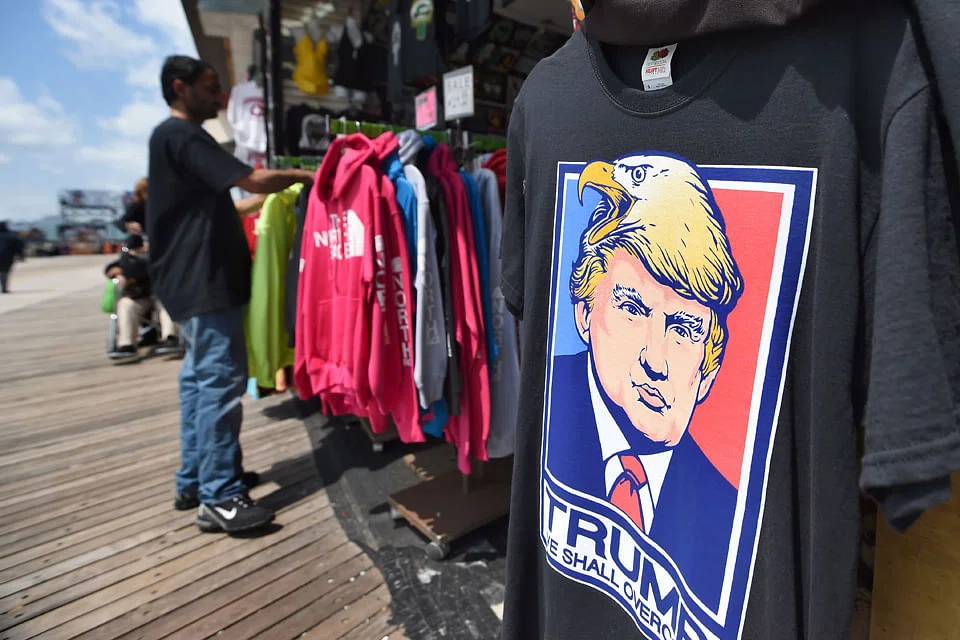
Washington
WHAT do George H W Bush, George W Bush and Jeb Bush have in common? Well, one answer is obvious. The three belong to a distinguished political dynasty that has produced the 41st and 43rd presidents of the United States and was perhaps on the verge of providing Americans with another one this year.
But then if you are Donald Trump, you would suggest that the other thing the three have in common is being "losers". Mr George H W Bush lost his run for re-election to Democrat presidential candidate Bill Clinton in 1990. Mr George W Bush did win re-election but was responsible for the war in Iraq, one of the worst military fiascos in American history, not to mention the financial crisis and the ensuing Great Recession that happened on his watch.
And there's the other "loser", former Florida governor Jeb Bush who had, at one point, been crowned the inevitable presumptive Republican presidential nominee of 2016, only to lose the race big time to the Donald who was responsible for tagging him as Low Energy Jeb.
And now there is a person who is bringing the three Bushes together. They have all made it clear that they are not going to support the presumptive Republican presidential nominee of their party and are not planning to vote for him in the general election.
The New York real estate magnate, who is expected to be nominated as the GOP presidential candidate during the party's convention in Cleveland in July, following the decision by his main rival for the position - Texas Senator Ted Cruz - to drop out from the race, has refrained from responding directly to being shunned by the members of this leading Republican family.
But during the campaign, the Donald not only mocked Mr Jeb Bush (at one point suggesting that his marriage to a Mexican American clouded his views on immigration policy), he also launched a brutal attack against the 43rd president, blasting his decision to go to war in Iraq and suggesting that Mr George W Bush and his aides had lied to the American people when they stated that Saddam Hussein's Iraq possessed weapons of mass destruction (WMD), the argument that served as the rationale for ousting the Iraqi dictator.
The Donald ended up winning the Republican presidential primaries in South Carolina, a pro-military conservative state, and beating Mr Jeb Bush after lashing out at his brother's Iraq War episode and after members of the Bush family campaigned in South Carolina for the former Florida governor. That win made it clear that a major political and ideological transformation has been taking place in the Republican Party.
Until the 2016 presidential race and Mr Trump's victory, the conventional wisdom among members of the Republican establishment was that support for the Iraq War and the policies that had driven it - and that assumed that the US should achieve an hegemonic military position in the Middle East - was one of the political dogmas that held the party together. There was no way that a harsh critic of the war, and one who was accusing the former president of lying about it, could win the support of Republican voters, especially when it came to the presidential primaries.
But that was exactly what happened this year when the brash New Yorker challenged that dogma and the entire Bush dynasty that moulded it, while beating Mr Jeb Bush and is now on his way to winning the Republican presidential nomination.
That explains why the Donald has been treating with a certain benign neglect the Bushes' decision to ostracise him.
From the perspective of the Donald, the refusal of the Bushes and other GOP figures - including House Speaker and Wisconsin Representative Paul Ryan (who was a losing Republican presidential candidate in 2012) and South Carolina Senator Lindsey Graham (who marshalled about 0.5 per cent of the votes running in this year's presidential primaries) - to endorse the presumptive Republican nominee says something about them and not about him.
After all, by supporting a former Democrat who in addition to his opposition to the Iraq War, doesn't buy into many other items on the traditional GOP agenda - such as promoting free trade, providing illegal immigrants with a path for citizenship and calling for trimming down the major social economic programmes - the Republican primary voters have rejected what the party's establishment and its leading intellectuals have been successfully marketing to them for years.
The revolt against this establishment among Republican voters, with the white blue-collar workers in the Rust Belt states leading the way, allowed the former reality television host to take over the GOP and oust from power the Bushes and other Republican biggies, including members of the donor class and Washington lobbyists.
What has happened amounts to a historic development. The Republican Party that was known for promoting pro-free market and pro-free trade policies, an interventionist military policy and a strong commitment to traditional values, is no more.
It has been replaced instead by the Trump GOP, a movement that is dedicated to advancing Trumpism, a blend of populist and nationalist principles that seem to be responding to the concerns of members of an ageing and shrinking white electorate. They feel a sense of anxiety over the demographic and cultural changes transforming America into a more multicultural society, and they regard the Republican establishment as a guardian of the interests of the pro-globalism elites who they accuse of doing their best to assist African Americans and Hispanics but who dismiss the plight of hardworking white Americans who have lost their manufacturing jobs as a result of trade agreements.
But the Bushes and other members of the Republican establishment and its many institutional and media outlets reject this critique and Trumpism in general, which they regard as being incompatible with the principles of Ronald Reagan's brand of conservatism. Reaganism revolved around expanding the free market, free trade, immigration, and extensive US engagement in world affairs. The committed Reaganites see Mr Trump as a dangerous demagogue and have no plans to vote for him.
"The party of Lincoln is in ruins," wrote columnist David French in the National Review, the leading conservative magazine that has highlighted its anti-Trump position. "A minority of its primary voters have torched its founders' legacy by voting for a man who combines old-school Democratic ideology, a bizarre form of hyper-violent isolationism, fringe conspiracy theories, and serial lies with an enthusiastic flock of online racists to create perhaps the most toxic electoral coalition since George Wallace (the late Alabama governor who had advocated racist principles and policies)".
Mr French, reflecting the views of his Republican colleagues who have rallied behind the #NeverTrump coalition, went on to scoff at those GOP figures who supposedly "bulldozed the ashes" of the Republican political corpse by "issuing nauseating calls for unity" behind the party's presumptive presidential nominee.
Some of these "collaborators", as the #NeverTrump crowd decries them, such as GOP chairman Reince Priebus, are confident that "time would heal" the political wounds of a divided party and that by the time Republicans convene in Cleveland in July, all the major Republican lawmakers and governors would rally behind the Donald in order to beat the real enemy, the presumptive Democratic presidential candidate Hillary Clinton.
The expectation is that Mr Trump, as he embraces a more "presidential" persona and ceases to insult women and Hispanics, would introduce soon his vice-presidential candidate and the men and women who would serve in his Cabinet and who supposedly would be devoted to traditional conservative values.
But it's doubtful that the Bushes, Mr Graham or Mr French would be impressed by this marketing campaign or that the Donald is even interested in re-branding himself as the New Trump. That would make it likely that quite a few Republicans would either stay at home or vote for a third party candidate or perhaps even for Mrs Clinton in November, but who would under no condition cast the ballot for the presidential candidate of the Trump GOP.






