

Grab should consider a Singapore dual listing on SGX
Beyond an uplift to investor recognition, the company could also benefit from EQDP funds

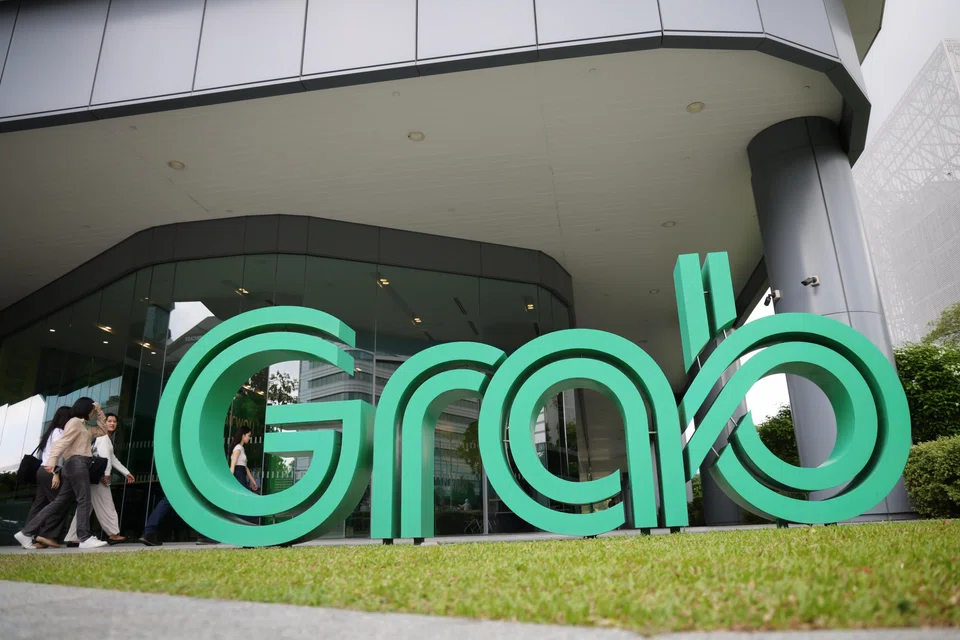
[SINGAPORE] As regulations and legislation are amended to facilitate the dual-listing bridge between the Singapore Exchange (SGX) and Nasdaq, one company that could consider tapping this opportunity is tech giant Grab.
Despite being Singapore-headquartered, the super app eschewed an SGX listing, instead debuting on the Nasdaq in December 2021 after combining with a special-purpose acquisition company (Spac).
Although its market capitalisation of US$15 billion puts it comfortably within the range of Straits Times Index component stocks, it has been thinly traded compared to its tech counterparts.
In the three months between Feb 10 and Monday (May 11), Grab’s average daily trading value was US$188.9 million, while that of its peer Uber was US$1.3 billion.
Fellow Singapore-headquartered tech company Sea’s average daily trading value for the same period was US$445.5 million. Sea is listed on the New York Stock Exchange.
With Grab’s shares so thinly traded, perhaps it should not be a surprise that its share price has never been close to Uber. Grab’s share price has hovered around US$3 to US$4, while Uber’s share price has not fallen below US$21.
Note that Grab’s market capitalisation of US$15 billion is about a tenth of Uber’s US$155 billion. Sea’s market value is higher, at around US$52 billion.
Perhaps US investors pay less attention to Grab simply because of its lack of presence in the US consumer market.
While the company has captured a significant chunk of South-east Asian consumers’ everyday lives – from ride-hailing to food delivery and financial services – that level of involvement is something that US investors might not appreciate from their vantage point.
Instead, US investors would be more familiar with Uber and how ubiquitous its ride-hailing service is, as well as its efforts in the food delivery space.
To tackle this recognition issue, Grab could dual list with the upcoming Global Listing Board (GLB). Dual listing in Singapore could unlock positive share-price movements for Grab, as it has high name recognition with investors here.
Similar to Uber’s US investors, Grab’s investors here would have lived the Grab experience and seen how in South-east Asia, for example, “Shall we Grab?” is commonly used as shorthand when referring to its ride-hailing or food delivery services.
Beyond retail investors buying into Grab here, the super app might also get an uplift from the Equity Market Development Programme (EQDP) funds that have been seeded for investment into the local market.
GLB-listed companies will be among those that EQDP funds will look to invest in.
Grab represents a growth company in tech that is not readily available on SGX.
While some, such as medtech player UltraGreen.ai, have debuted recently, Grab offers scale that few can match, given its operations across South-east Asia.
Being on the GLB will also afford Grab the best of both worlds, as its shares will be fungible on both SGX and Nasdaq. This means the company would not need to maintain two separate pools of shares.
Coupled with the harmonisation of laws between Singapore and the US, compliance costs should not increase as well. For Grab, there is more to gain than lose in using the GLB.
With the GLB slated for launch in mid-2026, this sounds like perfect timing for Grab to reap the benefits from its efforts here in South-east Asia.
TRENDING NOW

Once staunchly pro-China, Malaysian Chinese businesses are now distancing themselves from Beijing

Looking beyond looming CEO succession, should UOB potentially pursue a transformative merger?

Could stablecoins be the future of money?

Grab CEO’s wife Chloe Tong on life with Anthony Tan and finding her purpose

