GrabPay’s retreat is GXS Bank’s gain

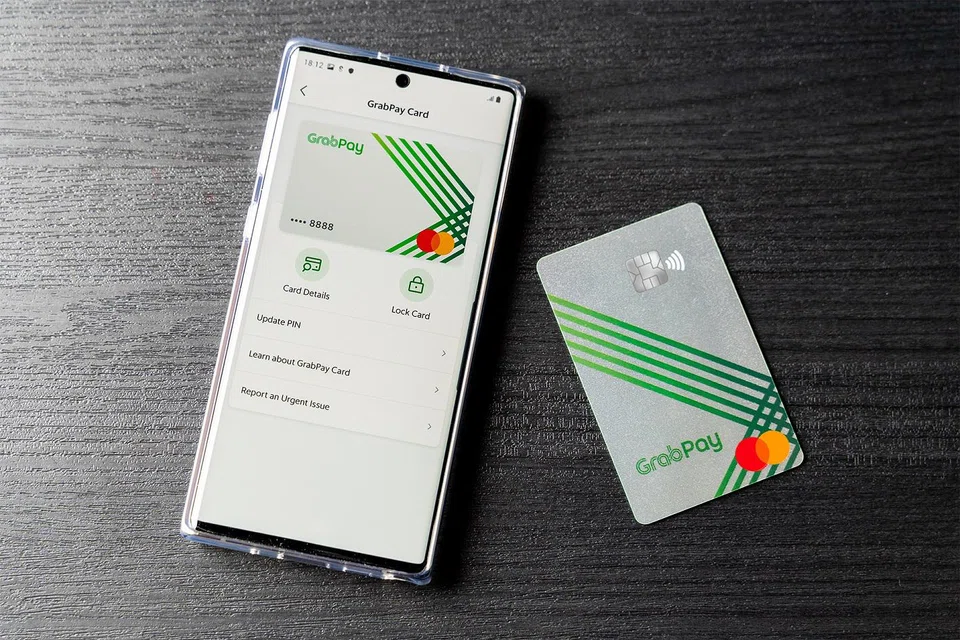
WHEN news broke earlier this month that ride-hailing giant and fintech platform Grab would discontinue its GrabPay Card issued by Mastercard from Jun 1, many were quick to see it as a casualty of Grab’s profitability drive.
Indeed, that might have been a factor in Grab’s decision to kill off the product.
But, looking at the bigger picture, cutting the service might point instead to the company pushing the utilisation of the payment methods offered by GXS Bank – the digital bank backed by Grab and Singtel.
This seems to be a more plausible scenario, especially when considering the roots of the GrabPay e-wallet.
GrabPay was initially launched as a way to keep customers within the Grab ecosystem, with the debit card offered as a sweetener.
Rewards for using the GrabPay Card came in the form of Grab loyalty points, which could be used on the platform’s app. The technology company saw this as the start of a virtuous circle, where customers would spend with Grab even if their GrabPay Card transactions went beyond the ecosystem.
Fast forward to today: Grab has undergone the cycle of pain felt by e-wallet operators, who consistently lost money on each transaction as the cost of cash could not be eliminated.
But, GrabPay has an advantage over some e-wallet operators. With a digital bank, it could see some cost savings in handling transactions.
In a market such as Singapore – where the population is highly banked and not lacking for options in debit or credit cards – perhaps retreating from this space is a valid strategy.
After all, users have also complained that the reward points for GrabPay have lost a lot of lustre over the years.
With GXS now in the picture, the GrabPay Card could be seen as potentially cannibalising the digital bank’s payment business.
With GXS customers acquired from ecosystem partners Grab and Singtel, it would make sense to funnel payment usage through the bank – with lower costs – rather than through GrabPay.
This isn’t the first service that GrabPay has shuttered in Singapore. Last September, it discontinued investment services AutoInvest and Earn+.
While GXS currently does not have any investment products, it is almost certainly on the cards as it looks to double its loan disbursals.
The jettisoning of these extra services does point to Grab consciously stepping away from areas of overlap with its digital bank.
It is a bonus if the jettisoned service was not doing particularly well for Grab.
As this column pointed out before, GXS’ key challenge in its path to profitability is in getting customers to use their accounts.
In that aspect, GXS has not been idle in its efforts.
Interest rates for the main account – with which customers can carry out transactions – have already been boosted to 2.38 per cent, from 0.08 per cent back in August 2023.
More recently, GXS announced on Apr 13 that it is offering a higher interest rate of 2.88 per cent on customers’ main account with five qualifying transactions. These transactions include paying with a GXS debit card or PayNow, and must include a transaction on either the Grab or Dash apps. Dash is an e-wallet owned by Singtel.
GXS will get a cut of the payment transactions made by its customers, and these moves should help increase utilisation for the bank as it charts its path to profitability.
This should also support its case for regulators to grant an increase in its deposit cap.
Coupled with growing its loans disbursal, GXS’ case for profitability will likely appear stronger than some of its peers that have yet to offer loans or a debit card.
Even as GrabPay appears to be sounding a retreat, the shrinking of overlaps with GXS means the digital bank will likely reap the benefits.