The Greek crisis: wild cards and the Russian connection
It cannot be excluded that Mr Tsipras insidiously hatched a plan with Mr Putin to get help from Russia in meeting financial commitments, while staying in the Euro.
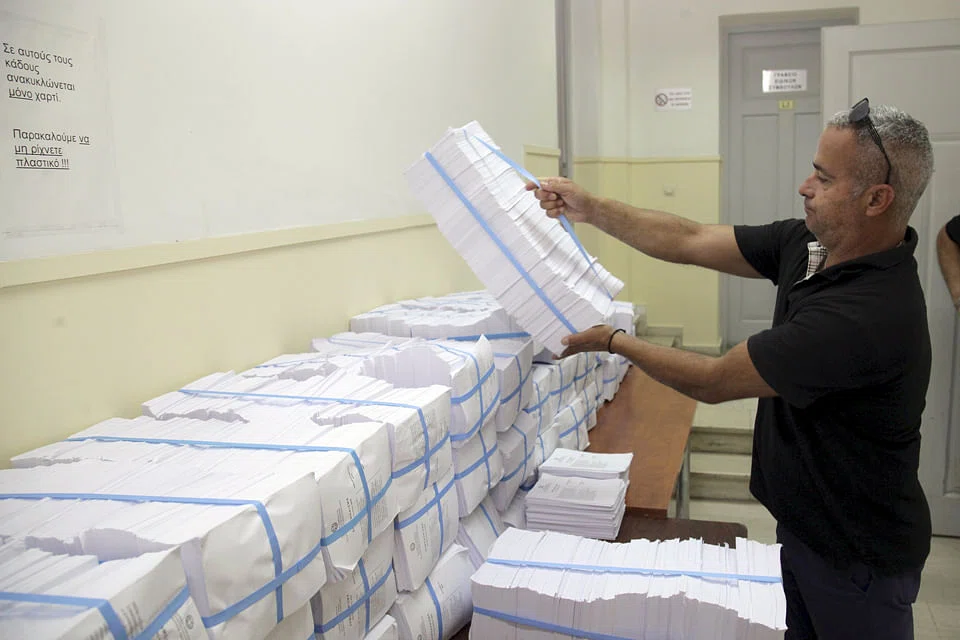
THE Greek referendum set for July 5, 2015, is about "yes or no to Europe."
The nation is divided. One camp is for the Euro, for membership of the European Union (EU), and ultimately for "Europa"; the other is against the Euro, against EU membership and ultimately against Europe. Families, friendships, organisations and businesses will split right through the middle. The two camps will hate each other for a generation.
A prosperous, well-functioning Greek society playing a role in Europe, in the southeastern part of Europe, well-anchored in an alliance with Western countries, looks remote. More likely Greece will serve as a European edition of a semi-failed state. It is urgent to get the country going again - whether it is yes or no - but extremely difficult in such a climate. Long-term confidence among overseas investors will dwindle from an already low level.
Opinion polls have consistently shown a majority of Greeks for the Euro, nudging the government to strike a deal with the creditors. If these polls are correct and the response holds, a majority will vote for Europe.
The opposition will hammer the point of "yes or no to Europe" during the campaign - admittedly a short one, but short campaigns favour simple questions.
The Greek government and Prime Minister Alexis Tsipras will propagate that Greece was confronted with an ultimatum on unacceptable terms - a humiliation for the nation. The snag is that he was elected on January 25, 2015 campaigning for Greece to stay in the Euro, but on better terms than the previous government, saying he could deliver. It is now apparent that this was not the case. Over five months of arduous and strenuous negotiations he has repeatedly conveyed the message to the public that he negotiated to keep Greece in the Euro and that a deal was close. It wasn't. Now he puts the full blame on the creditors; maybe he will succeed, but it is not likely. People's memories are not that short.
At the January 25 election, with a turnout of 63.9 per cent, political parties either totally against the Euro or asking for a better deal, got a small majority of votes. The largest party, Syriza, gained 9.5 percentage points, equal to about 500,000 votes. Its coalition partner, Independent Greeks, who only share opposition to austerity with Syriza, lost about one third of its votes. The two anti-Euro parties (Golden Dawn and the Communists) increased their vote slightly. The 500,000 votes gained by Syriza can be classified as floating votes. They can go anywhere: vote against the Euro, abstain or vote for the Euro. The rest of its voters, around 1.7 million people, may be more solid, but even among them, some will probably adhere to the slogan "yes to the Euro, but better terms," not really knowing what to vote in a referendum.
As for the opposition parties, the surmise is that their supporters will turn out and vote for the Euro. These parties will not only campaign for the Euro, but also accuse Syriza of incompetence and irresponsibility, plus of course they would be spotting an opportunity for new elections which could bring them back to power. They will point to an unknown future and uncertainty, which is traditionally something voters do not like.
NO CONTAGION
These preliminary observations may change as the campaign moves into its final stretch, but most Greeks will see this as a major issue determining the future course for the nation and not about "yes" or "no" to complicated economic issues.
Syriza faces an uphill task to explain what will happen after a no vote on the Euro. Greece will leave the Euro, but under what circumstances? What will it mean for the banking system and for the ordinary Greeks? The burden of proof that it will be better for Greece weighs heavily on its shoulders. Even if anger and frustration can be mobilised, it is doubtful how much it will attract voters interested in their daily lives. It will also depend on how the banking system weathers the storm. The more turmoil, the more likely it is that voters will turn against the government. The closure of the banks this week, plus the imposition of capital controls, do not convey the impression that the government is in control or knows what it is doing.
A majority for the Euro raises the question of what will happen in the Greek parliament. Prime Minister Tsipras stated explicitly that the will of the people will be respected, so the deal will be put forward and parliament will pass it with the votes of the opposition, regardless of how the government votes. Syriza may split and new elections would seem unavoidable. It is not possible to predict whether that will lead to a stable Greek government capable of sorting out the country's problems.
A majority against the Euro would take Greece out of the Euro and its membership in the European Union will inevitably be on the agenda. The transition to a Greek currency will throw the economy into a tailspin. The new currency - the drachma - will depreciate considerably against the Euro and will for a short while take some of the pressure off the economy. Judged, however, by Syriza's economic policy, the competitive advantage will be eaten up in a few years' time and, say two to three years down the road, Greece will be back to where it is today - only worse off having scared international investors away and chased business out of the country.
The financial markets will soon let us know whether the consensus is that Greece leaving the Euro can be isolated from the rest of the Eurozone, in particular the southern European countries plus Ireland, displaying vulnerabilities a couple of years ago. Some of them were enrolled in support programmes set up by the Eurozone. It is almost certain that contagion will not take place. A remarkable turnaround has been engineered. Economic growth is back - the 2015 forecasts for Spain go as high as three per cent. These countries were harassed by imbalances three to four years ago; but not anymore. Furthermore, the bulwark built since then by the Eurozone is much more robust.
SURPRISE SCENARIOS
However, there are three wild cards that might change the game completely.
The first one is an obscure result in the Greek referendum with a low turnout and a fifty-fifty vote. This will amount to stalemate with no one knowing what to do.
The second is that Greece returns to sign a deal with the creditors. A last attempt to scare the creditors into further concessions fails. Prime Minister Tsipras finds a pretext for calling off the referendum. Legislation will pass the parliament supported by the opposition, Syriza will break up and Mr Tsipras will form a new centre-left coalition. If concocted, such a plan might keep him in power with a more solid majority than the present one.
The third one is Russia. A week before the showdown with the creditors, Prime Minister Tsipras visited Russian President Vladimir Putin, allegedly to discuss a pipeline. It cannot be excluded that Mr Tsipras insidiously hatched a plan with Mr Putin to get help from Russia in meeting financial commitments, while staying in the Euro. He may deftly and deviously spring the surprise at the appropriate time just before the referendum telling the Greek voters that they can vote no to the terms set by the creditors because he has got money from Russia to take Greece over the hurdle and stay in the Euro. The electorate can react in two ways. Either they can buy it as the way out of the dilemma or they realise being tricked, beguiled and deceived by their prime minister.
If Greece accepts Russian loans, Greece's membership of the Euro and the EU belongs to a fantasy world. Nato membership will come into play too, as Russia would certainly ask for access to Greek military installations as a quid pro quo. For Russia and President Putin this will be a God-sent opportunity to exult and pay back for its sufferings in central and eastern Europa, Ukraine and the Caucasus. No one knows whether Russia has the money. Over the next six months Greece faces total repayments to the tune of at least 15 billion euros (S$22.45 billion).
For the West, the first reaction might be consternation, but bearing in mind that Russian military bases in Greece will reverberate in Turkey, drawing it closer to the West, Egypt as a solid Western ally, and Croatia as a new EU member, plus accession negotiations with countries north of Greece, the repercussions, however unwelcome, might be less dramatic than some years ago. Greece is no longer an indispensable ally.
What the Greek people will say to such a volte-face is difficult to gauge; the leverage of the Orthodox Church and traditional links to Russia should not be underestimated especially in view of the rivalry with Turkey. It may, however, be difficult to swallow for the large number of Greeks who welcome membership of the EU because domestic politicians over decades have undermined whatever credibility they enjoyed so the better to rely on the EU. Such a move by their prime minister may confirm that their judgment was correct.
If Russia does not seize the opportunity we can conclude that the Russian economy is in much worse shape than we thought - also an interesting observation behind the gunpowder smoke recalling Ukraine, Iran's alleged nuclear weapons programme and several other geopolitical issues.
Read more on the Greek crisis here