
The hedge fund king
Ray Dalio talks about his approach to investing, and his life philosophy.
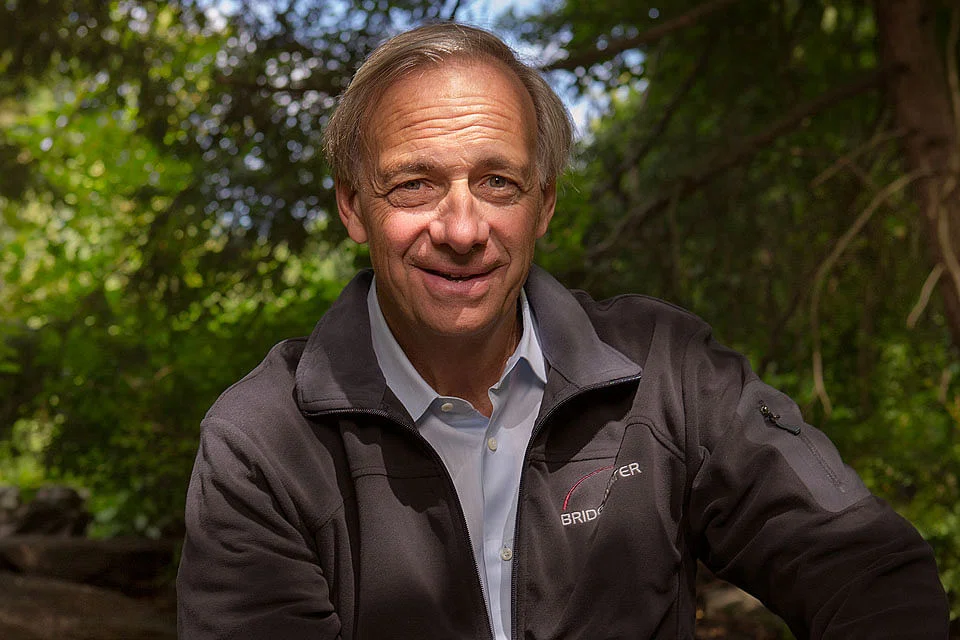
IN 1994, the Government of Singapore Investment Corporation (GIC) recruited a small and little-known hedge fund in the US called Bridgewater Associates as one of its external fund managers. Led by a maverick founder named Ray Dalio, Bridgewater had a staff of 39, an unorthodox approach to investing and a corporate culture that was considered unconventional and even bizarre.
Fast forward to the present. Last month, Bridgewater and GIC celebrated the 20th anniversary of their relationship. With a client base that includes many of the world's top sovereign wealth funds, central banks and institutional investors, Bridgewater has grown to become the world's largest hedge fund, with a staff of 1,500 and assets under management in excess of US$150 billion.
Mr Dalio, 65, the son of a jazz musician, is one of America's richest individuals with a net worth estimated by Forbes at US$15.2 billion. A cult-like figure who dispenses advice not only about investment and economics but also about life, he is the new king of hedge funds.
Candid, communicative and philosophical, Mr Dalio is a man of eclectic interests that include neuroscience and hunting, scuba-diving, oceanography, music and meditation - the last of which he credits for much of his success as an investor.
That success has been phenomenal. Bridgewater is reported to have made returns of close to 14 per cent a year for a quarter of a century. For GIC, it has returned 18 per cent a year on average over the last 20 years.
Its Pure Alpha fund has consistently beaten not only the US market but also most other hedge funds.
But Bridgewater's "killer-app" for which it is arguably most famous is its pioneering concept of the "all-weather" portfolio, which is constructed to make money under any economic scenario - whether it's rising growth and rising inflation, falling growth and falling inflation, rising growth and falling inflation or falling growth and rising inflation. The all-weather portfolio is segmented into assets - stocks, bonds and currencies - that do well in each of these scenarios. So no matter what happens, the overall portfolio tends to outperform the market.
TIMELESS AND UNIVERSAL
One of Mr Dalio's key investing rules is what he describes as "timeless and universal". "Those rules should be timeless," he says. "If I go back 100 years, they should work. And they should be universal - so they should work in any country. To me, the economy and the markets are like a machine. They have cause and effect relationships."
The criteria for making investments are put into computers as formulas, which are constantly updated as new data comes in. These formulas then help determine investment decisions. "It's like a GPS," Mr Dalio explains. "I'm driving my car and wondering what turns I should make. I have a GPS that says, 'now you are going to buy this'. There is this totally automated decision-making system which takes in data and says 'buy this, or sell that'."
But the final investment decision is a blend of judgment and automated instruction. "If the machine says do something and we think something different, the reconciliation of those things alerts me to the fact that I forgot some of the criteria that I have used in the machine. Two thirds of the time, the machine wins. One third of the time, I say there's something else we need, to make the machine work better."
Mr Dalio's quest for a "timeless and universal" system of investing has led him to delve deep into economic history. "I learnt that the times I was wrong (about investments) was when things happened to me for the first time, but they had always happened before."
For example, after the dollar crisis of 1971 when then US President Richard Nixon took the decision to de-link the dollar from gold, the dollar became a floating currency and was effectively devalued. "This looked like the biggest crisis I had ever seen," recalls Mr Dalio. "The next morning, I thought the stock market would be down a lot. But the market jumped the most it had jumped for years. It turned out that there had been currency devaluations before - just that I had just never experienced them, because I had only experienced fixed exchange rates. And when I looked at those past devaluations, I saw that all of them caused stock prices to rise.
"In history, everything happens over and over again. Every single thing is 'another one of those'. And if you find out which 'one of those' it is you can learn how to handle 'those'."
Mr Dalio believes that patterns repeat in life as well. "Principles are the way of dealing with all the things that happen over and over again," he suggests. "Individuals in their lifetimes make millions of decisions. If you look at them individually, you can get confused by them. But if you realise that every one of them is 'just another one of those', that makes it easier."
He has written a 123-page tract on principles - which is said to be required reading for everyone at Bridgewater. "All my decisions on management came down to about 200 principles. So while there may be millions of decisions, actually they come down to 200. Or if you look at how the economic machine works, it comes down to 30 minutes." Mr Dalio has made a 30-minute video on "How the economic machine works", which is posted on YouTube.
"I LOVE MY MISTAKES"
He claims that his greatest source of learning, as an investor, has been his own mistakes. "I love my mistakes," he says. "I have an expression: pain plus reflection equals progress. Every mistake is a learning opportunity. Every time you make a mistake, think of it as a puzzle you have to solve as to what you should do differently next time. If you crack that puzzle, you will get a gem."
His biggest mistake - one that he says changed his life - happened in 1979-82. The US had double-digit inflation and interest rates. Banks had lent hundreds of billions of dollars to Latin American countries and were in bad shape. "It was a period of greater uncertainty and turbulence than 2008," Mr Dalio points out. "It looked to me there was a choice between inflation and depression. I anticipated that these countries would default on their debts and, in August 1982, Mexico defaulted.
"And that was the bottom of the stock market. Mexico defaulted on its debts and the US and the world began 15 years of disinflationary growth. That stuck in my mind. Latin American countries went into depressions but because of that dynamic, we went into a boom. Depression in other countries gave us a deflationary force that allowed the easing of interest rates."
From that episode, he learnt many things, he says - notably, the power of central banks and the importance of being aggressive and defensive at the same time. "If you're not aggressive you won't achieve anything, but if you're aggressive without being defensive, you will get killed," he says.
Up to that time he had been making a lot of discretionary decisions, but the experience of 1979-82 inspired him to build systems to invest - both aggressively and defensively. The seeds of the "all-weather portfolio" were planted.
Systems and automated decision rules also helped him take emotion out of decision-making. "When you're in the middle of a chaos that's moving fast and you're holding positions - winning positions and losing positions - I learnt that by computerising the decision-making process, I could make decisions better."
He never gets emotionally affected. "You just look at it as a machine and don't let yourself get caught up in the minute-by-minute. If you can have perspective, stay back and remain calm - that's the test of you."
Nor does he trust "gut-level" decisions, which many money managers and corporate leaders rely on. "Our gut is determined by our experiences," he points out. "And the things that happen in our lifetime make up our experiences. You're going to be fooled by the experiences that haven't happened to you yet. So it's not good enough to go by your experiences and your gut."
His decisions come more from intuition, tempered by logic. He claims that his most creative ideas come from his subconscious. "Some of the best thinking takes place in the subconscious part of the brain," he says. "For me, the way to know whether something is good or bad is when it comes up to the conscious. If I can reconcile it with my logic and bring the two together, then they become a decision rule.
"I think this is true for all people. You will have subconscious motivations and they will come up. If you can reconcile them with your conscious logic, then they're probably good for you."
THE POWER OF MEDITATION
Meditation helps him a lot, he says. "It gives me equanimity. It allows me to take myself out of the situation and look at reality as a beautiful machine. I can get rid of my conscious thoughts and go into the subconscious state. That is where good things come from. It helps bring up things like intuition and imagination into my conscious mind." He meditates twice a day for 20 minutes each time.
"RADICAL TRUTH, RADICAL TRANSPARENCY"
Aside from automated decision rules and creative ideas, Mr Dalio also attributes Bridgewater's success to its unique corporate culture. All meetings are recorded for viewing by anyone in the company. Mistakes are openly pointed out. There are no pretences. Egos are not allowed to hold sway. Or at least that's the theory.
"Meaningful work and meaningful relationships through radical truth and radical transparency" is how he describes it. He explains: "I think everybody has to be on a mission and be excited about their work. Meaningful relationships are a source of great satisfaction to me. So if you can put meaningful work and meaningful relationships together, it's a wonderful combination.
"Radical truth means being able to talk about anything, particularly problems and weaknesses. This is the main differentiating quality of our culture. Most people do not like to talk about weaknesses. Yet everybody has weaknesses. Successful people - and I have been able to meet many successful people in the world - all have weaknesses, and what has made them successful is that they recognise their weaknesses and have developed compensating mechanisms. So they're not afraid to face their weaknesses. Radical truth means looking at problems and weaknesses and embracing them."
As for radical transparency - the recording of all meetings, for instance - Mr Dalio suggests that it helps people know the full truth of what's going on all the time - and it's a good thing.
"Imagine you're in a place where you know that nobody can talk about you without you seeing that conversation. So you can see every conversation that I have or the leadership of the company has with each other, on every topic. Nothing is hidden."
He acknowledges that this may not work for everybody. "It certainly selects people - people hate it or they can't do without it . . . It's like going into the Navy Seals.
"But the key is, are you afraid of the truth? Are you afraid of being embarrassed? We all stumble, we all make mistakes, we're all humanly flawed. If you can be comfortable being this way together, something magical happens. It's fantastic."
Mr Dalio is exacting in his selection of people - and there are thousands of graduates who want to join Bridgewater. "It's always more difficult when you're on top and so many people want to join you - it's almost like being rich and so many people want to be your friend," he says wryly.
He looks for three main qualities - character, common sense and creativity. "By character I mean integrity - to be the same on the outside as on the inside and to have the ability to do the things you don't want to do, to do the right things that are the difficult things. And common sense - there's a saying that common sense is anything but common."
Paper qualifications and mere intelligence do not impress him. "I find that there are way too many bright people; people who graduate from the best universities with the best grades are a dime a dozen. You have to sort through that. Unconventional, independent, thoughtful people are not as easy to find. That's what we look for."
Thirty-nine years on from starting Bridgewater from his Manhattan apartment and then guiding it into the force it has become, Mr Dalio is handing over the reins to his successors. While he is still chairman, he is not the CEO any more. "Right now, my role is largely as a mentor," he says. "It's a little bit like Lee Kuan Yew becoming mentor." And Bridgewater is going through "a good, smooth transition".
With a net worth equivalent to more than 5 per cent of Singapore's GDP, Mr Dalio is stupendously rich. He readily admits: "I have quite a bit of excess money." He has committed to the Giving Pledge - that is, to donate most of his wealth to philanthropic causes. A great believer in creating opportunity, he particularly favours microfinance - "because I can see the power of giving somebody US$1,500" - and education. As a nature lover, his foundation also supports groups that work towards preserving nature and the oceans.
His attitude to money is pragmatic. He wants to ensure that his family has enough for what he calls "HEM" - health, education and maintenance, but not much more beyond that. "The best gift I can give my children is self-sufficiency," he says. "I never understood how people would trade off their free time to get a bigger house or a bigger car, or status - I think status is a very unhealthy thing. Even luxury is an unhealthy thing." He folds up his sleeve cuff to show off his watch. "It's an Orvis watch. It costs about US$150."
Making money for himself was, in fact, never his goal, he says. "It was an accident. I just happened to be in an industry that produced money. It was a game for me. I could have been playing chess, or some other game that didn't make money. I just loved the game."



