

How the stars aligned for hospital giant IHH’s S$420m sale of education arm to TPG

Anita Gabriel
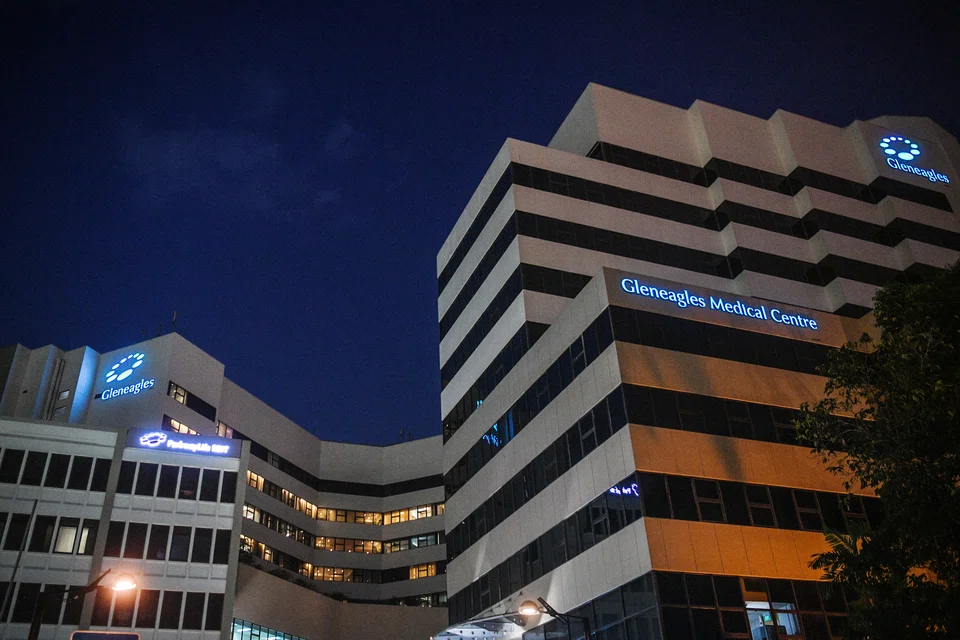
ASIAN hospital giant IHH Healthcare has made a strategic move to sell its education arm — a move that will allow it to sharpen its focus on its core healthcare business even as it embarks on a plan to expand its global presence.
The company recently announced it will sell its Malaysian medical education arm as well as a private hospital under construction to the Asian arm of US buyout giant TPG and Malaysian conglomerate Hong Leong Group.
This deal has been a long time in coming. IHH’s private medical school, International Medical University (IMU), has reportedly been on the block since March last year.
Now, IHH, the world’s second-largest healthcare group by market capitalisation, stands to pocket a divestment gain of some RM902 million (S$284 million). Proceeds will be used partly to pare down debt, which will also lead to savings in finance costs.
In the bigger scheme of things, the divestment of non-core assets will allow IHH to recycle its capital into its core healthcare business. IHH’s anchor markets are in Singapore and Malaysia, and it also has a large presence in Turkey and India. The firm can now muscle-up its existing hospital clusters even as it scours new and adjacent markets.
Of course, IHH already has quite a lot on its plate. The company, which counts Japan’s Mitsui & Co as its single largest shareholder, followed by Malaysia’s sovereign wealth fund Khazanah Nasional, had 3 months ago lobbed a RM5.67 billion takeover offer for Ramsay-Sime Darby. If this latter deal pans out, IHH will have a more dominant position in the Klang Valley. The acquisition will also be a stepping stone into Indonesia, a market that the healthcare group’s heart has been set on for a while.
Meanwhile, the loss of IMU would not cause a dent. The education arm accounted for merely 1 and 3 per cent of the group’s FY21 revenue and net profit, respectively. IMU is probably more valuable to TPG and Hong Leong. The duo pipped Southern Capital Group — a Singapore-based private equity firm owned and chaired by Malaysian tycoon Tan Teong Hean — to win the bid for the assets. Tan led and controlled Southern Bank, a Malaysian bank he had built over 2 decades, till it was taken over 15 years ago by Malaysia’s second-largest bank CIMB Group.
One tycoon’s loss is now set to be another’s gain. The sprawling Hong Leong empire is led by Malaysian billionaire Quek Leng Chan (his cousin Kwek Leng Beng, a Singaporean billionaire, chairs Hong Leong Group in Singapore). Quek has been keen on healthcare, as evidenced by Hong Leong’s move with TPG in September 2019 to scoop up Columbia Asia’s hospitals in Malaysia, Indonesia and Vietnam in a US$1.2 billion deal.
What makes this latest deal by IHH most interesting, however, is the historical dimension, including the past connection of at least one key individual, who could have provided the victors with an advantageous personal touch.
Prior to taking on his current role as TPG Capital Asia’s managing partner and head of South-east Asia, Ganen Sarvananthan was a key executive at Malaysia’s Khazanah for 10 years from 2004. As head of investments then, Sarvananthan played a central role in Khazanah’s measured yet zealous efforts to beef up the fund’s healthcare portfolio via big-ticket buyouts — until the assets morphed into the juggernaut that IHH would eventually become.
Sarvananthan, who is also a member of the TPG board and executive committee, was in fact one of the key negotiators in the Malaysian fund’s nail-biting takeover — and eventual privatisation — of Singapore’s Parkway Holdings (now part of the IHH umbrella) back in 2010.
Khazanah had been battling a rival bid by India’s billionaire Singh brothers of Fortis Group. It was in fact a sale by TPG of its block in Parkway to the Singh brothers that sparked the highly publicised battle for the Singapore-listed hospital group.
That the former investment banker, with stints at UBS in Singapore, Hong Kong and London, was also involved in talks over a decade ago for IHH to acquire IMU, further underscores the upside of connections, both past and present, in dealmaking.
IHH’s current managing director and chief executive Kelvin Loh also has historical links to the parties in the recent bidding process. Before he rejoined IHH in July 2019, to succeed its long-serving boss Tan See Leng (now Singapore’s Manpower Minister and Second Minister for Trade and Industry), Loh helmed Columbia Asia Group for about 2 years and oversaw the group’s 28 hospitals across the region.
The deal’s commercial upsides and “friendly” personalities aside, one question may become relevant down the road.
It is well known in healthcare circles that TPG has been eyeing KPJ Healthcare, Malaysia’s leading private healthcare operator. Last year, news reports said that the private equity fund, together with KPJ’s largest shareholder Johor Corp, was weighing taking the Malaysian-listed hospital group private. There has been little news on that front since, but market wags reckon a deal may still be brewing.
Should TPG bag KPJ, the former would have the means to crank up the competition for IHH on its home turf. The question, then, is whether IHH has unwittingly provided its competitor in Malaysia’s booming healthcare space with something of an advantage.
TRENDING NOW

If Europe goes to war, the fallout will be felt in East Asia

Singapore government slaps loan curbs on individual private-hire car buyers

Wider talent pools, smoother operations: What these S’pore firms gain from inclusive hiring

Philippines’ FDI slowdown exposes uneven investment prospects across S-E Asia

