

How to win friends and influence people - Shinzo Abe style
75 years on from its defeat in WWII, Japan's alliance with the West strengthens.
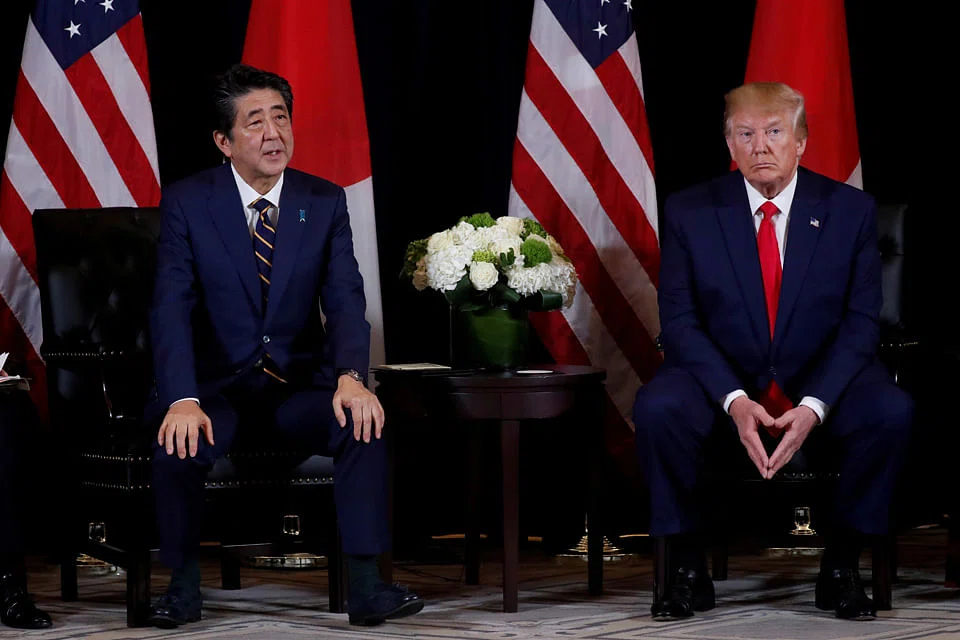
AUGUST marks the 75th anniversary of Victory over Japan (VJ Day) that finally brought closure to World War II. While Japan was a major US foe then, today Tokyo's importance in the Western alliance is of significant, and growing, strategic importance again.
Not only is Japan a longstanding member of Western clubs such as the G-7 alongside Italy, Germany, France, the United Kingdom, Canada and the United States, there is also growing policy speculation that it could be invited to join the so-called 'Five Eyes' intelligence alliance which currently comprises Canada, the US, UK, Australia and New Zealand.
A key part of the rationale for Japan's growing geopolitical importance is that, just like the start of the Cold War, it is perceived in the West as a key bulwark against the advance of China and potentially Russia into Asia-Pacific. Yet, while much emphasis is put on the security pillar of the Japanese-Western alliance, economics is important too.
Since the end of WWII, the gradual transformation of Japan's world role stemmed, in part, from its phenomenal post-war business success which led to growing calls for it to match its economic power with commitment to international political relations too. Today, it remains one of the world's largest three economies, and it will be critical to helping rejuvenate global economic growth after the shock of the Covid-19 crisis.
Outside of the US, many other Western countries, including in Europe, particularly welcome Japan's invigorated commitment to international trade. Not only did Tokyo sign last year a bilateral agreement with Washington, it has committed recently too to an EU-Japan trade agreement covering around a third of global GDP and almost 650 million people. Moreover, Tokyo was at the vanguard of the so-called Comprehensive and Progressive Agreement for Trans-Pacific Partnership (CPTPP) last year with 11 Asia-Pacific and Americas nations which account for around 13 per cent of global trade and a combined population of around 500 million.
One of the reasons that Europe has particularly appreciated Japan's defence of international trade, and indeed a wider 'rules-based world order', is the Trump administration's equivocation on these issues. The Tokyo-hosted G-20 summit last year saw trade being given a key focus, despite the fact that this issue caused much contention between US President Donald Trump and other world leaders at previous G-20 meetings, including in Germany in 2018 which saw a clash between Chancellor Angela Merkel and the US president with the latter pushing for protectionist language to be inserted into the end-of-summit communiqué.
Beyond these structural factors driving Japanese international policy, Prime Minister Shinzo Abe - now the longest serving premier in the nation's history - has proven personally very adept at consolidating relationships with Western leaders. This includes Mr Trump who during the 2016 election campaign was critical of Tokyo.
Mr Abe spotted this danger and became the first foreign leader to meet the president after his shock victory four years ago. Since then, Mr Abe appears to have forged a significant personal bond with the mercurial president to fortify US-Japan ties in the face of significant international uncertainty.
Mr Abe has been one of the few foreign leaders, for instance, to agree to a trade deal with Mr Trump. This has helped neutralise the president's previous criticism of what he characterised as Japan's unfair trade practices involving car imports and exports; and his accusations that Tokyo was using monetary policy to devalue its currency to boost exporters.
Moreover, Mr Trump has repeatedly highlighted the strong US commitment to the security of Japan and said that the relationship is the "cornerstone of peace" in Asia-Pacific. This despite his 'America First' philosophy, and his 2016 assertions that the bilateral relationship had become too one-sided with Japan needing to undertake more financial burden-sharing in international security. This deepening of US-Japanese ties reflects bilateral concerns about a range of issues, including North Korea, where Mr Trump and Mr Abe have sometimes appeared at odds. The prime minister has been blindsided on several occasions by Mr Trump with his Pyongyang diplomacy, including the original decision to meet with Kim Jong-Un in Singapore.
Mr Abe urgently spoke with Mr Trump about putting on the table with Mr Kim the issue of Japanese nationals abducted in the 1970 and 1980s, and taking Tokyo's broader security interests into account in the meeting. Japan has been worried that Mr Trump may look to a deal with Mr Kim under which Pyongyang would agree to give up missiles capable of reaching the US, without eliminating short- and medium-range missiles that threaten Tokyo and other Japanese cities. This issue, however, has become less salient given the stalling of the US dialogue with North Korea.
Undoubtedly, the major driver in the increasing closeness of US-Japan ties is China. Here, Tokyo has been reassured by Washington following earlier worries about what Mr Trump's 'America First' presidency might mean, especially after US' withdrawal from the CPTPP (which includes Australia, Canada, Singapore, New Zealand, Japan, Chile, Brunei, Malaysia, Mexico, Peru, and Vietnam) and had been originally intended by the Obama administration to lock the US into deeper strategic partnerships with traditional allies in the region.
In this fluid geopolitical landscape, Mr Abe has sought to align his longstanding foreign policy plans around that of Mr Trump's agenda and he has significantly increased defence spending. Building from last year's US-Japan trade deal, in a context whereby the president appears to want a more internationally assertive Tokyo, the prime minister would now like to overturn much of the remaining legal and political underpinning of the country's post-1945 pacifist security identity so that it can become more externally engaged.
One big, specific measure Mr Abe wishes to push for is abolition of Article Nine. This is the clause in Japan's post-war Constitution which constrains the country's military to a strictly defensive role rather than a conventional army, and has meant that defence spending has most often remained below one per cent of GDP for much of the period since 1945.
To overturn this, Mr Abe needs not just a two-thirds majority in both chambers of the legislature, but also a simple majority in a national referendum.
While he continues to push for this as part of his legacy, it may yet prove an insuperable obstacle even for the skilled, longstanding prime minister given the large body of Japanese public opinion which continues to value its post-war pacifism in the only country in the world to have ever been attacked with nuclear weapons.






