Hydrogen the key puzzle piece for Singapore’s decarbonisation
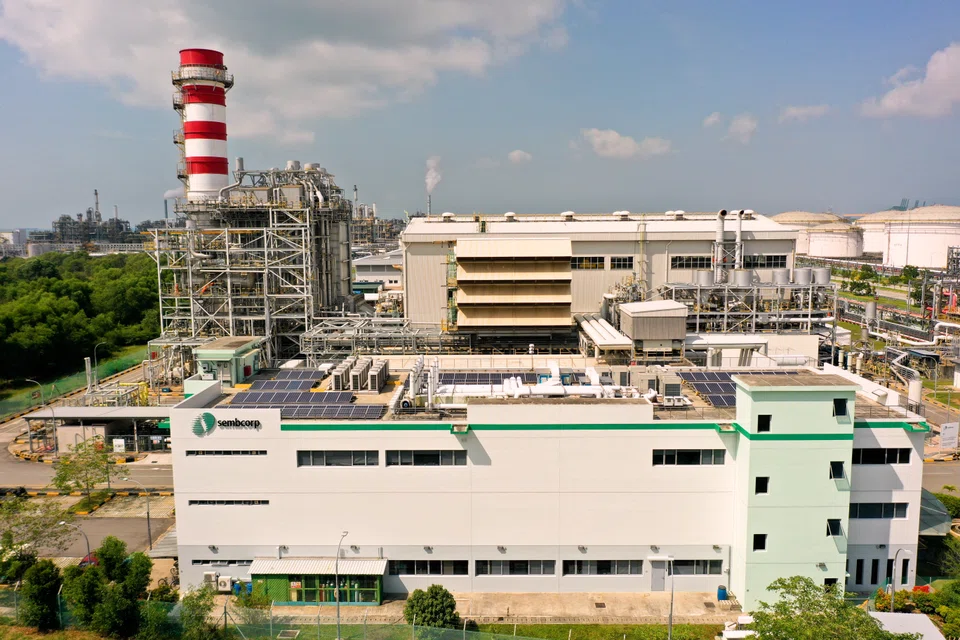
SINGAPORE stands at a critical point in its decarbonisation pathway, to reach its net-zero goal by or around mid-century. As announced by the Ministry of Trade and Industry at this year’s Singapore International Energy Week, building up capabilities for hydrogen-fuelled power generation will be key.
The power sector currently makes up 40 per cent of the nation’s total carbon emissions. To reduce this carbon footprint, hydrogen is the most promising alternative fuel to natural gas, which addresses 95 per cent of our energy needs today.
According to the Hydrogen Council, clean hydrogen, defined by its production from renewables and low-carbon methods, has the potential to represent 11 per cent of total carbon emission abatement needed to limit global warming to 1.5-1.8 deg C. One of the scenarios in the Energy Market Authority’s Energy 2050 Committee Report also projects that hydrogen as the main energy source could account for up to 60 per cent in Singapore’s energy mix.
Accessibility and affordability of hydrogen
Hydrogen is the most abundant element in the universe. Despite that, the ability to produce and transport the fuel at an affordable scale requires more investment and research.
The most common production method today, steam methane reformation, produces grey hydrogen using natural gas and releases carbon emissions in the process. In comparison, green hydrogen is produced when renewable energy is used to break down, or electrolyse, water into its base components of hydrogen and oxygen – releasing zero carbon in the process. However, Singapore does not have the renewables capacity to produce sufficient green hydrogen for its energy needs. The only solution is to import it.
Thankfully, hydrogen has similar infrastructure and distribution methods to natural gas, our current mainstay. It now boils down to how exactly we bring green hydrogen in, each method with its own pros and cons.
First: Ammonia. The global ammonia supply chain is well established, given that 70 per cent of ammonia is used for fertiliser production. However, toxicity from industrial ammonia use and the lack of combined-gas cycle turbines capable of ammonia-natural gas blends remain challenges. Turbine manufacturers around the world are now developing ammonia-ready turbines to address this gap.
Liquid organic hydrogen carriers (LOHC), which are energy-intensive when extracting hydrogen, are comparatively safer. The “SPERA Hydrogen™” technology developed by Chiyoda Corporation for instance, releases hydrogen from methylcyclohexane, a form of LOHC that is safe to handle and compatible with existing industrial infrastructure. Sembcorp is currently working with Chiyoda Corporation and Mitsubishi Corporation to explore the potential commercialisation of a decarbonised hydrogen supply chain into Singapore.
Another form, liquefied hydrogen, remains highly energy-intensive to cool and compress, given the extremely low storage temperatures of below -250 deg C. Furthermore, its commercial viability depends on engineering solutions to limit evaporation losses. And while hydrogen pipelines already exist, no country has built long-distance subsea hydrogen pipelines.
Selecting the optimal transport method will depend on factors ranging from transport distance, proximity to urban areas to existing infrastructure capabilities.
An Asean hydrogen economy
Developing a regional hydrogen economy in Asean, which is endowed with renewable energy potential, provides the best solution.
Singapore is well positioned to lead this effort through partnerships with other importing nations, such as Japan. As the first country with a national hydrogen strategy, we can leverage the expertise of major Japanese industrial corporations and financiers active in the space. The Japan Bank for International Cooperation (JBIC) for instance, has inked several clean energy-related partnerships focused on decarbonisation initiatives. Sembcorp is currently working closely with partners such as JBIC to support such ambitions.
While Singapore continues to accelerate renewables development, a robust hydrogen economy, playing to our strength in regional cooperation, will be key to our low-carbon future.
The writer is CEO, Singapore and South-east Asia, at Sembcorp Industries