

Impact of global market turmoil
The gyrations felt in the world's markets had their roots in China, but Asia's giant was just shifting over to a new way of growing.
WHAT we are about to see is a major restructuring of the Chinese economy and the pattern of its trade. It will have enormous consequences for Asia, and within that continent, on South Asia. In a way, this is China's "pivot to Asia". The American version focused on military preparedness. The Chinese will place emphasis on economic links. The stage for this fundamental change was set into motion by the events last month.
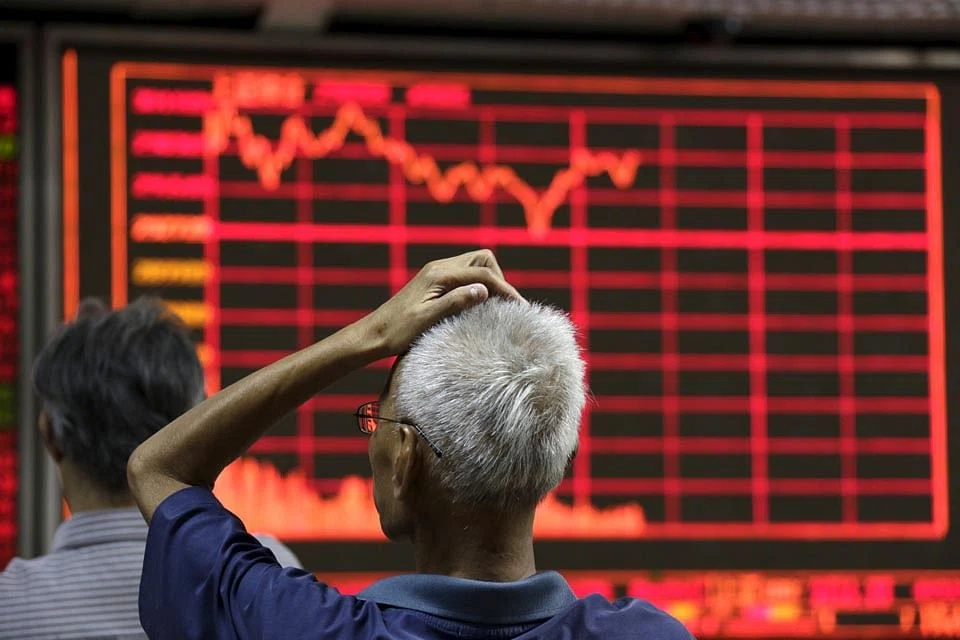
Over a period of less than three weeks, there was unprecedented turmoil in the world's financial markets. On Aug 11, the Chinese central bank devalued its currency by 1.9 per cent against the United States dollar and followed it up with smaller adjustments in the next two days. On Aug 24, Dow Jones Industrials in the New York stock market fell by more than 1,000 points soon after the opening bell. The same day, the Shanghai market declined by 8.5 per cent.
China, undoubtedly, was the main reason for this turbulence. Trillions of dollars of value were wiped off the markets in the United States and other major financial centres, raising the question as to what to expect in the future.
While this drama was unfolding, the International Monetary Fund (IMF) indicated that China will not be able to meet its "new normal" of 7 per cent of gross domestic product (GDP) growth over the next decade. This year, the Chinese economy will increase by only 6.8 per cent, declining from 7.4 per cent last year. This means the demand for raw materials supplied by countries such as Australia and Brazil would decline by significant amounts, negatively impacting commodity producing and exporting countries. On Aug 28, the Brazilian authorities announced that the country's economy had plunged into a deep recession. All this was a reminder about the deep links that had developed among different parts of the world economy.
What we are seeing is an over reaction to the changes in the structure of China's economy and in the policies adopted by the government in Beijing to deal with them. China could not have maintained the rate of growth of the last almost 40 years, from 1979 to 2013.
In 1979, Supreme leader Deng Xiaoping announced a number of reforms that, when fully implemented, would move China from a socialist to a quasi-capitalist economy - "quasi" since the state, while giving up the ownership and direct management of a number of assets, would remain actively involved.
In 2013, political and economic power passed into the hands of new leadership group headed by President Xi Jinping. He took a number of initiatives, in addition to proclaiming the "new normal" of 7 per cent rate of growth.
In between these two important events, the Chinese economy grew by 9.8 per cent a year. This record of very high level of growth stretched over such a long period of time has no parallel in economic history. At this rate, the Chinese economy was 31 times its size at the beginning of the Deng period. Income per head of the population had increased 16-fold. The country has virtually eliminated mass poverty; the World Bank estimated that only 10 million people were poor in a population of 1.4 billion.
NEW ECONOMIC GROWTH MODEL
With changes of such magnitude, it was clear to the new leadership in Beijing that it could not continue with the old model of economic growth powered by exports of manufactures produced by cheap labour. The first generation of development economists had suggested that a mass transfer of workers from low-productivity agriculture to more productive manufacturing would fuel growth, but this would continue for as long as the reservoir of cheap labour was not depleted. It is now exhausted in China.
The Chinese authorities turned to investment in infrastructure as the new engine of growth. Roads and rail-lines were laid in all parts of the country, and new housing was constructed for the tens of millions workers who moved from the countryside to towns and cities. China now has, by far, the largest network of fast trains in the world. And one way of encouraging domestic consumption is to encourage those with capital not to save it in the banks but to invest it in domestic companies. But the local governments and the investors in the stock markets overshot. The former became heavily leveraged; the latter became over-bought. The gross values of the main stock exchanges doubled in a year and a correction was expected - and occurred.
This was not the first time the Chinese stock markets were adjusting; this occurred 10 years ago as well. But the current correction eroded only a part of the gains made over the last one year. By the end of last month, the Shanghai index fell by 43 per cent; even with this fall, it was 50 per cent higher than in early last year. If the adjustment in the markets was not a cause of worry, were there reasons to believe that the Chinese economy was not in a major crisis? The answer is yes because the authorities have instruments in place to deal with the situation.
With poverty virtually eliminated, Chinese consumers are looking for a different basket of consumption goods than that demanded by the less well-to-do. If there is to be a consumption-led pattern of growth provided mostly by industry and the modern service sector, the Chinese will need a policy framework within which that can be done. Some of what the new consumers require will come from the outside, particularly from Asia, particularly the southern parts of the continent. This means a major adjustment in the patterns of growth and trade. What China was producing for the West, it will need from Asia. Its own industry will focus even more on investment goods required to supply the massive construction projects it has begun in Central Asia and is preparing to launch in Europe.
With these adjustments in mind, the policymakers in Beijing adopted measures to facilitate the contemplated change in the pattern of trade. For this, they needed to move towards a convertible currency the Asian nations could use to increase their trade with China without using scarce dollar resources. One step was to realign the renminbi rate of exchange with market fundamentals. This was done by the series of devaluations undertaken from Aug 11.
If we see China and the performance of its financial markets and that of its economy from this perspective, the reason for panic seems less justified.






