

To improve Hong Kong’s international image, start at home
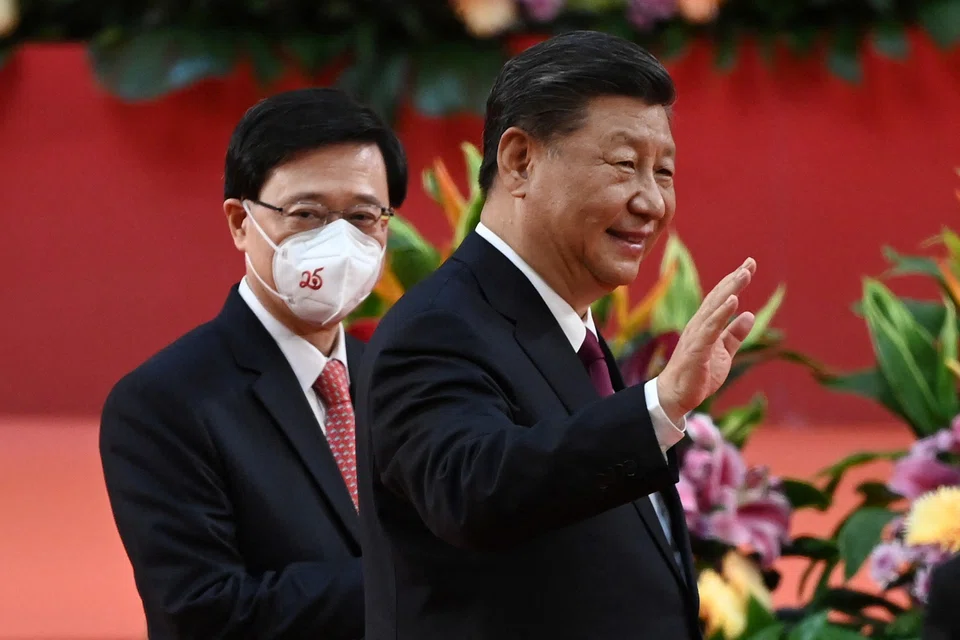
LESS than a month after assuming office, Hong Kong chief executive John Lee faces a major stumbling block in his much ballyhooed campaign to promote the financial hub in the international community by “telling a good Hong Kong story”.
Even before he was handpicked by China as the sole candidate in the chief executive election on May 8, Lee spoke about countering what he called “smearing” of Hong Kong by “foreign forces” by promoting a different narrative.
In his inaugural address on Jul 1, Lee praised the 2020 national security law (NSL) imposed by Beijing for having enabled Hong Kong to end the chaos that began in 2019 and restore order. Others, on the other hand, see the China-drafted legislation as responsible for narrowing Hong Kong’s autonomy and eroding its people’s rights and freedoms.
On July 27, the United Nations Human Rights Committee, after 3 sessions of open discussion with Hong Kong officials – part of a review of the city’s compliance with the International Covenant on Civil and Political Rights (ICCPR) – issued “concluding observations” in which it voiced concern regarding the “overly broad” security law. It asked Hong Kong to repeal the law because of its inconsistency with the covenant, a key human rights treaty which has been ratified by most UN member states but not China.
The committee voiced numerous concerns about the NSL, including “the lack of clarity on ‘national security’ and on the types of behaviour and conduct that constitute a criminal offence under the law, which undermine the principle of legal certainty”.
The call for repeal is hugely embarrassing for Hong Kong and China. For one thing, Hong Kong is in no position to repeal a Chinese law. The committee knows this but can only operate within the parameters of the ICCPR, which binds Hong Kong but not China. So the committee can only admonish Hong Kong, not China.
The committee members are international human rights experts. The current chair is from Greece and the vice chair, who asked some searching questions, from Guyana.
On the past 3 occasions when the UN committee reviewed Hong Kong’s compliance with the treaty, it had received copious submissions from non-governmental organisations (NGOs). This time, apparently because of the security law, Hong Kong NGOs fell silent and submissions were largely made by NGOs based overseas.
Asked repeatedly if NGOs that made submissions might be punished on national security grounds, Hong Kong officials refused to provide a clear answer, implying that even the UN committee could be considered a foreign force with which Hongkongers are not allowed to collude.
Aside from the NSL, the committee was also harsh when commenting on the offence of sedition.
It noted that sedition as an offence of the Crime Ordinance “was resuscitated in 2020 for the first time in decades”, and recalled that people have been arrested and charged “for having exercised their legitimate right to freedom of speech such as chanting slogans in public, clapping in courts and expressing criticism of government activities”.
It expressed concern that those arrested include “academics, journalists and representatives of civil society”.
Hong Kong officials, the committee said, have allegedly “failed to specify the precise nature of the threat posed by activities” such as slogan-chanting and clapping.
The committee also focused on freedom of association, saying that it was concerned about the filing of criminal charges against the leaders of trade unions and their vulnerability due to relations with international trade union organisations.
As is the case with international law generally, the UN committee has no coercive power and can only enjoin state parties to act through moral suasion. But the committee is considered authoritative where human rights matters are concerned, and its finding that Hong Kong is not compliant with the human rights covenant is likely to have far-reaching impact.
The committee pointed out that Hong Kong’s next report is due in July 2028. However, it requested Hong Kong to provide, by Jul 28, 2025, “information on the implementation of the recommendations made” regarding the NSL, freedom of expression and freedom of association.
Hong Kong’s immediate response was a statement objecting to “unfair criticisms.” But it indicated it would continue to engage with the committee, submitting its next report in 2028 and providing information on the three areas requested by the deadline.
If there is no progress on the ground in the next few years, it surely won’t be easy for chief executive Lee to tell nice-sounding stories on Hong Kong. To change Hong Kong’s image, the place to start is not the outside world. It is in Hong Kong itself.
TRENDING NOW

Singapore identifies 7 firms responsible for haze fires, notices issued urging action: Grace Fu

‘How many will survive?’: Bubble fears arise as China’s humanoid robotics face reality check
GIC-backed Bank Jago sees wealth management as next growth engine as Indonesian investor base grows
Ageing in Asia: Huge potential for the consumer economy

