
Inflation and Omicron killing Biden politically
Many Americans think President Biden has not brought them to the post-pandemic promised land.
 Add BT as a preferred source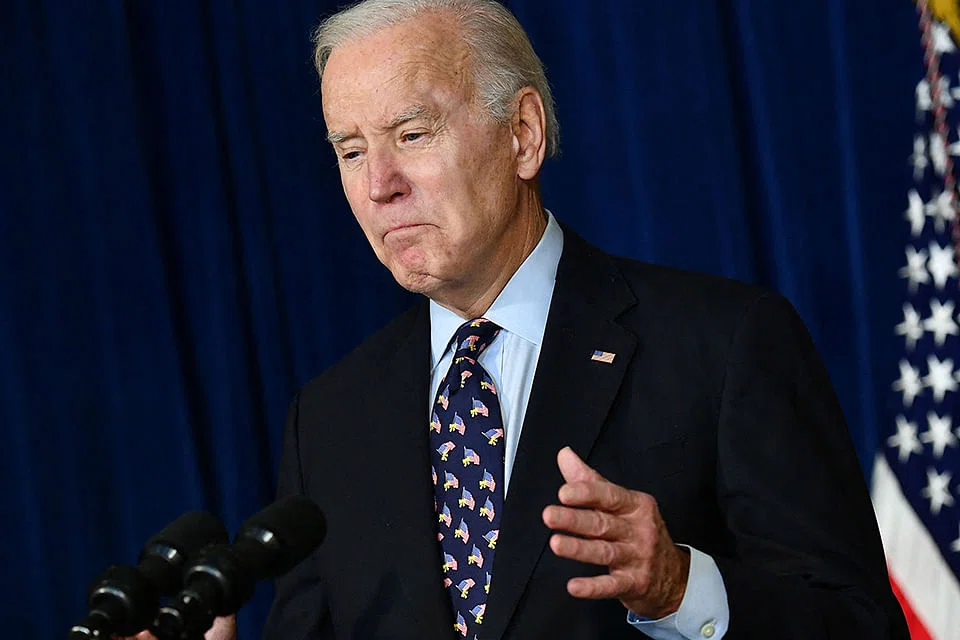
LET'S consider 2 contrasting narratives to summarise US President Joe Biden's first year in office: In the first one, President Biden is compared to former presidents Franklin Roosevelt, Lyndon Johnson and Ronald Reagan, as a leader who achieved one of the most ambitious domestic agendas in American history.
After all, Biden has already won Congressional approval for 2 gigantic spending bills, the US$1.9 trillion pandemic relief plan and the US$1.2 trillion infrastructure bill. Most Washington insiders are predicting that he would be able to deliver another one - the Build Back Better Act, a huge investment in expanding the social safety net, which would probably come to around US$1.75 trillion in the coming months.
In big historical terms, President Biden may be on his way to reverse the free market social-economic policies inaugurated by the pro-business Republican president Reagan, and to moving America to the political left by shifting more control over the economy to the federal government and redistributing wealth from corporations and the wealthy to the struggling middle class and poor.
Moreover, most indicators - including GDP growth, the unemployment rate, stock prices - are suggesting that the American economy has been doing quite well under the Biden presidency, recovering gradually and perhaps on its way to a historic boom.
In fact, the American economy has been surging faster than most analysts had predicted earlier and creating 6 million jobs since President Biden took office. Americans have now a more competitive labour market that allows workers to demand a rise in pay. Which explains why 13 million Americans have quit their jobs in the last 3 months, and are looking for better paying opportunities.
The rapid economic growth and rising employment opportunities are helping those at the bottom of the social-economic ladder, as Candidate Biden pledged to do during the 2020 presidential campaign. But they are also making investors happy: The stock market is up around 25 per cent and is continuing to climb.
Navigate Asia in
a new global order
Get the insights delivered to your inbox.
And Americans have now more money in the bank, thanks to the stimulus cheques they received during the pandemic. They can now not only avoid being evicted from their rented apartment or the foreclosure of their business, but can also spend more money on their personal needs.
But if the economy is doing so well, as Biden administration officials point out, why is President Biden's approval ratings continuing to sink, with a majority of Americans giving him failing grades not only for his handling of the economy, but also for his management of other policy issues, including defence and foreign policy and, let's not forget, his response to the pandemic.
And the general consensus among politicos is that President Biden's party, the Democrats, are going to lose their slim majority in the House of the Representatives, after the 2022 midterm election, and that there is more than a 50 per cent chance that the Republicans will also take control of the Senate next year, turning President Biden into a political lame duck.
The reality
There are several reasons why the bullish narrative above about President Biden, with its emphasis on the good economic indicators, runs contrary to the reality of his collapsing approval rating and the general depressed national mood; and which makes for an alternative bearish narrative.
First, there is the other economic indicator, inflation. US inflation continues to persistently rise, hitting the fastest rate since 1982 in November, with the consumer price index rising to 6.8 per cent from a year ago, and as well a significant rise from 6.2 per cent in October.
One doesn't have to be an expert economist to figure out why a rising inflation rate dampens the public's mood. Higher prices at the supermarket or at the petrol pump have a direct effect on the expectations consumers have about the growth of their income and the economy.
While it's true that many Americans have seen a rise in their incomes in recent months, those gains can be lost when adjusted against the rising prices that force American households to spend more money on rent and petrol. Telling them that their economy is growing and that the stock market is roaring isn't going to change how American consumers are regarding their economic reality after standing longer than usual in line in the grocery store and discovering that your food bill has increased by more than 20 per cent compared to last year or that the cost of petrol at the pump has risen to the stratosphere.
It may not be fair to President Biden, but most Americans compare the economic conditions under his presidency to those prevailing in the first 3 years of economic boom and no inflation under the Trump presidency before the pandemic hit. They have been counting on Bidento return them back to that pre-pandemic era.
But they don't feel that they are experiencing an economic boom and have also concluded that, despite his pledges to the contrary, President Biden's management of the response to the pandemic doesn't deserve high grades, at best a B-minus compared to president Trump's C.
National mood
People understand that President Biden hasn't been responsible for the advent of the Delta and Omicron variants of the pandemic that have placed obstacles on a continuing economic recovery and are raising the spectre of new lockdowns.
But what is going on around them doesn't seem to be in line with President Biden's earlier forecasts that the country was on its way to bid farewell to the pandemic and to return to normalcy.
That is certainly not the national mood at a time when Americans are continuing to feel anxiety over the present and the future: Those long lines in the grocery stories, the requirements to wear face masks, the never-ending Covid tests, school closures, and the failure on the part of the Biden administration to mandate vaccinations to all Americans.
And then there is a growing crime wave, with the US experiencing the largest ever single year homicide spike in 2020, while more and more homeless people are seen on the streets of large cities.
All of that takes a psychological toll, in addition to an economic one, on the country, leading many to the conclusion that President Biden has not brought them to the post-pandemic promised land and seems to be spending a lot of time pandering to the "woke" activists in his party.
Not that the Republicans have been helping the country by acting irresponsibly, including by cheering those Americans in many red states and districts who have refused to get vaccinated and rejecting any effort by the White House to forge bipartisan cooperation on dealing with the pandemic and other issues.
The bottom line is that this political and economic reality - and in particular the threat of inflation - is going to make it more difficult for the president to pass his Build Back Better Act in Congress. He faces opposition from Republicans and scepticism from moderate Democrats, who are worried that more government spending would only accelerate the inflationary pressures.
But despite all odds President Biden and the Democrats continue to embrace the bullish narrative, hoping that as post-pandemic challenges are resolved, the pressure on the supply chains is reduced and the balance between supply and demand in energy markets returns to normal, prices would start going down.
And if that doesn't happen as soon as possible, the US central bank would then be in a position to raise interest rates and battle inflation. And if that doesn't come to pass, well, then President Biden would be in big, big trouble.
Decoding Asia newsletter: your guide to navigating Asia in a new global order. Sign up here to get Decoding Asia newsletter. Delivered to your inbox. Free.
Share with us your feedback on BT's products and services

