Instead of reducing the need for humans, Grab’s AI push might result in the opposite
Artificial intelligence can impair conceptual understanding, code reading and debugging; software developers still needed for such higher value roles

[SINGAPORE] Grab has been a consistent advocate of artificial intelligence, having posted monthly in its internal blog about the different ways it uses AI since January 2024.
CEO Anthony Tan has even credited AI for maximising efficiency in a recent fourth-quarter 2025 earnings call, as it allowed the super app to double the number of cities it serves while reducing operations headcount.
“We have been deploying auto-adaptive technology to optimise our core marketplace in each city, enabling us to scale in a lean and agile fashion,” said Tan.
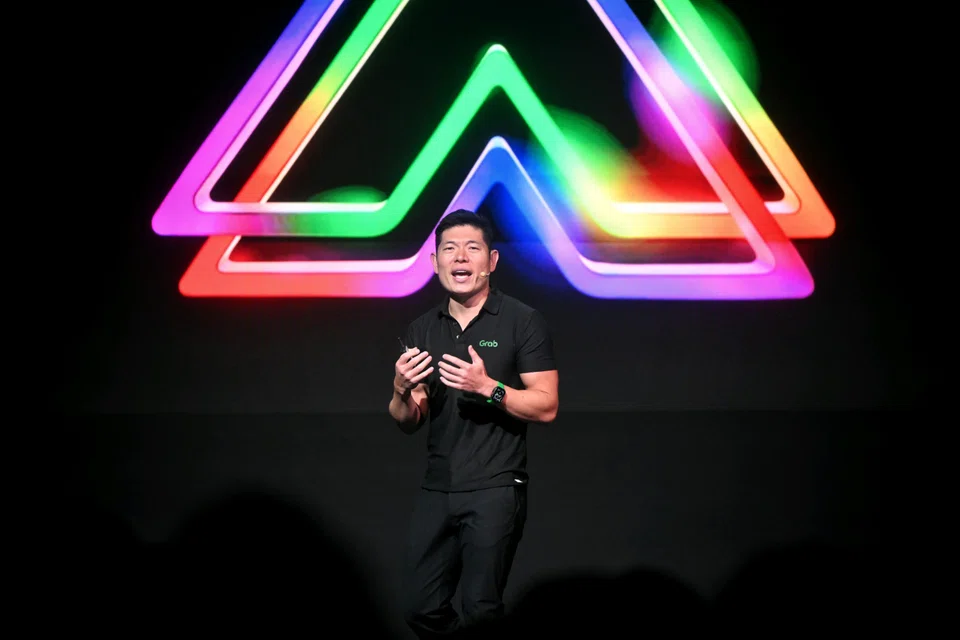
At Grab’s recent annual product showcase, GrabX, the tech giant took AI even further. A host of AI-powered products were unveiled, cementing the technology’s place at Grab.
This includes an AI assistant for drivers; a group ride feature that uses AI to optimise the drop-offs along the route; and a virtual store assistant which uses AI to analyse CCTV camera feeds to give insights into store operations.
This is part of Grab putting AI into the hands of its drivers, riders, merchants and customers. For now, Grab is bearing the bulk of the costs of incorporating AI into its products.
“We bear all the AI token costs because we know great AI isn’t cheap. But it shouldn’t be a luxury for only those who can afford it,” said Tan in his speech at GrabX 2026.
For a tech company to use AI is a no brainer, especially since AI agents can now code at significantly faster speeds than humans. There are numerous media reports about how companies have sped up their software development work via AI agents.
The old software bottleneck of coding has moved to code review – the process of reviewing the code and checking for defects of logic, security and performance. With the volumes of code AI can generate, humans struggle to keep up with AI’s request to integrate the code into the software.
It is not just the volume of code that human software developers struggle with, but the issues that AI code can have. A report by CodeRabbit, an AI-based code review platform, found more logic, security and performance issues with AI-generated code than human-generated code.
AI-generated code on average had about 10.8 issues each compared with 6.5 issues in human-generated code. Problems caused by AI-generated code also tended to be more severe than human-generated ones, containing about 1.4 times more critical issues and 1.7 times more major issues.
Human code reviewers have to deal with a larger volume of issues, slowing code review times.
While AI has maximised productivity for operational roles, software developers took longer using AI tools than without. A study by AI research non-profit METR showed that software developers took 19 per cent longer when they used AI tools.
Before the study, software developers believed that using AI tools would speed them up, with estimates of about a 24 per cent decrease in task completion time. There was a gap between perception and actual performance when developers used AI.
For newer software developers, utilising AI tools could impair necessary conceptual understanding, code reading and debugging abilities, indicated a study by AI platform Anthropic in January 2026.
These studies challenge the notion that AI tools will result in massive efficiency gains for software developers – such as using AI to write cleaner code with fewer bugs.
It is possible that the demand for software developers will grow even as AI improves its coding prowess. The volume of code that AI can generate will likely only increase in the future. But it is still likely that AI will not be fully trusted to review and integrate code directly into software.
While a player like Grab might reduce operational roles due to AI efficiency, there remains room for higher-value roles such as those of software developers. In fact, there may be even more demand for them, if companies are to fully grasp AI’s potential.