

Integrated financial market has to start with political will
The members of the South Asian Association for Regional Cooperation stand to gain from this integration, but their leaders need to set their houses in order first.
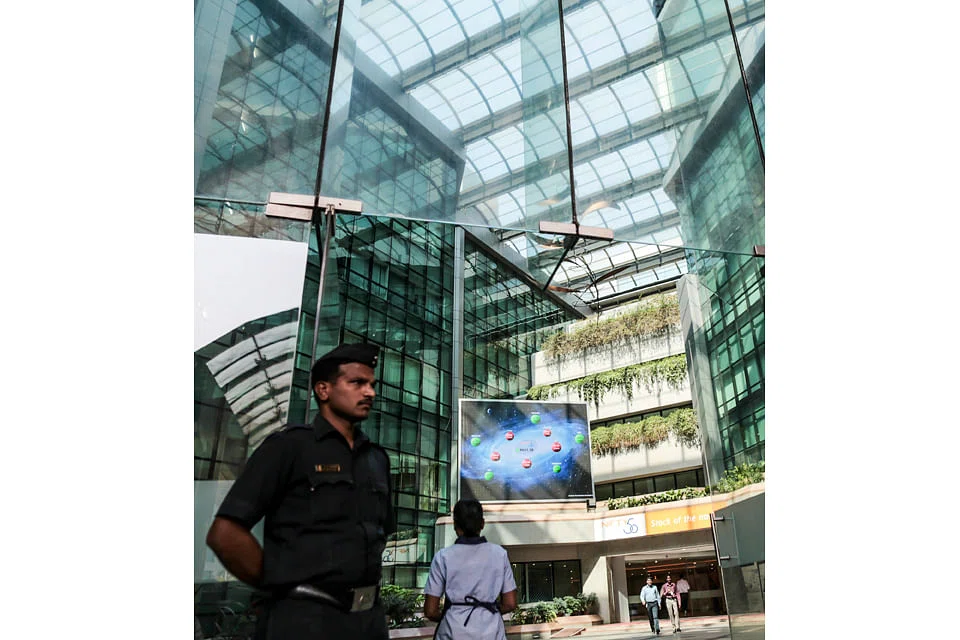
A FEW years ago, the countries of South Asia had a farsighted idea: Create a stock exchange or a board where companies of the region would list their shares. Even though the vision crashed headlong into political reality, the idea still has backers in governments and multilateral institutions.
The South Asian Association for Regional Cooperation (SAARC) had proposed the creation of an Integrated Financial Market Platform some years ago, but it has yet to be implemented by the member governments of the grouping: Afghanistan, Bangladesh, Bhutan, India, the Maldives, Nepal, Pakistan and Sri Lanka.
There is no denying the potential benefits of market integration, which would give companies a much larger universe of investors, who would also gain from having more choice.
The SAARC was set up in 1985 with the belief that cooperation would lead to an era of shared prosperity, but it has remained dormant since 2014, when its last summit was held in Kathmandu, Nepal.
The grouping shows signs of life from time to time. The government of Nepal recently declared that it is keen for SAARC to be revived, but deteriorating relations between India and Pakistan are holding it up.
The SAARC countries are aware that they face both great opportunities and formidable obstacles. One of the multilateral institutions that has consistently supported integration is the Asian Development Bank (ADB), which recommends that the member nations make "coordinated and focused commitment" to overcome the barriers to integration. It also calls for a regional body to be set up within the SAARC Secretariat to promote the harmonisation and development of the region's capital markets.
The role of India in creating a new market platform will be crucial, as it has the most sophisticated financial market in the SAARC region, whereas the stock markets of the other member countries lack liquidity. The member states would need to agree on the currency to be used for transactions, but there are suggestions to have the Indian rupee as the common currency.
The differing regulatory standards within SAARC need to be harmonised, and a host of traders' and brokers' associations would need to be set up that would, ultimately, make the region's capital markets more efficient.
The smaller stock markets of SAARC would need to be reassured about the possible flight of capital from their markets to the new platform.
The SAARC is not alone in this effort because the Association of South-east Asian Nations (Asean) and the European Union (EU) are also moving towards harmonising their stock markets, which is a critical step towards integration of those markets. Integration requires the removal of obstacles to movement of both capital and financial services.
It is worthwhile to examine both the opportunities integration would unleash, and the challenges it poses.
Firstly, it would present new prospects by enabling investors in one country to invest in another country, and issuers from one country to raise capital in another. It would also allow firms to offer cross-border financial services.
An integrated capital market would develop the forces of competition as it would attract numerous market participants and increase the flow of liquidity. The muscular competition would lower the cost of capital.
Secondly, the obstacles, however, appear in various forms and guises. At present, the region suffers from regulatory barriers in the shape of exchange controls and restrictions on ownership.
There is also a lack of transparency in trading or corporate disclosure. Further, minority shareholders are not treated well.
Another obstacle within SAARC is that members states do not see their own region as an attractive investment destination, and seek out other markets, and there is hardly any contact or communication between the SAARC capital markets.
An ADB study has found that the capital markets in the SAARC countries range from developed to under-developed. Moreover, there are marked differences in market monitoring and enforcement in these capital markets, even though all of them require issuers to release prospectuses and adhere to corporate disclosure. In most countries, the governance rules and accountancy standards comply with international standards.
The SAARC markets have a long way to go because almost all of them are closed to foreign companies, and only allow locally incorporated subsidiaries to list. These markets are, however, open to foreign brokers, which are required to set up local subsidiaries.
Observers have been wondering whether the smaller markets in the SAARC region will be able to survive over the long term because foreign exchange controls are a formidable barrier in some countries to the development of their markets.
Although there is an awareness of the benefits of integration at the level of ministers and senior officials, information on the subject is scarce.
The SAARC political leadership needs to get its own house in order, and turn its attention to addressing some basic issues, chief among which is the need to formulate clear-cut goals of harmonising the markets and putting in place common standards. These guidelines would serve as a roadmap for the region's regulators.
To start with, the regulators would need to address issues such as the sharp divergence in market regulations between the region's markets that already deter cross-border investment; and how the region's smaller stock markets would be able to justify and sustain high levels of expenditure in order to attain the status of an efficient and functioning capital market.
The region's exchanges have some catching up to do as well, in areas such as offering innovative financial products and raising their own skill levels.
Towards these objectives, the ADB has suggested a raft of measures such as starting a programme to exchange information between the region's markets, formulating a common policy on relaxing exchange controls, adopting harmonisation as a policy goal, helping the smaller markets to develop business strategies, and improving the commercial skills of the stock exchanges.
The SAARC senior officials have skimmed the surface of these issues. In May 2014, they reviewed the development of capital markets in South Asia, as well as the findings of a SAARC-ADB study on regional economic integration, and on the divergences in the levels of capital market development in the region. They have expressed the need to share experiences and best practices in the financial sector and to prepare a proposal to allow for greater flow of financial capital and intra-regional long-term investment.
Much more needs to be done. But first, the SAARC heads of government must meet and send a clear signal of positive intent.
TRENDING NOW

Knight Frank’s Tan Tee Khoon leaves firm, Nicholas Keong takes over auction business
Keppel Energy, Sembcorp Utilities and Tuas Power to supply biomethane in pilot project

GovTech retrenches another 38 staff in second round of layoffs
Take-up of new private homes dives 45% in Q3 as prices accelerate with 1.4% rise

