

Iran will augment Opec's clout
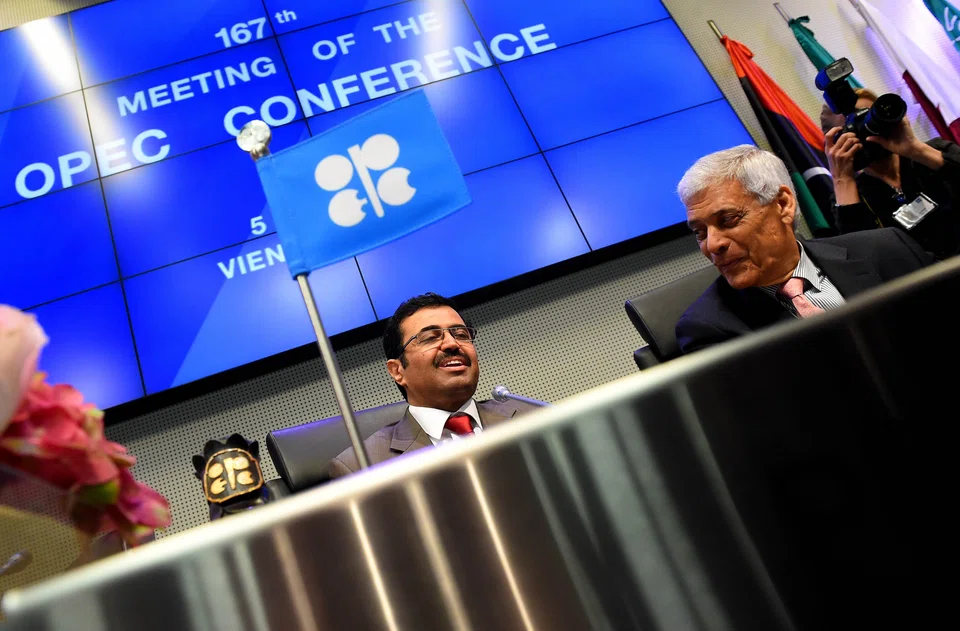
IRAN's nuclear agreement with six global powers is decidedly bearish in an oversupplied oil market. When those supplies start emerging down the road, they will add to the arsenal of the Organization of the Petroleum Exporting Countries (Opec), fighting for leverage.
Iran was producing about four million barrels per day (bpd) before sanctions were tightened in 2012. The output and exports are now down by a million bpd each. It produced as much as six million bpd before the revolution.
Thus the potential for substantial production and exports, given Iran's huge oil and gas reserves, is immense. Teheran plans to lure majors with liberal terms.
Iran holds roughly 30 million barrels of the global inventories. Releases from that stockpile will add to the two million bpd supply overhang. Further, there is a similar excess production capacity with Saudi Arabia.
Thus a price fall will follow the script. The Energy Information Administration (EIA), the US forecasting agency, had seen a slump of up to US$15 per barrel.
Oil is down about 50 per cent from June 2014. Prices had fallen nearly 60 per cent from last year's peak of US$115 per barrel after Opec refused to trim production last November.
Yet oil prices could head in the opposite direction sooner than widely reckoned. The prolonged price weakening must trigger a bounce-back as development spending slows and encourages consumption.
Energy watchdogs have been sounding such alarms. Demand, which has grown roughly by six million bpd every five years, will reach 100 million bpd next decade. Opec estimates the world will need about 20 million bpd more a day by 2040. The International Energy Agency (IEA) places it six million barrels below, requiring investments at US$900 billion a year.
Already dozens of projects have either been scrapped or delayed. More than 60 per cent of the drills are idle.
Conventional crude production has been more or less stagnant. Oil majors have struggled to replace reserves. The demand is increasingly being met by natural gas liquids and more expensive unconventional oil from shale rocks, tar sands and offshore. The latter is the Opec's target.
But a demand surge can throw the market off balance. Prices went ballistic, with the Brent benchmark hitting a record US$147 per barrel, seven years ago, fed on fears of crude shortages. The global financial crisis soon cut it back to a low of US$34.
The sluggish global economy got a break in 2010. Oil demand increased a sharp 3.2 per cent to 87.4 million bpd.
But production lagged demand by about a million bpd then, renewing warnings of a deficit. Shale rocks and tar sands oil have held back the doomsayers.
Now the rich economies, led by the United States, are improving. American vehicle sales have hit a decade-high. A forlorn Chinese economy is still clocking 7 per cent growth, and that largest car market consumes more than 10 million bpd.
India, forecast to grow faster than China, has crossed four million bpd. The two will lead Asian demand, which is expected to swell by 60 per cent or more by 2040.
The market is expected to return to balance late next year as demand improves. By then Iran should be raising its profile and joining other large future providers such as Iraq, Brazil and North America.
But the continued low price levels will deepen non-Opec worries. The shale slide is already in motion. The debt-burdened sector must soon cope with higher US interest rates.
US supplies, including biofuel, have grown by about five million bpd since 2008. But shale is expected to peak later this decade, perhaps without replicating the American success elsewhere.
Iraq is the most prominent future source of conventional oil. But it has been mauled by violence since the war. Its southern wells remain prolific. But Baghdad's poor finances are slowing oil investments. Over the past decade, it has lowered its 2020 ambition from 12 million bpd to nine million, and lately to below six million barrels.
Brazil hit headlines eight years ago with its huge deep-sea discoveries. The oil, buried three kilometres under the salt bed, was the biggest promise to emerge in several decades. Petrobras, the custodian, is caught up in a graft scandal and debt, and has recently slashed investments to 2020 by more than a third. The euphoric assertion of producing about five million bpd has given way to 2.8 million, slicing the share of potential non-Opec supply. Sanctions against Russia and pipeline problems may also affect future supply.
Then there is the climate change fallout. Environmental pressures piling on fossil fuel investors should make them wary. They are being warned about stranded assets, mostly coal. Even big European oil companies have joined the push for carbon pricing.
At the same time, viable alternatives to replace petroleum are still a long way off. Meanwhile the number of vehicles may triple from a billion by mid-century, underpinning the need for more supplies.
The upshot is that consumers may find themselves back at the mercy of Opec sooner if the cartel holds on to its strategy.
Unlike in the early 1980s, demand for Opec oil has not collapsed. It is producing at record, with Saudi production steadily rising. Iran will enlarge the group's cheap supplies as some members struggle to raise production.
Both Iran and Iraq ruled by Shiites are a formidable counterweight to the Saudi-led Gulf producers within Opec. But their interests will still be no different.
In good times and bad, oil producers of various hues and needs in Opec have historically stuck together, without upsetting the apple cart. The group's June meeting supporting inaction was "very amicable". A larger market share, after all, is easier to divide up when quotas return. Iran wants them back.
Producers now also hope for a fair price, between US$70 and US$80 a barrel.
They may all quarrel more, but their goals are still intact.
TRENDING NOW

Temasek’s Wan Chee Foong to helm PIL, Lars Kastrup to be board adviser
Chagee, Mixue and Luckin won the market. Sustaining their edge is the harder part

He built the Vingroup empire. Now South-east Asia’s richest man is handing some key roles to his sons

One-third of Singapore-listed firms at risk in severe AI downturn: MAS

