

Iranian nuclear talks process still precarious despite extension
Prospects for permanent agreement remain uncertain given gaps between parties and Republican opposition in US.
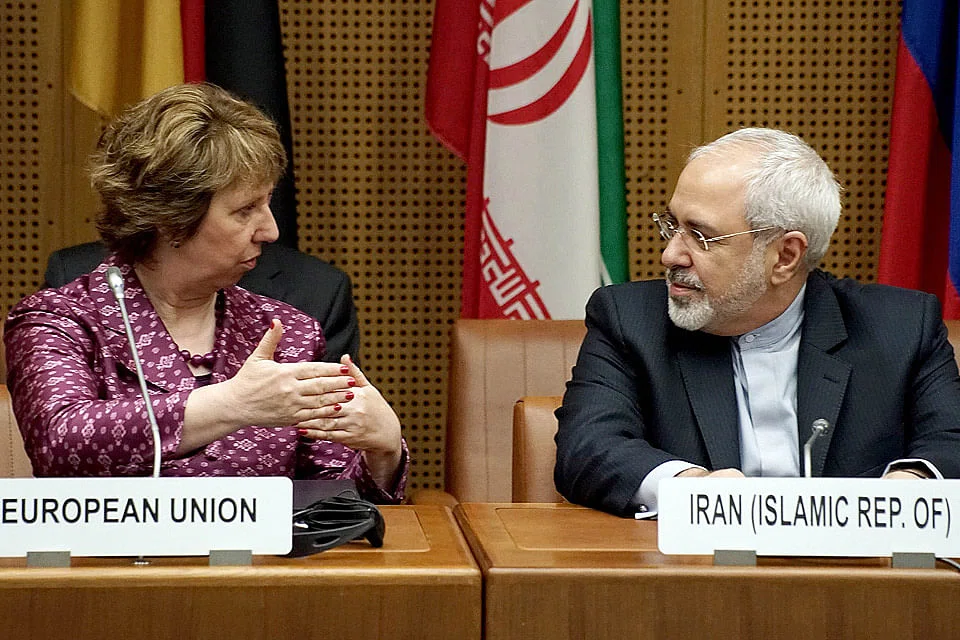
IRAN and the P5+1 nations (the United States, China, Russia, France, the United Kingdom and Germany) agreed on Monday to an extension until end-June 2015 of their talks aimed at forging a comprehensive, final nuclear deal. This follows failure to reach what would be a landmark historical agreement before the previously self-imposed Nov 24, 2014 deadline.
In intense diplomatic dialogue in recent days in Vienna, progress was made and it is hoped that a broad framework agreement might be possible within three months so that final details can then be tackled. Thus, the talks remain alive, but prospects for a permanent agreement remain uncertain given the gaps that remain between the parties.
There is also sizeable opposition to an agreement, including from conservatives in the US and Iran, and key US allies in the Middle East and beyond, including Israel and Canada. To date, these critics have remained relatively quiescent publicly, but it is likely that at least some of them will become more emboldened now.
This is not least in Washington given that Republicans in January will take over control of the US Senate. The Republican-controlled House of Representatives has already passed legislation to levy additional sanctions against Teheran, which has potential to torpedo the negotiating process. But the Senate (which for the last few years has been controlled by the Democrats) has not allowed these measures on the floor of the chamber for consideration. This may now change with the incoming Republican majority. From President Barack Obama's perspective, this opens up the prospect of greater congressional interference in his Iran policy.
The preliminary deal that Iran reached with the P5+1 last November saw it freeze key elements of its nuclear programme, but not (yet) permanently dismantle them. Perhaps the key bones of contention in the negotiations since then are how fast international sanctions will be lifted after a final agreement, and how far Teheran needs to go in unwinding its nuclear facilities.
To be sure, no deal that Iran is likely to agree to will completely eliminate its ability to build a weapon. In testimony earlier this year, US Secretary of State John Kerry told Congress it would, in theory, currently take Teheran around "two months" to produce sufficient nuclear material for a nuclear bomb. However, buttressed by greater international monitoring and oversight of Iran's programme, the P5+1 are seeking to significantly lengthen this so-called "breakout period". This is a very sensitive issue with many conservatives in Teheran, including Supreme Leader Ayatollah Ali Khamenei.
It is unclear if a deal is possible that could allow both Iran and the P5+1 countries to plausibly claim "victory". Given pressures on both sides, even if an agreement is ultimately reached, it could still get derailed domestically in either Teheran or Washington. The most likely outline of a deal would be for prohibitions to be placed upon the nature and number of centrifuges which Iran uses to enrich nuclear material. Moreover, the P5+1 could seek to make permanent the current temporary ban on uranium enrichment beyond 5 per cent purity, which would still allow Teheran to service its nuclear energy sector.
While a deal along these lines would still have vociferous critics, not least in Israel, it could potentially give the P5+1 enough to assert it has, in effect, significantly disabled Iran's potential to build nuclear weapons. Meanwhile, Iranian President Hassan Rouhani could try to sell the deal to conservatives in Teheran on the basis that it secures the international legitimacy of the country's longstanding position that it has the right to enrich uranium.
While the success of the talks is uncertain, the P5+1 and Iran remain motivated by the fact that securing final agreement would be hugely significant. In particular, it would represent a major foreign policy win for both Mr Obama and Mr Rouhani.
This is not only because, as Mr Obama said on Sunday, a deal would "take a big piece of business off the table and begin a long process in which the relationship not just between Iran and (the US) but the relationship between Iran and the world, and the region, begins to change". In addition, it would constitute an important victory for long-standing efforts to combat nuclear non-proliferation. And this at a crucial time when, according to the International Atomic Energy Agency (IAEA), over 40 countries have expressed interest in joining the "club" of 30 states with nuclear energy.
For President Rouhani specifically, a final agreement is key to revitalising the Iranian economy, which has been hit hard by years of international sanctions. Moreover, it would also give him the opportunity to bolster reformists, many of whom are key supporters, in advance of the 2016 Iranian parliamentary elections.
For President Obama, a deal would be a precious foreign policy victory at a time when his administration is on the back foot domestically, following congressional elections. Moreover, it would also allow him to potentially draw a line over setbacks in the Middle East ranging from the rise of ISIS in Iraq, and the collapse of Palestinian-Israeli peace negotiations and subsequent conflict in Gaza.
A deal with Iran would also constitute part of Mr Obama's foreign policy legacy - one of the pillars of which is enhanced global nuclear security. As well as inter-state nuclear diplomacy, the administration has created the Nuclear Security Summit (NSS) process to counter nuclear terrorism, which the president has described as the "most immediate and extreme threat to global security".
Since 2010, three NSS summits have been held, with a fourth scheduled in 2016. These have set in train a body of international work to "secure all vulnerable nuclear material around the world" by the end of Mr Obama's presidency in January 2017.
Taken overall, a nuclear deal remains possible despite the new uncertainty surrounding the negotiations. Much will depend on how quickly any breakthrough can be made in 2015 - and how far critics, including Republicans in Congress, step up opposition to try and derail the process in coming weeks.
The writer is an associate at LSE IDEAS at the London School of Economics, and a former UK government special adviser
TRENDING NOW
‘We don’t want to stay as we are’: CEO Patrick Ng builds a more resilient Huationg
URA to review guidelines on floor space to give developers more design flexibility: Chee Hong Tat

He built the Vingroup empire. Now South-east Asia’s richest man is handing some key roles to his sons
32 companies, 6 individuals bag accolades at Singapore Corporate Awards 2026

