

It's a trade war! Or is it?
Trump thinks it's better to challenge China now than later; he's also minding the midterm polls
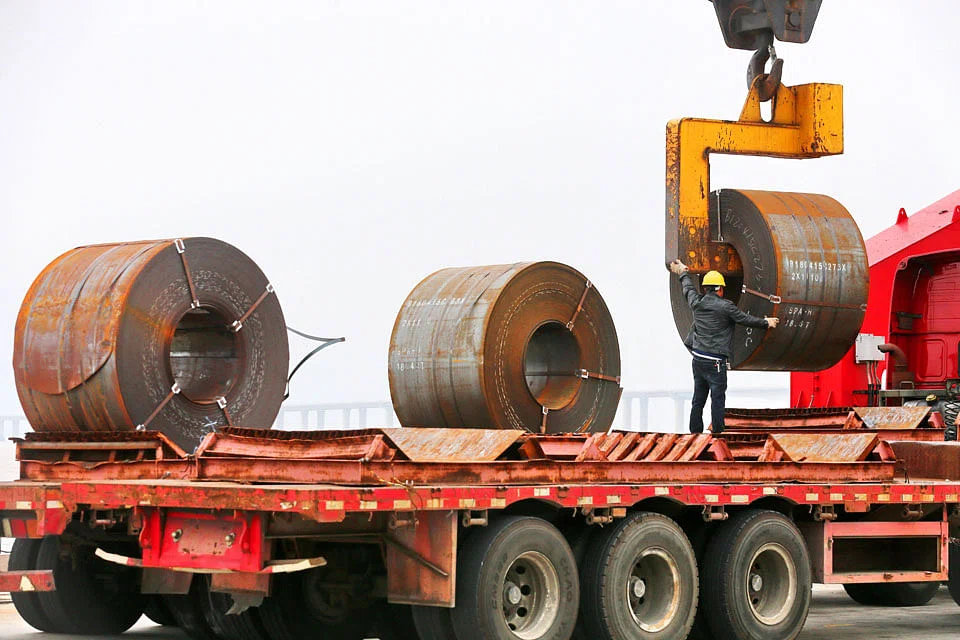
SINCE Donald Trump became US president, Washington has been occupied with a few brain-teasers.
The populist presidential candidate ran for office promoting an aggressive economic nationalist agenda, castigating America's economic partners for their "unfair" trade practices, pledging to impose punitive tariffs on imports from China which he accused of "stealing" American jobs, calling for the repeal of the North American Free Trade Agreement (Nafta) and other free-trade accords, and declaring that "trade wars are good, and easy to win".
So would the president who won the presidential race by capturing the votes of unemployed blue-collar workers in the Rust Belt states, who counted on him to "bring back" their jobs from China, follow the advice of his more protectionist advisors like US Trade Representative Robert Lighthizer and economic advisor Peter Navarro?
Would he carry out his mercantilist campaign threats and in the process sink the entire global economy into costly trade wars?
Or would he display his pragmatic streak and, under the pressure of pro-free trade Republicans and his buddies on Wall Street, avoid launching an all-out trade war and, instead, employ his talents as a deal-maker to resolve the disputes with America's economic partners?
For a while, it seemed that former Goldman Sachs executives like economic advisor Gary Cohn and Treasury Secretary Steve Mnuchin, opposed to revoking Nafta and declaring a trade war on China, may have had the upper hand during the trade debate at the White House: US officials set out to re-negotiate Nafta and the free-trade deal with South Korea.
They exempted Canada and other friendly nations from tariffs on steel an aluminium imports while holding a series of talks with the Chinese aimed at reaching a "grand bargain" on trade with Beijing, cantering on a plan to reduce the US deficit with China.
HIS NATIONALIST NOISE
So President Trump would continue to make a lot of economic nationalist noise on trade, placating his blue-collar fans in Pennsylvania, Ohio and Michigan, bashing free-trade agreements, slapping a few tariffs on solar-panels and washing machines, and even playing "chicken" with China.
But then when push came to shove, he would recognise that an actual trade war, especially when it came to China, could impede the acceleration of economic growth and rapid job creation, also known as Trump Expansion - fuelled by the recent massive tax cuts and deregulation - and, more specifically, hurt sectors of the economy such as agriculture, located in strategic "red" (that is, Republican) states.
So he would step back from the precipice over a global trade war.
In a way, President Trump would be following the guidelines for negotiations outlined in The Art of the Deal: Walk out of the negotiations and threaten your adversary with massive retribution.
But then, like he demonstrated in his handling of North Korean leader Kim Jong-un, you would finally be in a position to make a deal.
From that perspective, what are we to make of the following: Against the backdrop of the successful conclusion of the Trump-Kim summit in Singapore, President Trump has, first, announced that he was going ahead with slapping tariffs on steel and aluminium imports from Europe, Canada and Mexico, justifying these moves against leading US military allies on national security grounds.
And there is now talk of using the national security argument to justify imposing tariffs on autos and auto-parts exports from the same countries.
Then later last week, the Trump administration announced that it would impose a 25 per cent tariff on up to US$50 billion in Chinese goods, including on aerospace, telecommunications equipment, as part of a strategy to protect US intellectual property and technology, with China being accused of corporate espionage that has cost the American economy close to US$600 billion a year, and to reduce the US$375 billion bilateral trade deficit with China to US$200 billion by 2020.
So does that mean that the earlier hey-Trump-is-just-threatening-trade-wars narrative has become last week's speculation, and that the pundits who predicted that the protectionists were going to win the debate over trade have won? If there was one issue on which President Trump was not going to give up on, it was trade policy, they explained. Donald Trump was his name, and economic nationalism was his game.
The problem is that as President Trump begins his second year in office, much of the conventional wisdom that reflected the way policy makers and pundits had evaluated other American presidents and way decisions were made in Washington, does not seem to apply to the current White House occupant.
A disrupter who plays against the rules, who, like in the case of his performance on the North Korea issue, he cannot be pigeonholed as being either this or that. Old labels do not seem to work in his case.
To put it differently, he does not seem to embrace grand designs when it comes to policy issues, including on foreign policy and trade. Instead, he pursues an empiricist trial-and-error approach, operating within an evolutionary process that never comes to a final and happy conclusion.
Take the evolving trade [fill the blank] with China. Okay, so let's call it, a trade row, and we clearly see the start of what could evolve in a classic trade war, especially after in response to the planned US tariffs, Beijing has announced that it was retaliating by targeting US$50 billion-worth of high-value American exports, including cars, farm products and crude oil, accusing the Trump administration of "provoking a trade war".
But if it is a full-blown trade war, how does one explain President Trump's recent decision to lift the ban on America sales to the Chinese telecom company ZTE, accused of violating US sanctions on Iran and North Korea, in exchange for an agreement for it to pay a US$1 billion fine?
In fact, he tweeted that he was working with Chinese President Xi Jinping to get ZTE "back to business fast. Too many jobs in China lost" and that he ordered his Commerce Secretary to reach a settlement with the company.
The Chinese have already offered to reduce the bilateral deficit with the United States by buying US$70 billion more in American goods. He has insisted that that was "not enough" but has not closed the door on continuing to negotiate with the Chinese over a new number.
After all, he recognises that any progress in negotiating a denuclearisation deal with North Korea depends on the cooperation of China, Pyongyang's leading economic and military patron.
And so he would have at some point to make a way to find the right balance between his interest in winning applause from his political base by threatening China on the trade front and in winning applause from Americans for pursuing a nuclear deal with North Korea which would necessitate lowering trade tensions with Beijing.
THE NUMBERS
Indeed, one way of examining President Trump's recent aggressive move is to consider basic facts: Exports constitute about 12 per cent of the US' GDP - which amounts to nearly US$20 trillion. Domestic consumption is what counts.
And with the US$1.5 billion tax-cutting package coupled with US$300 billion federal spending increase, fuelling a major pick-up in the US economy, the risk of lingering trade rows (including with China, or even of Nafta collapsing), would have miniscule effect, if at all, on American and global economic growth, and certainly not in the next three years of the Trump presidency.
If anything, the economic bottom line is that America's trading partners, including the EU, Canada and Mexico are more vulnerable economically to American trade tariffs than the other way around.
Indeed, there are already signs that the US trade stance is starting to slow German economic growth, and Prime Minister Justin Trudeau of Canada, which has two-thirds of its trade with its southern neighbour, is already under pressure to resolve the trade dispute with the Americans.
And while continuing trade tensions with China could have harmful effects on some sectors of the American economy, Mr Trump and his aides have concluded that if, indeed, China would be transformed into an economic power sometime in the future, the US should challenge China's trade policies now - before the Americans lose their current economic leverage over the Chinese.
If that is the economic bottom line, here is the political one: He and the Republican Party are under the threat of losing their control over the House of Representatives in the coming mid-term election in November, and they know that the controversial president would face major challenge from a Democratic presidential candidate in 2020.
Taking all of that into consideration, President Trump has figured out that a trade fight with China would be politically popular among his supporters in the Rust Belt states as well as among the majority of Americans who regard China as a major economic and military threat.
And that while Prime Minister Trudeau may be cute, most American voters would cheer a president that stands up to US interests in his dealing with its northern neighbour.
READ MORE:
TRENDING NOW

He built the Vingroup empire. Now South-east Asia’s richest man is handing some key roles to his sons
Despite the de-dollarisation debate, demand for dollar liquidity in Asia is growing

Can a first-time homebuyer couple earning S$18,000 a month afford a new EC unit?
Asia needs new energy security architecture

