

Jakarta presses case against AUKUS nuclear plan
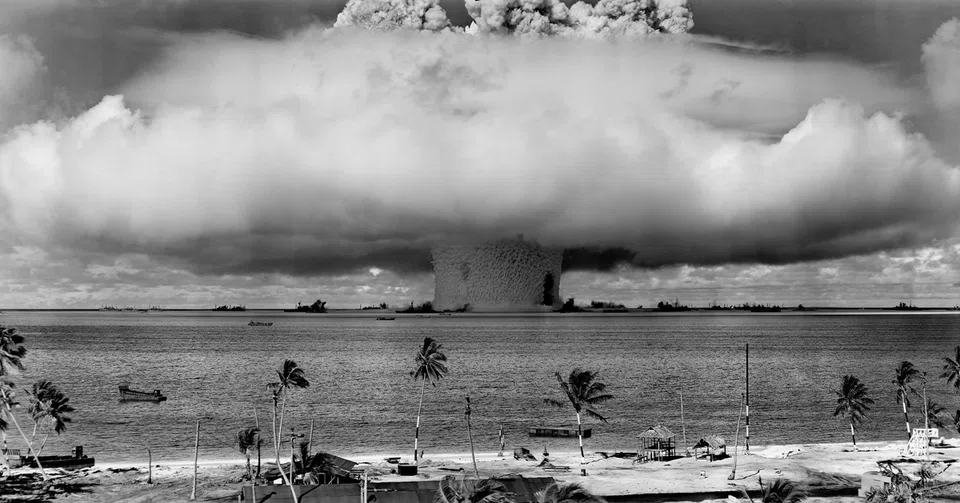
THE new AUKUS security alliance is having to defend its plan to arm Australia with nuclear-powered submarines at the UN Non-Proliferation Treaty (NPT) review meeting, now underway at the United Nations in New York. The trio -- United States, Britain and Australia -- known for their hyper vigilance of nuclear proliferation activity elsewhere, faces Indonesia’s objection to their plan.
In a submission to the UN review, Jakarta notes “with concern the potential consequences" of providing nuclear propulsion technology which could undermine the fragile non-proliferation edifice. Indonesia, together with Malaysia, expressed reservations from the first time the AUKUS alliance revealed that Australia planned to get at least eight nuclear-powered submarines, fearing a regional arms race.
To its credit, Indonesia has always emphasised the equal primacy of all three pillars of the NPT - non-proliferation, disarmament and peaceful uses of nuclear energy. It has been equally vocal about the second pillar of the NPT – disarmament. Jakarta has consistently voiced concerns about the apparent indifference to nuclear disarmament, calling on all nuclear weapon states to eliminate their nuclear arsenals in an “irreversible and verifiable” manner, as declared in the treaty.
This time, Jakarta says its working paper is in response to the obvious lacuna in the NPT that should be addressed immediately. While the NPT places strict safeguards on weaponisable nuclear material, a subsidiary agreement does allow an exemption in cases of “non-proscribed” military uses. Australia would be the first non-nuclear-armed state to use this loophole. If it goes ahead, the deal would set a precedent that could make nuclear proliferation and breakout capacity so much harder to restrain, as Jakarta notes. Such a deal could provide a cover for diversion of weapons-grade fissile material to a nuclear weapons programme. There is also a worry over the potential for an environmental disaster when these submarines transit the archipelago.
The AUKUS partners hold that they are exempt under the subsidiary International Atomic Energy Agreement (IAEA) as this technology transfer will be for the aforesaid “non-proscribed military activity”; Australia is not seeking nuclear weapons and the submarines will not be nuclear-armed. Nevertheless, it means that two nuclear weapons signatories of the NPT have flagged they are prepared to transfer nuclear material and technology for military purposes to a non-nuclear weapons signatory.
As critics point out, what happens if Russia decides to exercise the same right under the accord to supply Iran with nuclear propulsion technology? In fact, Teheran first informed the IAEA of its interest in naval nuclear propulsion in 2018 and cited the AUKUS deal to argue for its own plans at NPT meetings in 2021. Again, what if Beijing decides that Pyongyang should be helped to upgrade its submarine fleet with nuclear propulsion?
Of course, it would be argued that Canberra is worthy of trust, and why Teheran and Pyongyang are not. But once a precedent is set, it will be difficult to then proclaim that no one else should use the same loophole.
Fortunately, Canberra under its new government is undertaking a broadbased review of its defence needs. Given that it might take up to 20 years to get its nuclear-propelled submarines, Australia might reconsider the whole project. But whatever Canberra decides, Jakarta has raised an important non-proliferation issue. Its objections must be given due weight in the NPT review.
TRENDING NOW

Once staunchly pro-China, Malaysian Chinese businesses are now distancing themselves from Beijing

Grab CEO’s wife Chloe Tong on life with Anthony Tan and finding her purpose

Could stablecoins be the future of money?
ST Engineering opens tech-focused aircraft maintenance facility in Changi; to create over 500 jobs

