

John Soh’s recalcitrance calls for tough stance
Penny stock crash of 2013 underscores need for law enforcement agencies that are vigilant, vigorous and even a bit vicious

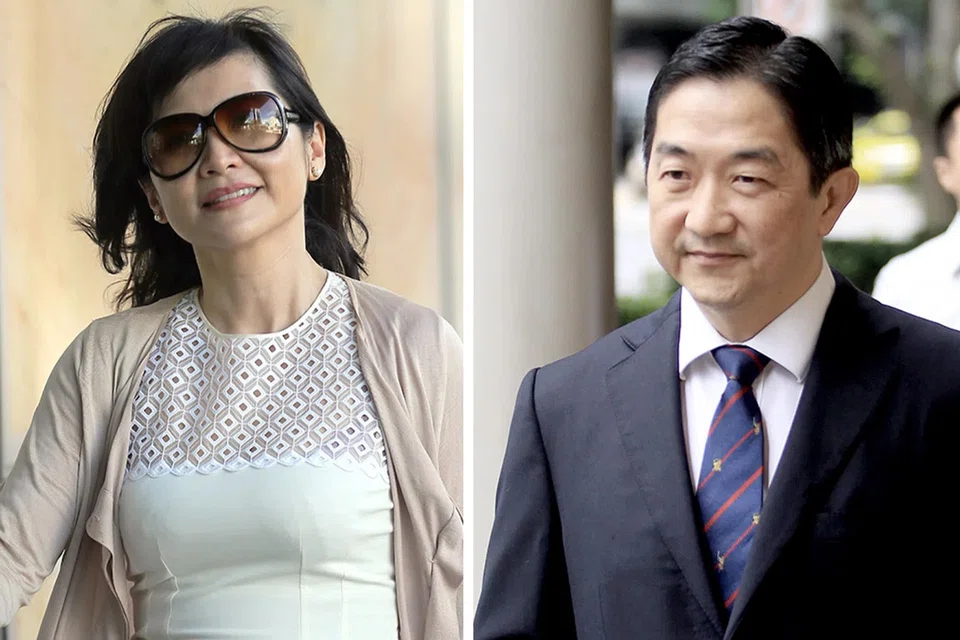
JOHN Soh and Quah Su Ling were found guilty this past week of a massive market manipulation operation that led to the infamous Singapore penny stock crash of 2013.
This marked a hard-won victory for Singapore’s law enforcement authorities.
Immediately after Justice Hoo Sheau Peng delivered her oral judgement – finding Soh guilty on 180 of 188 charges, and Quah guilty on 169 of 177 charges – the Singapore Police Force (SPF) and Monetary Authority of Singapore (MAS) reminded everyone what it took to get here.
In a joint statement, they noted that more than 50 locations had been raided in the course of their investigations and over 70 people had been hauled up for questioning.
Extensive documentary evidence had been gathered, comprising some 2 million emails, half a million trade orders and thousands of telephone records and financial statements.
Then there was the trial, which involved close to 100 prosecution witnesses, thousands of exhibits and lasted nearly 200 days.
Prosecutors painstakingly demonstrated that Soh and Quah had used an “extensive infrastructure of nominee accounts” to create a false market for shares in Blumont Group, Asiasons Capital and LionGold Corp (collectively known as BAL), and enhanced the perceived prospects of the 3 companies.
Besides the sheer volume and complexity of the evidence, the prosecution also had to contend with maddeningly uncooperative witnesses and baseless allegations from Soh and Quah of prosecutorial misconduct.
Challenging as it all was, the purpose of bringing Soh and Quah to book was clear.
The collapse of BAL in October 2013 lost investors billions of dollars, resulted in a prolonged slump in trading activity, and tainted the international reputation of the Singapore market.
Moreover, the collapse of the BAL counters did not bring an end to Soh’s shenanigans. He is said to have subsequently been involved in the inflation of shares of Sino Construction and ISR Capital – even as investigations were underway.
In fact, ISR’s massively pumped up share price collapsed dramatically on Nov 24, 2016, the day Soh was finally arrested.
Singapore’s law enforcement authorities should now take active measures to comprehensively dismantle Soh’s network of enablers. All in, the High Court found that Soh and Quah had used 187 trading accounts belonging to 58 individuals and corporate nominees to manipulate the BAL counters.
Part of this “infrastructure” comprised long-time associates – such as Peter Chen, a lawyer who over several years went from handling Soh’s legal work to being a nominee director and shareholder for Soh in various companies.
Chen was also once engaged to Ung Hooi Leng, whom prosecutors have said is Soh’s god-sister.
Chen testified that he had opened 14 trading accounts in his name at 8 different financial institutions between 2000 and 2013, and that all of them were for Soh’s use.
Another prominent member of Soh’s network was James Hong, who was executive director of Blumont from 2006 to 2014. Besides having 12 trading accounts at 8 financial institutions, he was also the authorised signatory of 2 trading accounts held by subsidiaries of Blumont.
Unlike Chen, Hong held himself out to be the ultimate decision-maker for those accounts and that he only took “advice” from Soh. But the manner in which funding for the accounts was managed and instructions given showed the accounts were actually controlled by Soh and Quah.
Trading representatives were also a crucial group of Soh’s enablers.
At one end of the spectrum were members of a close circle – such as Ken Tai, whom prosecutors say was deeply involved in Soh's activities. Tai managed 21 trading accounts at Saxo Bank and 11 at Interactive Brokers.
At the other end of the spectrum were trading representatives who just went with the flow. Among them was Jordan Chew, who worked at DMG & Partners Securities (which is now RHB Securities) from April 2010 to October 2014, his first job in the financial services industry.
Chew handled five trading accounts, in the names of Chen, Quah, Quah’s brother-in-law Ronald Menon and Blumont’s then-chairman Neo Kim Hock. Chew was given to understand that trading instructions would come from Quah.
Chew testified that in H2 2012 he realised clients need to formally appoint a third party who gives instructions for their accounts. He tried to obtain the necessary paperwork from the account holders and Quah but did not succeed.
Tough regulation needed
Even if the authorities decide that some of these account holders and trading representatives should not be prosecuted – either because they cooperated or because their culpability was low – action should still be taken to ensure history does not repeat itself.
At a minimum, the firms at which the trading representatives conducted business should be closely monitored by regulators. The errant trading representatives themselves ought to be subject to appropriate penalties.
As for the trading account holders, even if their involvement in the stock manipulation operation is overlooked, they ought to at least be blacklisted and barred from opening new accounts or obtaining any form of financing for the purchase of securities.
More than anything else, the authorities should acknowledge that the local market ecosystem did not “self-correct” in the face of Soh’s machinations.
The boards of BAL certainly did not raise the alarm. The brokerage industry seemed content to play along. And, reporters who asked too many questions when everything blew up were threatened with legal action.
If there is a lesson from the penny stock crash of 2013, it is perhaps that there is no substitute for law enforcement agencies that are vigilant, vigorous and even a bit vicious.
Note: Mark To Market will take a 2-week hiatus while the writer clears some leave






