Journalism in the age of TikTok
The profession needs to take TikTok seriously, once we get over how much we hate it.

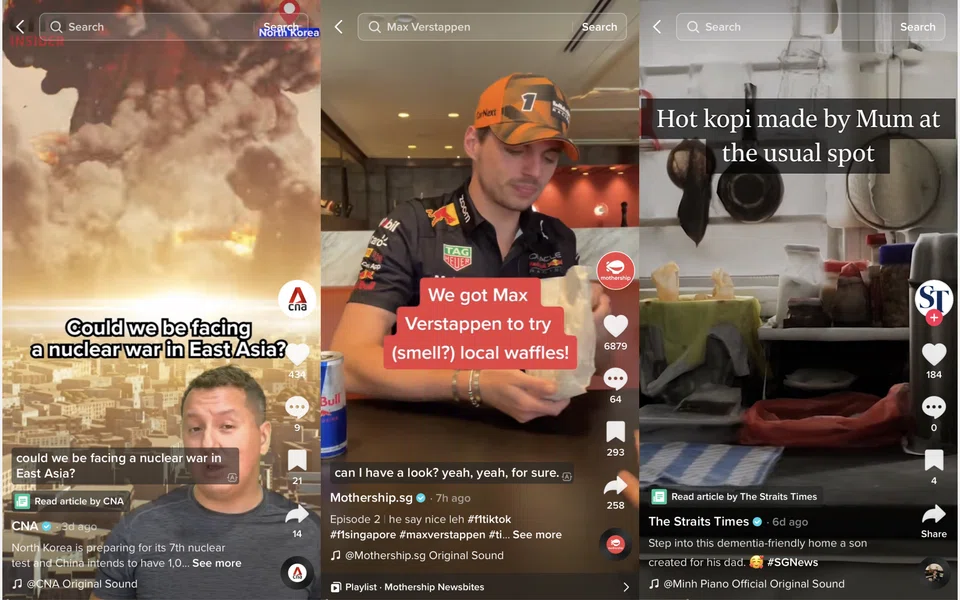
“I DON’T know what to do with this platform,” laments a senior editor with The Business Times (BT), as some of us discuss TikTok. “The boomers are on it for silly entertainment. Gen X, like my husband, uses it to forage for food ideas. And my 14-year-old says all I have to do is get Uncle Raymond to visit the newsroom?!”
Uncle Raymond is a 60-year-old TikTok dance sensation; and with 2.4 million ‘likes’ on his videos to date, he’s giving news providers a run for their money in connecting with Singapore’s young audiences.
TikTok is relatively new, but has shaken up the media world. Driving its success is the use of short-form, vertical video; and an uncanny algorithm, that serves users content they don’t even know they want – based on their actual browsing behaviours, and not the creators they follow.
The app reported hitting one billion monthly active users last year, just five years since its launch. Facebook, Instagram and YouTube each took eight years to reach the same milestone. TikTok is also a Gen Z darling: among its users aged 18 years and up, some 42 per cent are in the 18 to 24 age group as of April, according to Statista.
Despite this, newsrooms – and journalists – are lukewarm towards it.
Cringe-worthy, or binge-worthy?
Youth-friendly, all-digital news providers seem to have taken more warmly to the app. Mothership and Today became active on TikTok in 2019. In contrast, CNA and The Straits Times (ST) only began posting in the past year. BT is inactive, at this time.
In part, the reticence stems from how difficult it can be for traditional media to find its voice on TikTok. These outlets have built up their brands over generations, on the premise of serious reporting and deep analysis.
TikTok is still widely seen as an entertainment app, and much content posted there is light-hearted. Jiving to the latest beats and memes in a one-minute window is not what most journalists signed up for; nor do they think it represents their publication’s brand.
It’s not just the veterans who are wary, either. I’ve spoken to many young journalists who are reluctant to appear on social media, and especially on TikTok.
“I secretly judge people who post on TikTok,” a BT journalist in her mid-20s confesses. “So if I do it, I’ll be thinking about people judging me.”
There’s the fear of looking frivolous, and inauthentic. There’s the risk of online harassment and abuse. And then there are ethical reservations: the lurking suspicion that social media is a fundamentally bad way to spread the news – with its bias towards performative and shallow content, of questionable credibility.
“Everyone on social media thinks they’re an opinion leader,” she says. “I’m like – why should anyone listen to you?”
Still, not everyone is holding back. One such journalist is Farzanah Friday, 26: ST’s one-woman TikTok production house. She picked up on changing audience habits last year, and wondered why more wasn’t being done to act on them.
“With TikTok and Instagram Reels emerging, we realised people don’t stay on the same content for anything more than a minute now,” she says. “Younger people were more interested in getting the news from alternative sources, like Vox or Mothership.”
Last year, Friday was given the green light to set up ST’s TikTok presence from scratch. The account has been posting videos since last September – ones that are often quirky, and sometimes downright surreal.
In a clip from last October, ST journalist Clement Yong discusses toxic masculinity in Singapore’s National Service. He does this while riding an exercise bike, holding a gaming console, getting a leg massage, and hiding behind shrubbery – all to the tune of a marching band.
Friday also makes liberal use of Gen Z’s slangs and trends, which are disorienting for the uninitiated. In a July video, she translates a headline on the strength of Singapore’s passport into TikTok lingo: “It’s a W passport,” she explains.
“W” stands for “win” – something Friday had to assure her bemused, 1981-born editor that kids these days would understand.
Journalism, interrupted
Friday’s irreverent strain of journalism is not your vanilla ST, which some may find difficult to accept. But the hard truth is that pinching our noses at social media will not stop our audiences from flocking there.
The Reuters Institute’s June 2022 report, which covers 12 global markets, indicates that 39 per cent of those aged 18 to 24 now use social media as their primary source of news, compared with 34 per cent who visit a website or app.
Social media is even encroaching on search engine territory. In July, a Google executive revealed that 40 per cent of Americans aged 18 to 24 are turning to TikTok or Instagram, instead of Google, for lunch recommendations.
How can we stay relevant, and read?
For one, newsrooms have to take our social media presence seriously. We also have to pay attention to how social media trends are shifting.
The age of TikTok is not just about TikTok. Facebook and Instagram have been giving increasing priority to short-form video Reels, shared by accounts that their users aren’t following. If the trend sticks and we under-invest in production, we may find our news content de-prioritised across the board.
Newsrooms should also have a deliberate social media strategy, that includes identifying which platforms are the best fit for our target audiences and content propositions. (BT’s journalists aren’t dancing and lip-syncing the latest business insights on TikTok just yet, but we are active on Facebook, LinkedIn, Telegram, Instagram and YouTube.)
We should ensure our social media presence strengthens our audiences’ connection with our brand, and pulls them into our fuller range of content – especially on channels we own such as our websites, apps and e-newsletters. The goal remains to grow our direct relationship with our audiences, and not to be just another voice in the social media wilderness.
But the most important shift is to recognise that quality journalism now comes in many shapes and colours. We now need journalists adept at producing all kinds of content, including short-form video, bite-sized graphics, and snappy text that do well on social media platforms.
We have to empower and develop journalists who work in these mediums, as specialists in their respective crafts. To that end, we need good supervisors who give their reports licence to try new things; who equip them to protect themselves online; who give sound advice and editorial oversight to uphold credibility, without quenching exuberance.
Social media can admittedly be a cesspool of fake news, and fake experts. But that’s exactly why good journalism is needed on the front-lines. With a dose of open-mindedness, we will get figure out how to bring it there.
Off The Record is a monthly column by BT’s editors on the modern news industry from an insider’s perspective. We welcome feedback and suggestions at btnews@sph.com.sg.