

K-pop giant Hybe still a winner despite unsuccessful takeover attempt of SM

Tan Nai Lun
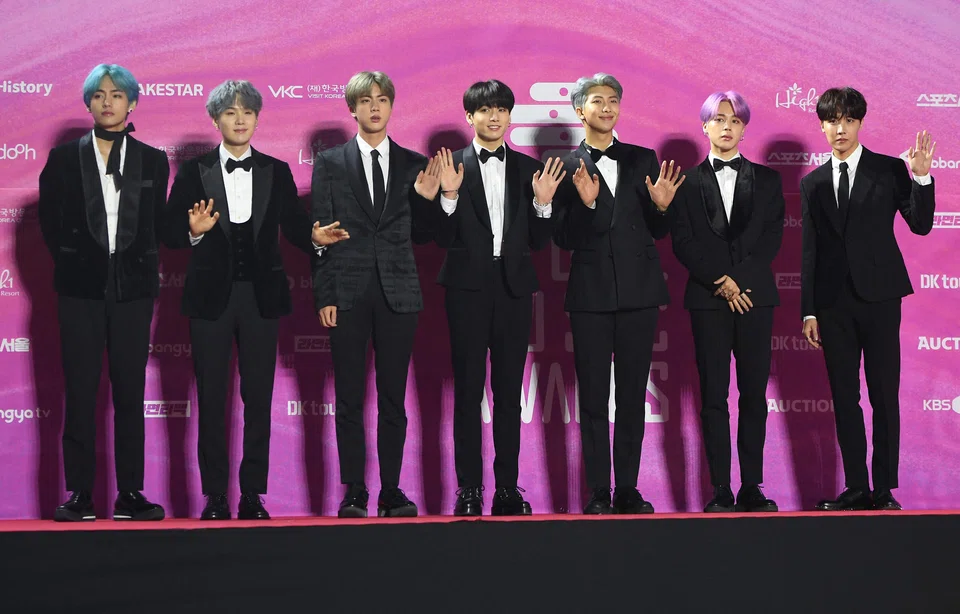
SOUTH Korea’s Hybe Corporation may have lost the battle to buy over rival SM Entertainment, but it has gained some leverage that may still help it win investors seeking a slice of the K-pop action.
Hybe – the management company behind K-pop megastars BTS – now owns a large enough stake to have some influence on SM. It also walked out of the deal with a partnership for its fan platform business.
Since February, Hybe had been in a battle with South Korean Internet giant Kakao to take over SM Entertainment – a rival entertainment agency regarded as a pioneer in taking the K-pop genre to the rest of the world.
This month, Hybe said it was exiting the battle as the price to acquire SM exceeded a fair range amid strong competition.
Hybe’s public tender offer for an additional 25 per cent stake in SM at 120,000 won per share received little support from shareholders.
Meanwhile, Kakao’s tender offer – to buy an additional 35 per cent stake – was at a higher price of 150,000 won per share, and garnered acceptances for more than double the targeted stake.
In exiting the takeover battle, Hybe is left with an 8.8 per cent stake in SM while Kakao has 40 per cent.
SM closed on Wednesday (Mar 29) at 97,400 won.
Hybe, Kakao and SM are also entering into a partnership for their fan platform businesses, although it has not been announced exactly how this will work.
Hybe owns Weverse, one of the biggest artist-to-fan communication sites in the K-pop industry. SM’s artists are not yet on Weverse, so one option is an integration of SM artists onto the Weverse platform. Meanwhile, Kakao operates KakaoTalk, the largest mobile messaging app in South Korea, and so a partnership could involve the integration of Weverse into KakaoTalk’s messaging platform.
More importantly, the takeover battle reflects Hybe’s appetite for growth and acquisitions in the industry, and demonstrates how it might go from big to bigger.
SM had for decades been one of the largest players in the K-pop industry, forming – with YG Entertainment and JYP Entertainment – what the industry called the “Big Three companies”. Hybe, far behind, became the largest entertainment label in South Korea after its group BTS shot to global stardom.
As at Wednesday, Hybe’s market capitalisation of 7.86 trillion won (S$8 billion) far exceeded the market cap of the Big Three companies combined, which was at 5.88 trillion won.
Over the past few years, Hybe bought out other smaller entertainment agencies in South Korea to grow its market share. It also collaborated with another South Korean Internet giant, Naver Corporation, to grow its fan platform business.
Outside South Korea, Hybe acquired Ithaca Holdings – the management label for Western acts including Ariana Grande and Justin Bieber – and other record labels.
After it failed to acquire SM, Hybe’s chairman Bang Si-hyuk said the company’s plans for the rest of 2023 are to acquire top-tier record labels in the Latin music market and one or two US music brands housing up-and-coming producers.
Hybe’s drive for acquisitions may be driven by BTS going on hiatus, at least for the next two years. Its seven members are on mandatory military service, and have also expressed a desire for solo projects and some rest.
Hyundai Research Institute reported in 2018 that BTS added around four trillion won to the South Korean economy per year, which is comparable to the contributions by South Korean flag carrier Korean Air.
Experts have also noted uncertainty over BTS’ future, as several male K-pop idols have struggled to resume their careers after military service due to a fast-moving industry.
Yet, Hybe is more than just BTS – or has, at least, become so.






